Cannabichromene, or CBC, is one of the cannabinoids that hemp makes directly from CBGA. It remains a minor compound in most plants, but its chemistry has some distinctive features: it has the same formula as CBD and THC, dominates the profile of young plants and reacts to light.

On this page
A discovery made twice in 1966
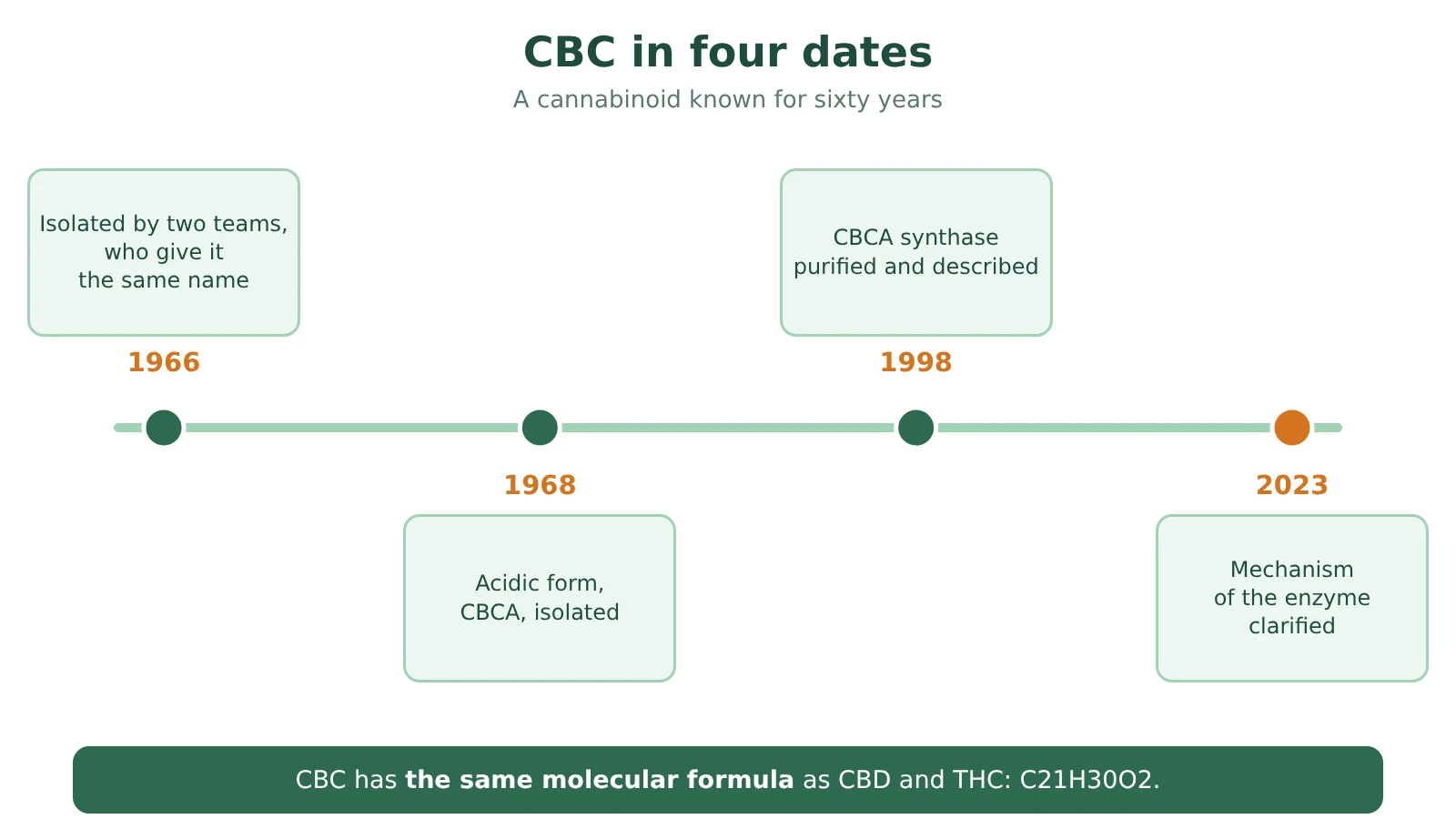
CBC was isolated in 1966 by two teams working independently: Yehiel Gaoni and Raphael Mechoulam on one side, Claussen and colleagues on the other. By coincidence, both groups gave it the same name. In the hashish extract analysed by Gaoni and Mechoulam, it made up 1.5% of the total extract.
Its acidic form, CBCA, was isolated two years later from the same plant source. Our guide to hemp cannabinoids places CBC among the plant's other molecules.
Same formula as CBD, different architecture
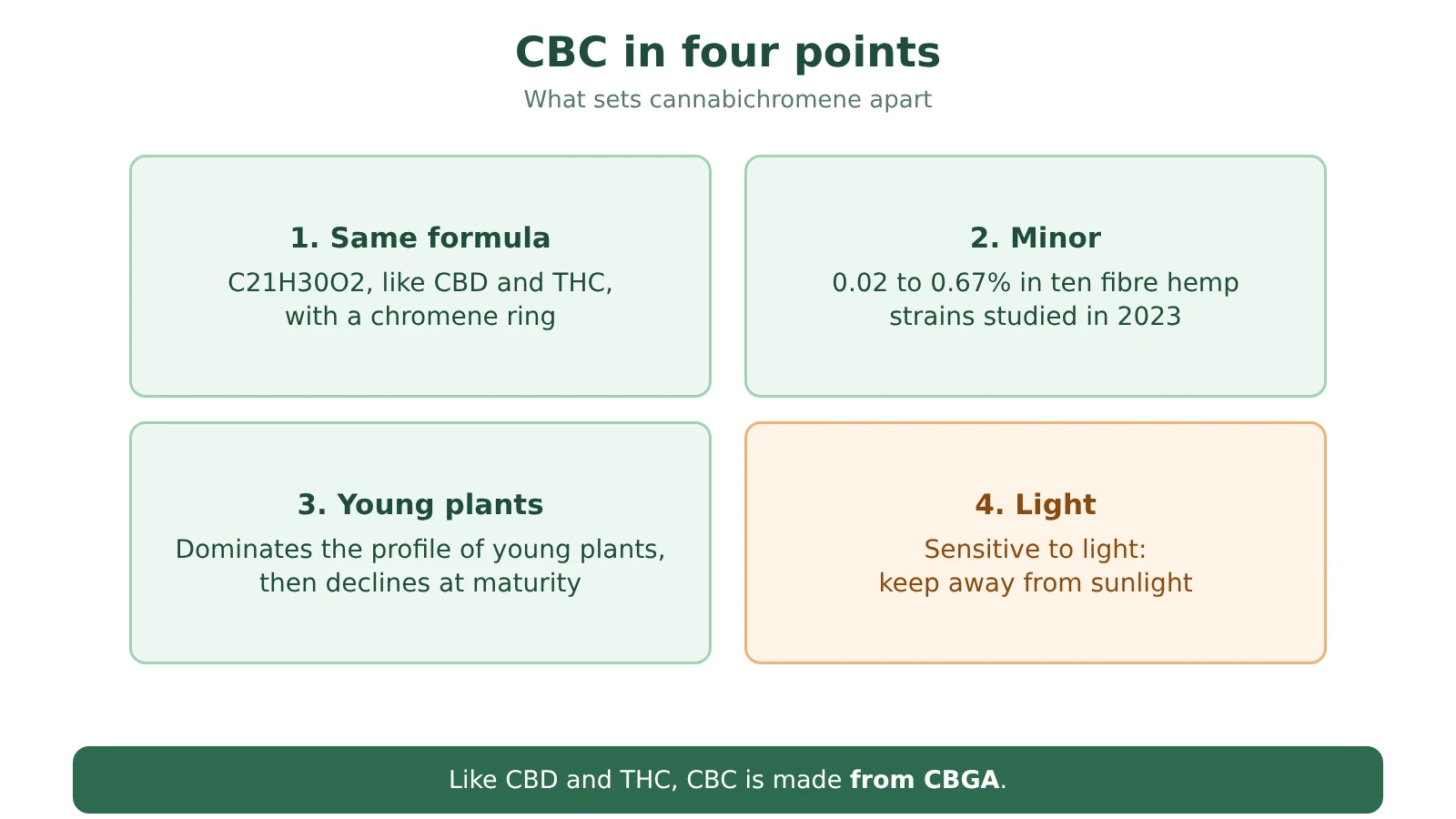
CBC has the formula C21H30O2 and a mass of 314 g/mol: exactly the same atoms as CBD and THC. What sets it apart is its architecture. Its terpene part closes onto the aromatic core to form a chromene ring, a structure from the benzopyran family that gave the molecule its name.
Natural CBC has another particularity: it is a mixture of two forms that mirror each other, like a right hand and a left hand, in proportions that vary with the variety. Chemists call this a scalemic mixture, and the two forms are told apart using special chromatography columns.
How the plant makes CBC
Like CBD and THC, CBC derives from CBGA. A specific enzyme, CBCA synthase, purified and described in 1998, converts CBGA into cannabichromenic acid, CBCA. Research from 2023 clarified the mechanism: the enzyme oxidises CBGA into an intermediate that then closes by itself into a chromene ring. The role of CBGA as the starting point is explained in our article on CBG.
CBC is therefore present in the plant mainly in its acidic form. Decarboxylation, driven by heat, converts CBCA into CBC, as with the other acidic forms.
A minor cannabinoid, more abundant in young plants
In most hemp varieties, CBC stays in the background. A 2018 review states that it rarely exceeds 0.2 to 0.3% of dry weight, and that CBC-dominant plants are very rare. A 2023 study of ten fibre hemp strains measured 0.02 to 0.67%, with higher levels in the CBG-rich varieties than in the CBD-rich strain.
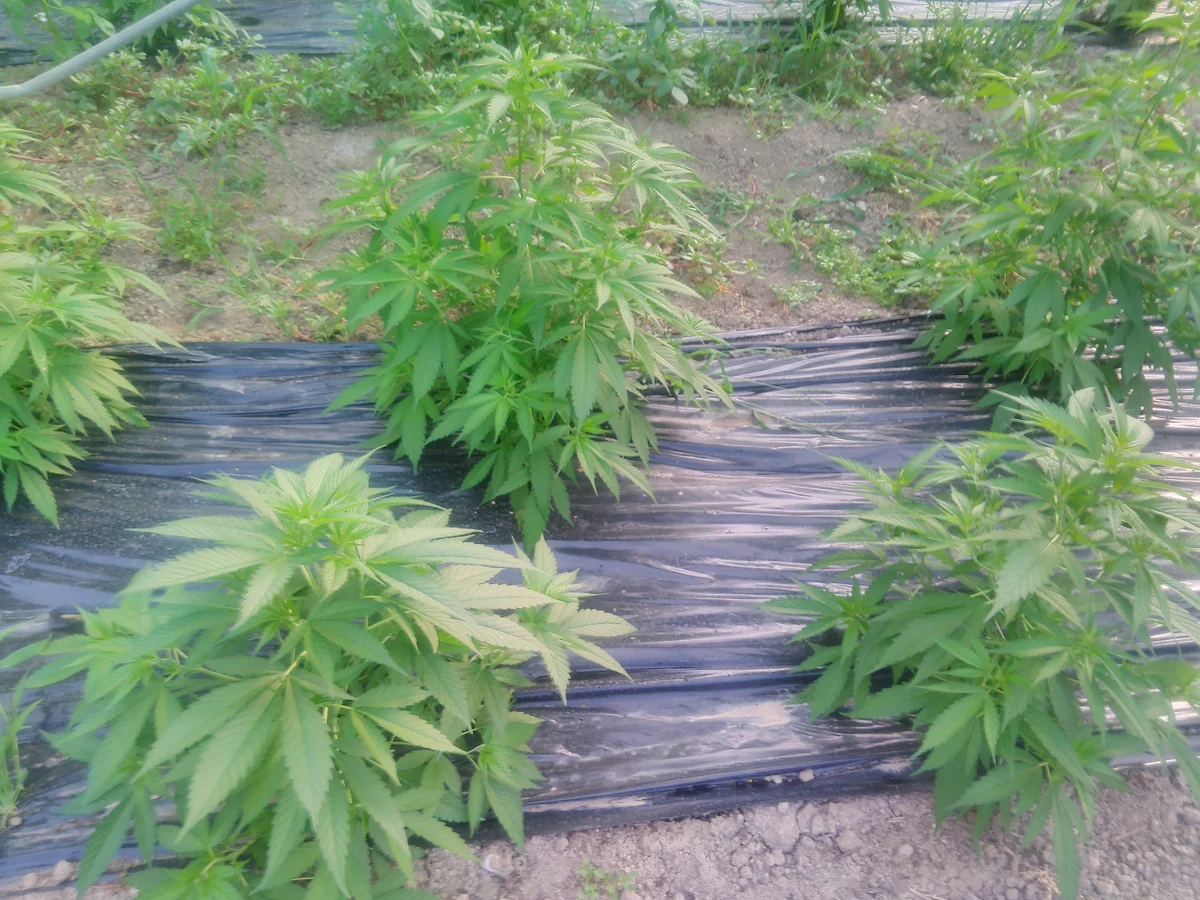
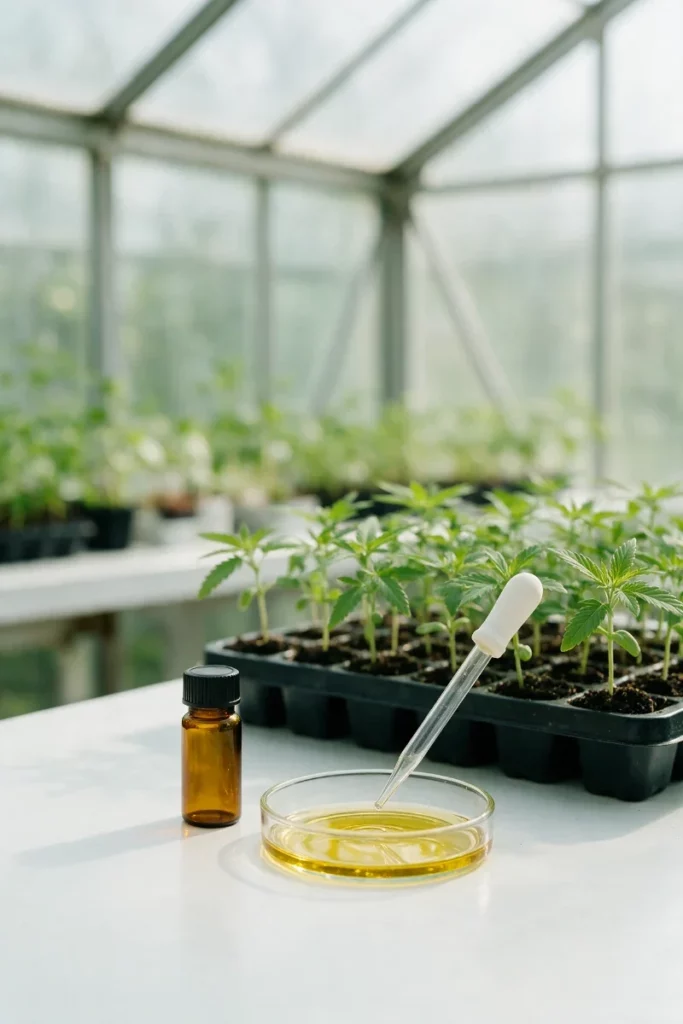
Its development during growth is more surprising. CBC dominates the cannabinoid fraction of young plants, then declines as they mature. In 2009, researchers described plants that keep this juvenile profile until maturity, and observed that reduced light increases the share of CBC.
A light-sensitive compound
CBC does not tolerate light well. Exposed to light rays, it undergoes a reaction that changes its structure, and heat can also rearrange it into other compounds. These reactions partly explain why it is difficult to isolate, with lower yields than for the other main cannabinoids.
To obtain pure CBC, chemists usually turn to synthesis, starting from olivetol and citral, a compound found in lemongrass. This route has been known for a long time and remains the standard method.
Point to watch
Most cannabinoids and terpenes react to light. An oil is best kept in its amber glass bottle, closed after use and stored away from sunlight.
Our article on storing CBD products gives practical advice, product by product.
CBC in an extract and in Switzerland
CBC does not appear on the Swiss list of narcotics. Like CBD and CBG, it follows the rules of the category of the product that contains it. A Full Spectrum extract retains the plant's minor cannabinoids, including CBC, whereas a CBD isolate contains none.
Full Spectrum oils, such as our Sublime range on MCT coconut oil, retain all the cannabinoids of their starting extract, and all our products are gathered on the CBD oils page. For even rarer cannabinoids, our article on CBN, THCV and CBDV picks up where this one leaves off.
Our laboratory
Our oils are bottled in amber glass in our laboratory in Gland, from crude extracts containing less than 1% total THC. Their cannabinoid levels are checked regularly by an external laboratory. Discover the laboratory →
Frequently asked questions
What is CBC?
Cannabichromene is a hemp cannabinoid discovered in 1966. The plant makes it in its acidic form, CBCA, from CBGA. It has the same molecular formula as CBD and THC, but a different structure, with a chromene ring.
What is the difference between CBC and CBD?
The two molecules share the same atoms, C21H30O2, arranged differently. They are made by two different enzymes from the same precursor. In CBD-rich hemp, CBC remains a minor compound, rarely above a few tenths of a per cent.
Why do young plants contain more CBC?
Observations show that CBC dominates the cannabinoid fraction of young plants, then declines at maturity. Some plants keep this juvenile profile right to the end, and reduced light increases the share of CBC.
Is CBC stable?
It is sensitive to light, which changes its structure, and it can rearrange when heated. As with other cannabinoids, an extract that contains it is best kept away from sunlight, in an opaque or amber bottle.
Is there CBC in a CBD isolate?
No. An isolate contains only purified CBD. CBC is found in extracts that retain the plant's minor cannabinoids, such as Full Spectrum extracts, in proportions that vary with the variety and the process.