A CBD product ages under the influence of four factors: light, heat, air and humidity. Their weight varies from one product to another: an oil fears light, oxidation and, above 30%, cold most, a flower humidity, a battery heat. Here is how to keep each product in good condition.
On this page
Four factors that age a product
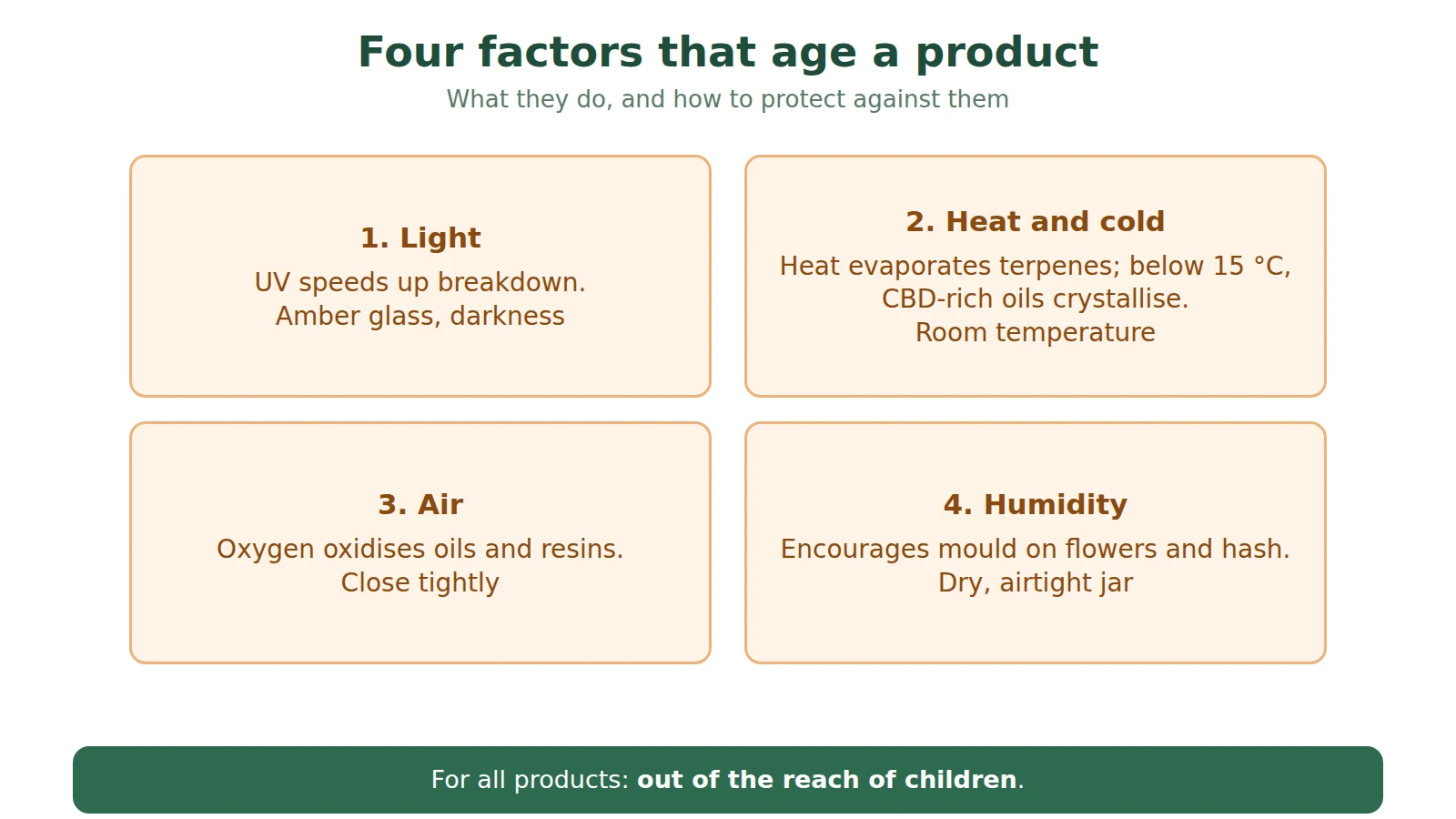
Cannabinoids and terpenes are organic molecules: over time, they change. Light, especially ultraviolet, speeds up these reactions. Heat speeds them up too, and makes the most volatile terpenes, those that carry the aroma, evaporate. Oxygen in the air oxidises oils and resins, and humidity encourages mould on plant products.
Not all cannabinoids react in the same way. A study we present in our article on the stability of CBD and THC found that CBD-dominant products remained stable at room temperature, whereas THC broke down much faster without cold. For a CBD product, a dark, temperate place is therefore enough in most cases. Our guide to using a CBD product also sets out the framework for each product.
Oils: light, air and cold
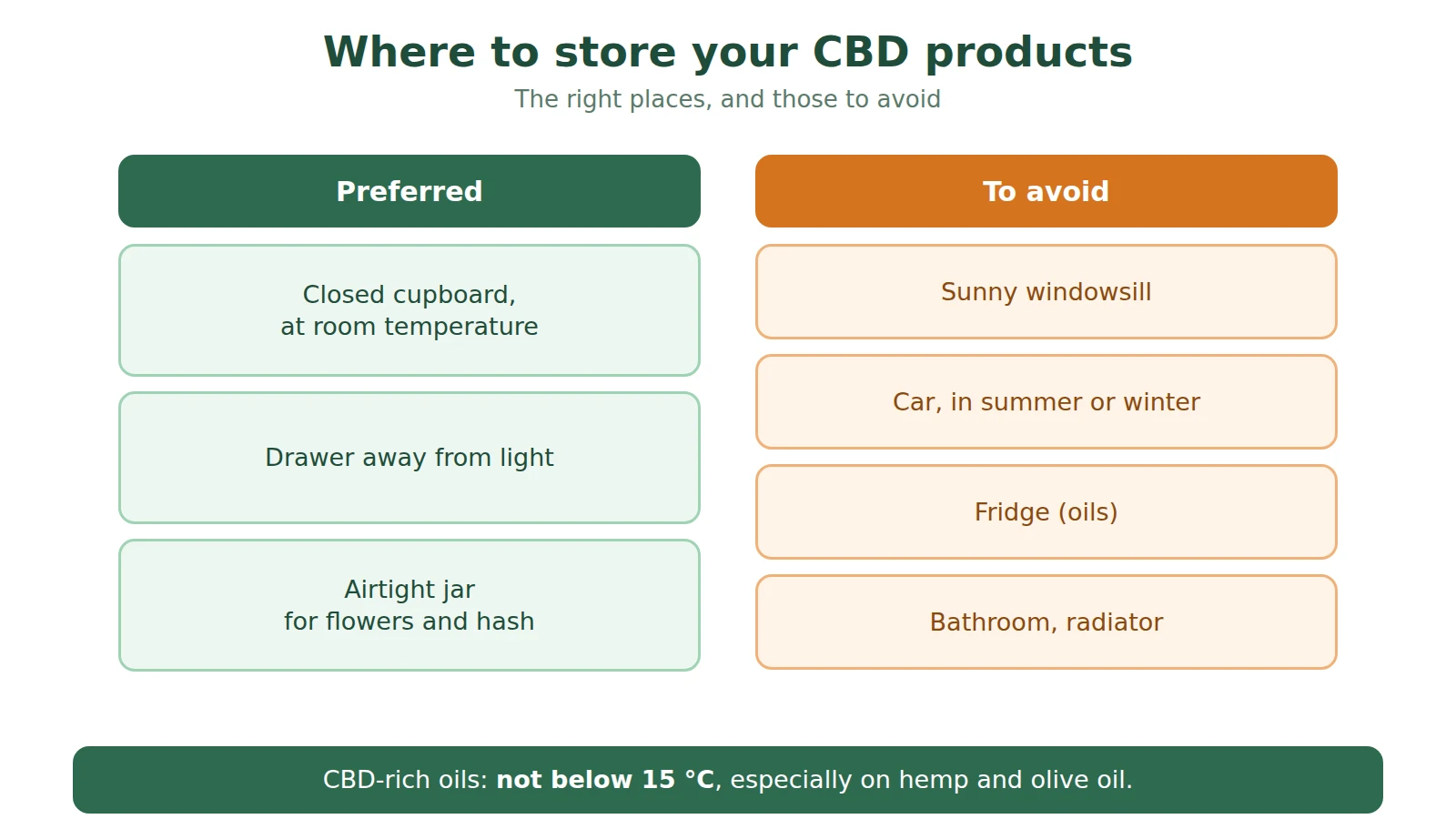
A CBD oil consists mostly of its carrier oil, and that is what ages first. The amber glass bottle already filters much of the light; all that remains is to close it after use and keep it away from a radiator or a sunny window. A moderate room temperature suits it, neither hot nor cold.
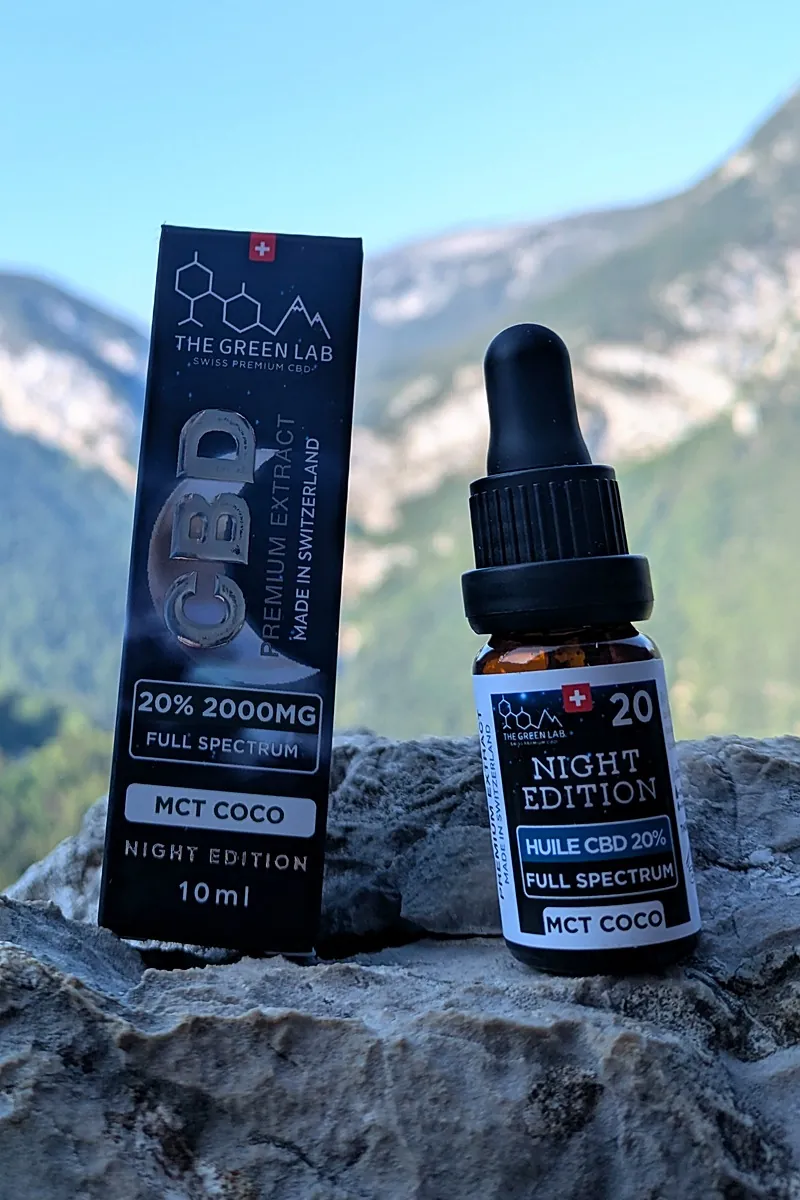
Carrier oils do not age at the same rate. MCT coconut oil, which is saturated, is very stable; olive oil less so; hemp seed oil, richer in unsaturated fatty acids, is the most exposed to oxidation, as our article on the role of the carrier oil explains. This is one reason why our Hemp oil needs a little more care than an oil on MCT coconut oil.
Cold is a trap for concentrated oils. From 30% CBD upwards, an oil can crystallise, mainly because of cold: the CBD forms crystals in the bottle. The risk is greater on hemp seed oil and olive oil, and we advise against keeping an oil rich in CBD below 15 °C. A CBD oil is therefore not kept in the fridge, and not left in a car in winter. If crystals appear all the same, the oil can be redissolved: with the bottle tightly closed, warm it in a water bath or a pan of water, shaking it until the crystals disappear. Once opened, the period after opening is what counts, and our article on the label of a CBD cosmetic explains how to read it.
Balms: heat
A balm is solid because its waxes and butters are solid at room temperature. Heat softens it, then melts it; as it cools, its texture may change. A closed jar, out of the sun and away from heat sources, keeps its consistency. Clean fingers and a closed lid avoid introducing moisture.
Flowers and hash: humidity and air
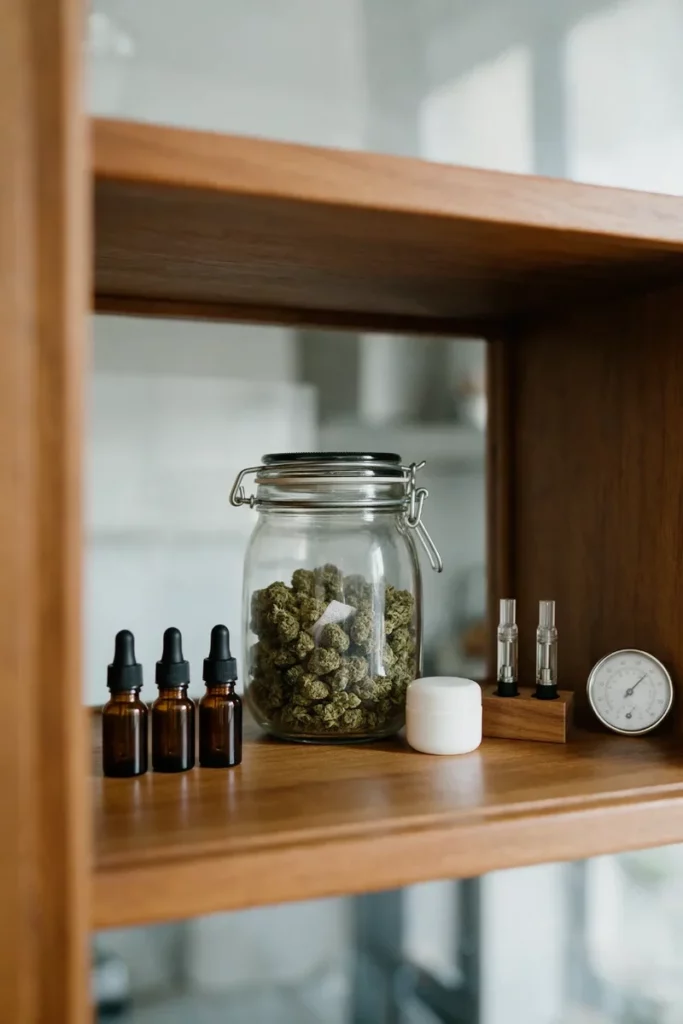
Flowers and hash keep best in an airtight glass jar, in the dark and somewhere cool. The jar limits air exchange, which dries the flower and carries off its aromas, and protects it from outside smells.
The size of the container matters too: a large, almost empty jar keeps a lot of air around a few flowers. A container suited to the quantity, filled without packing it down, limits this. Opening the jar as rarely as possible avoids swings in humidity.
Humidity calls for balance. Too damp, a flower can go mouldy; too dry, it becomes brittle and loses part of its terpenes. Some people add a humidity control sachet sold for this purpose to the jar. Hash, for its part, mainly must not dry out: well-closed packaging is enough. Our article on growing CBD flowers shows where the aromas worth preserving come from, and all our flowers are on the CBD flowers page.
Cartridges, e-liquids, distillate and batteries
Cartridges are stored upright, mouthpiece up, at room temperature. Heat makes their contents more fluid, and a car in midsummer or a sunny windowsill does them no good. E-liquids, the booster and distillate are kept capped and away from light.
Batteries cope poorly with both heat and frost. They are kept dry, at room temperature, and are not left charging unattended. Our article on CBD vapes details their maintenance and their take-back at end of life.
A few signs show that a product has aged. An oil that darkens markedly or smells rancid has suffered oxidation of its carrier oil. A flower that barely smells any more has lost its terpenes; a flower covered with white or grey fuzz has gone mouldy and is no longer used. A product past its period after opening is replaced, even if it looks intact.
Point to watch
Keep all CBD products out of the reach of children and animals, ideally in their original packaging, which carries the directions, precautions and batch number.
Storing a product well means preserving the balance of cannabinoids and terpenes it had when it left the laboratory. All our oils are on the CBD oils page.
Our laboratory
Our oils are filled into amber glass bottles in our laboratory in Gland, and their cannabinoid levels are checked regularly by an external laboratory. Discover the laboratory →
Frequently asked questions
Should CBD oil be kept in the fridge?
No. Below 15 °C, an oil rich in CBD can crystallise, especially on hemp seed or olive oil. A CBD oil is kept at room temperature, away from light and heat, and is not left in a car in winter.
What should I do if my CBD oil has crystallised?
Redissolve it with heat. With the bottle tightly closed, place it in a water bath or a pan of water that you warm up, shaking it until the crystals disappear. To keep it from happening again, store the oil at room temperature, away from the fridge and the cold of a car in winter.
How long does an opened CBD oil keep?
The period after opening shown on the packaging is what counts, often in the form of an open jar followed by a number of months. Writing down the opening date helps you respect it.
How should CBD flowers be kept?
In an airtight glass jar, dry, in the dark and somewhere cool. Too much moisture encourages mould; air that is too dry makes the flower brittle and costs it part of its aroma.
Where should a vape cartridge be stored?
Upright, mouthpiece up, at room temperature and out of the sun. The heat of a car in summer or of a windowsill does it no good.
Why has my CBD oil changed colour?
An oil can darken slightly over time, especially if it has been exposed to light, heat or air. It is a sign that its components are changing. Respecting the period after opening and good storage conditions limit this ageing.