Cannabigerol, or CBG, is present only in small amounts in most hemp varieties. Yet its acidic form, CBGA, is the molecule from which CBD, THC and CBC derive. This article explains this crossroads role, why CBG stays rare in a mature plant, and where the varieties and isolates that contain more of it come from.
On this page
A cannabinoid described in 1964
CBG was described in 1964 by Yehiel Gaoni and Raphael Mechoulam. Even then, the two chemists assumed that the plant assembled it from a terpene fragment, geraniol, and a derivative of olivetol. In 1965 they isolated its acidic form, unknown until then, from a sample of hashish. Our guide to hemp cannabinoids places CBG among the plant's other molecules.
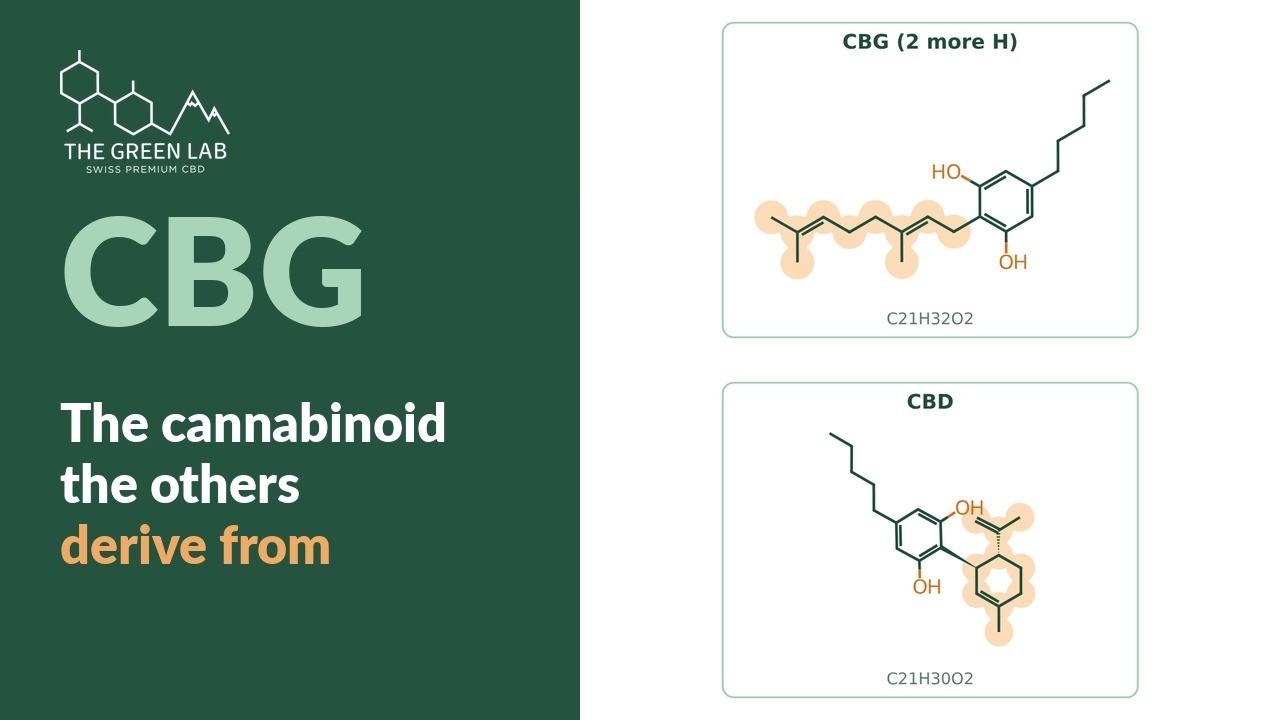
CBG carries a geranyl chain, a ten-carbon fragment from the terpene pathway, attached to an olivetol core. Its molecular formula is C21H32O2, with a molar mass of about 316.5 g/mol. It has two more hydrogen atoms than CBD, because its terpene part has not closed into a ring.
CBGA, the crossroads molecule
In the plant, everything starts with CBGA. An enzyme from the prenyltransferase family joins geranyl pyrophosphate to olivetolic acid. The first enzyme of this kind was described in 1998 in young hemp leaves, and its discoverers presented it as the first step in cannabinoid biosynthesis.
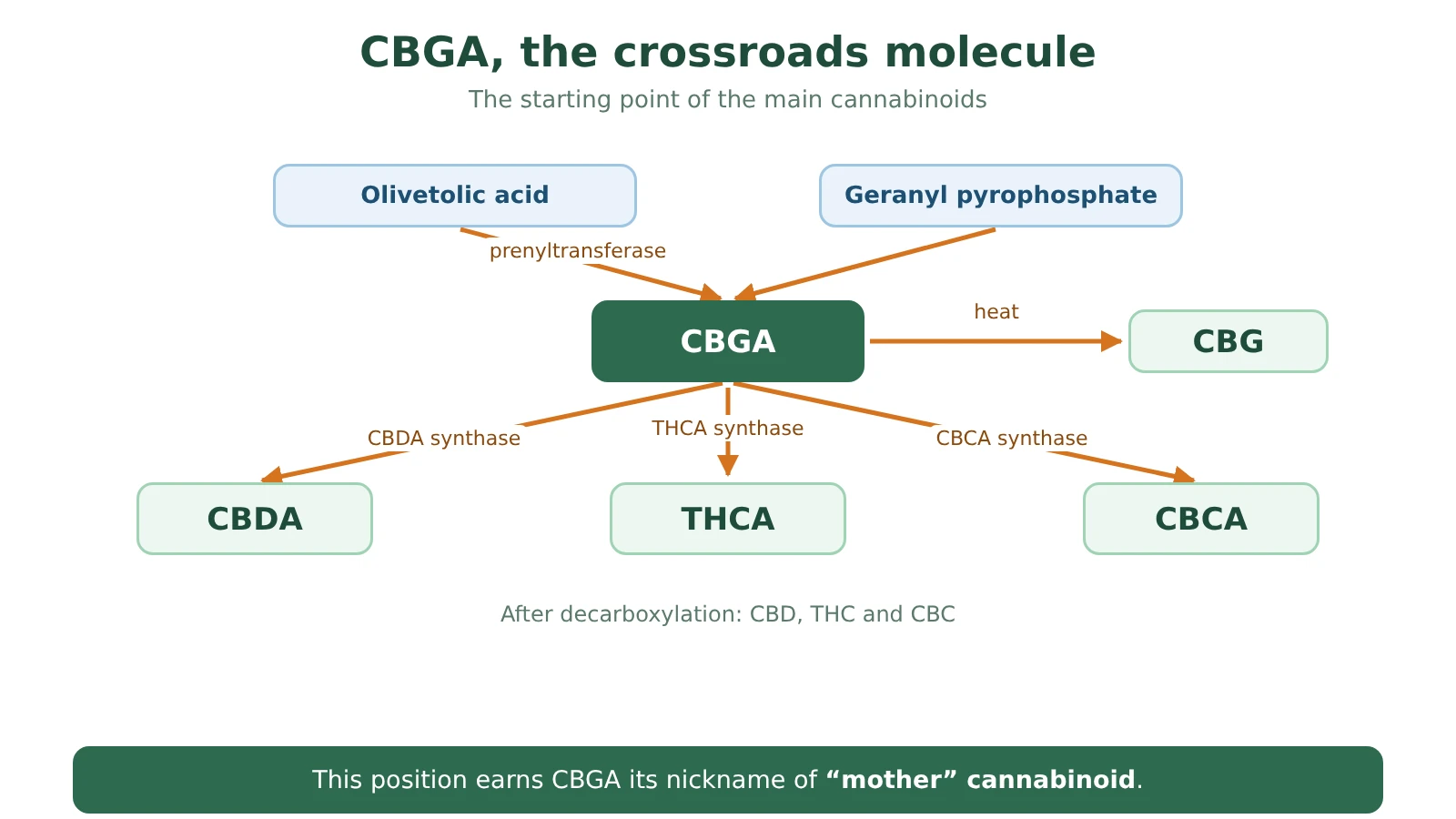
CBGA is then taken up by three synthases. CBDA synthase turns it into CBDA, THCA synthase into THCA and CBCA synthase into CBCA. This position earns it the nickname of “mother” cannabinoid, and links CBG to our article on CBD as well as to the one on CBC.
Why CBG stays rare
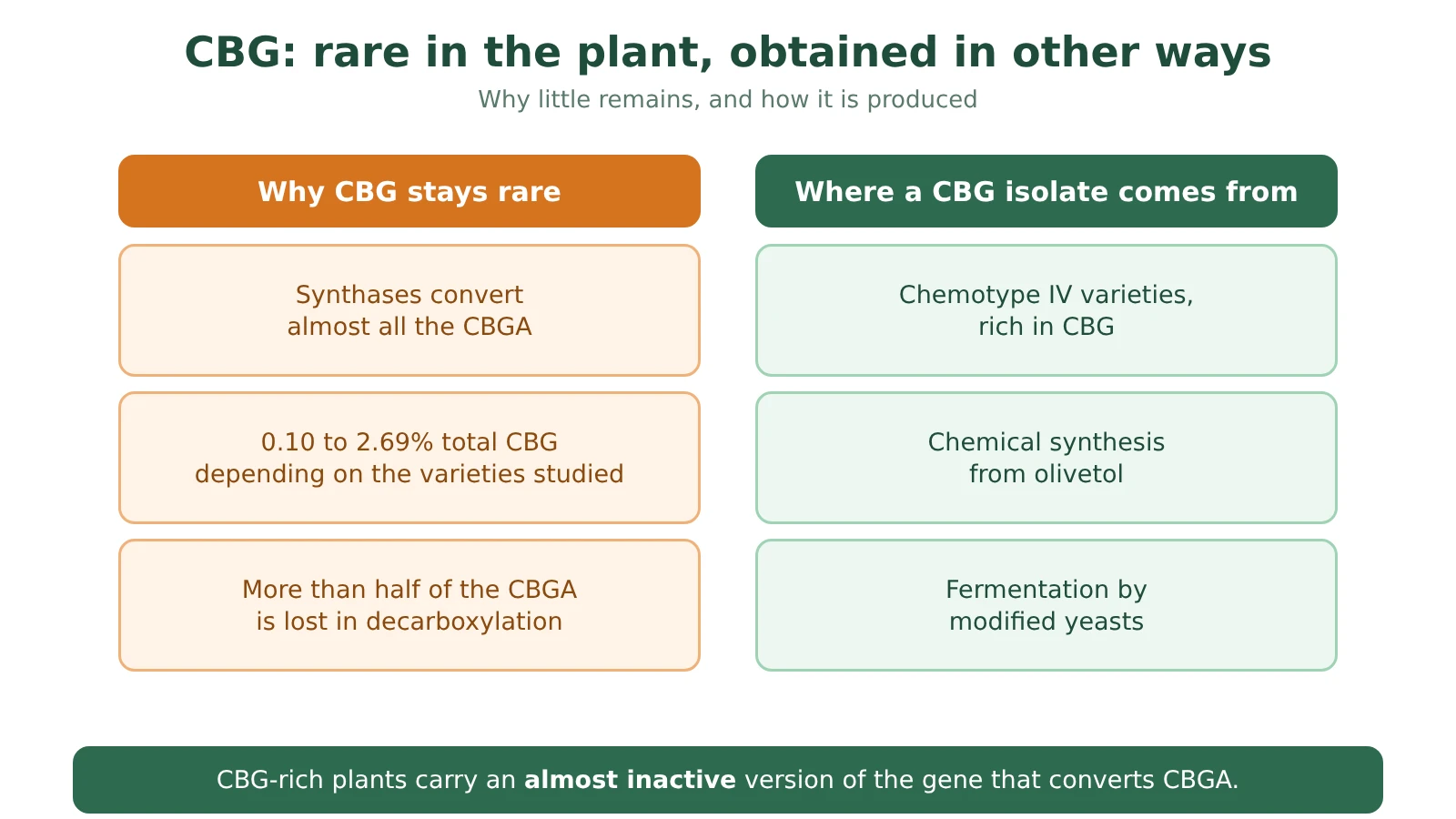
In a mature plant, the synthases have converted almost all the available CBGA. Little of it remains, and therefore little CBG once decarboxylation has taken place. A 2022 review goes as far as describing neutral CBG as an artefact, or a degradation product of its acid.
Measured levels point in the same direction. In a 2021 study of Italian and French hemp varieties, total CBG ranged from 0.10% to 2.69% by mass in the varieties where it was detected, and remained undetectable in one of them. The highest values came from particular varieties classed as chemotype IV.
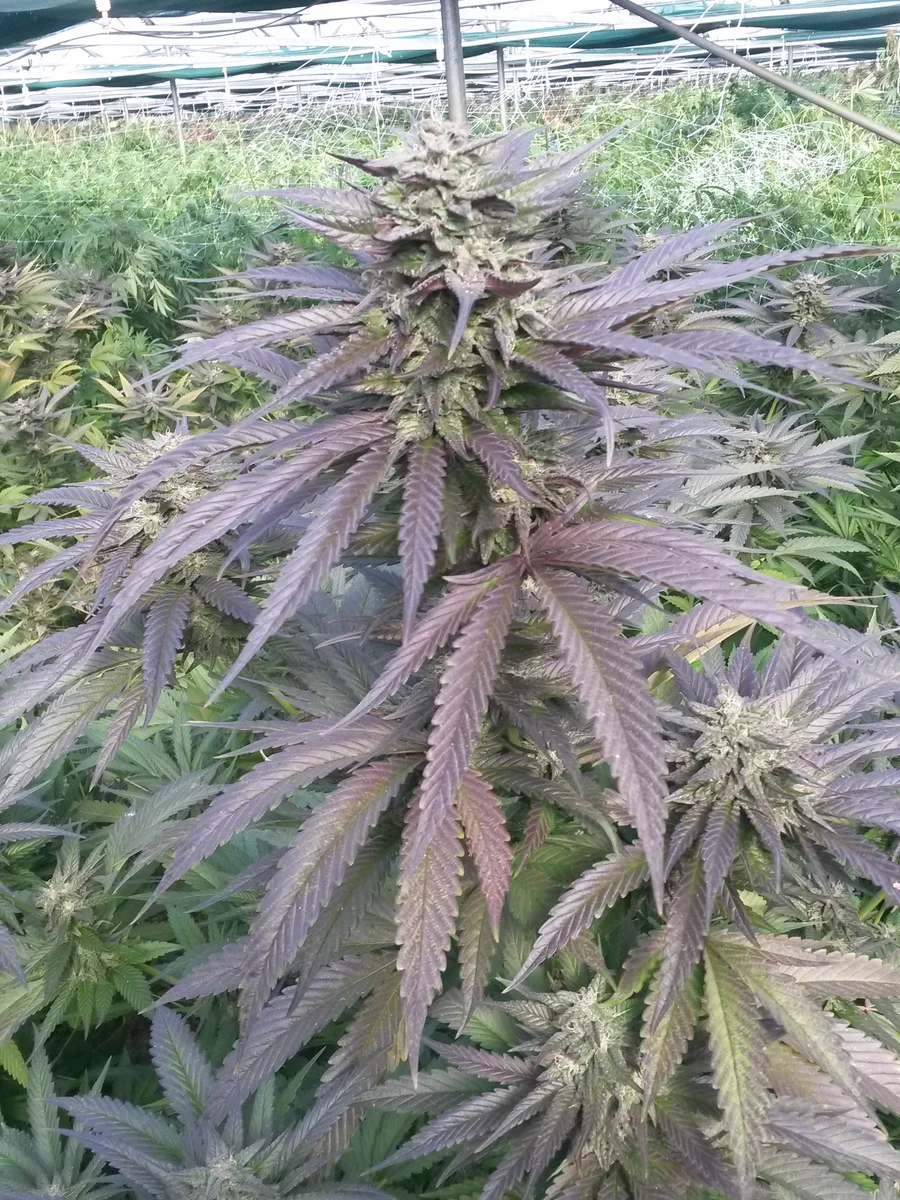
These CBG-rich plants were described as early as 1987. In 2005, de Meijer and Hammond showed that they carry an almost inactive version of the gene that converts CBGA into THCA or CBDA: as it is not converted, CBGA accumulates. The plants studied came from European fibre hemp populations.
Where a CBG isolate comes from
To obtain CBG in quantity, the first route is to grow chemotype IV varieties, extract their resin, then purify the CBG, for example by chromatography.
CBG can also be prepared by synthesis: chemists have obtained it in a single step from olivetol and geraniol, and other routes are being studied. Finally, modified yeasts can produce cannabinoids by fermentation, from sugar. This approach has been explored since the late 2010s, in response to the plant's low content of most known cannabinoids.
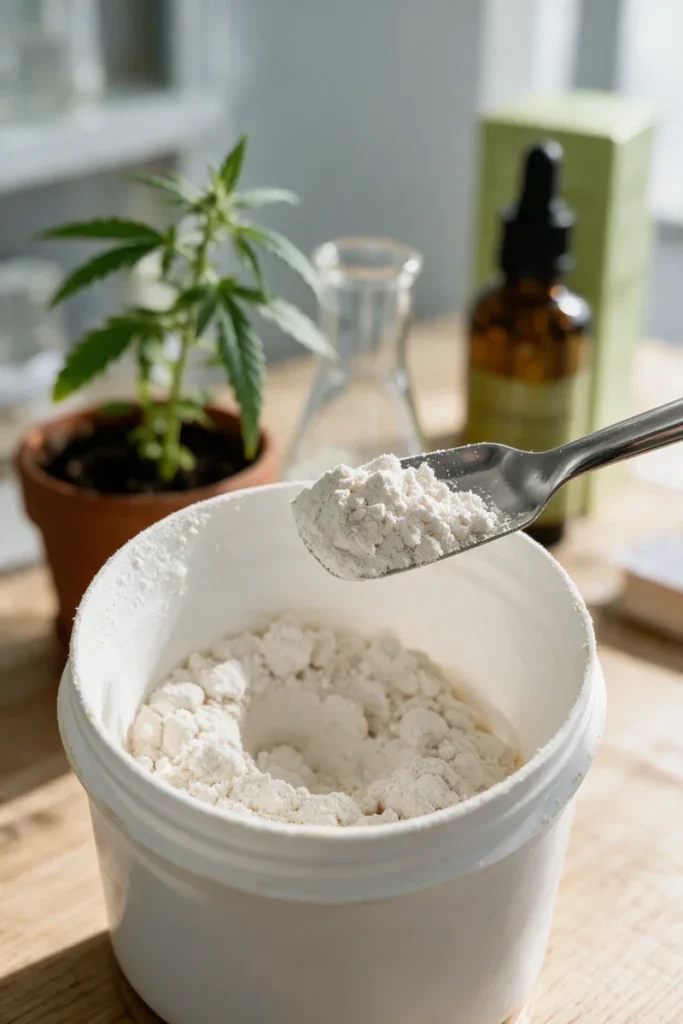
In its pure state, CBG is an off-white powder that is hard to tell apart from a CBD isolate with the naked eye. Only an analysis can distinguish them.
Point to watch
The word CBG on a product says nothing about how much CBG it contains. Only a stated content, in milligrams or as a percentage, makes it possible to compare two products.
CBG in Switzerland and in an extract
CBG is not on the Swiss list of narcotics. Like CBD, it follows the rules of the category under which the product is sold, as the federal authorities' fact sheet on CBD and other cannabinoids points out.
In a CBD-rich hemp extract, CBG generally remains a minor component, as does CBC. Its proportions vary with the variety and the process. Decarboxylation in particular causes a large share of the CBGA to be lost: in a 2016 study, more than half of the heated CBGA disappeared without being recovered as CBG, a phenomenon detailed in our article on acidic forms. Our article on the ratio between cannabinoids shows what these differences change in the profile of an extract.
Our oils are presented on our CBD oils page, and our flowers on the CBD flowers page.
Our laboratory
We do not isolate any cannabinoids ourselves: the isolates we use to adjust the spectrum of certain formulations are bought in, as are our crude extracts, which contain less than 1% total THC. The rest of the work, from winterisation to bottling, is done in our laboratory in Gland. Discover the laboratory →
Frequently asked questions
What is the difference between CBG and CBGA?
CBGA is the acidic form that the plant produces; CBG is the neutral form that appears when CBGA loses a carboxyl group through heat. CBGA is also the starting point for CBDA, THCA and CBCA.
Why is CBG called the mother cannabinoid?
Because its acidic form, CBGA, is the common precursor of the main cannabinoids. Three enzymes in the plant convert it into CBDA, THCA or CBCA, which then give CBD, THC and CBC.
How much CBG does a hemp plant contain?
Generally not much. In a 2021 study of several hemp varieties, total CBG ranged from 0.10% to 2.69% by mass. The highest values came from CBG-rich chemotype IV varieties.
How is a CBG isolate produced?
Most often from CBG-rich varieties, whose resin is extracted before the CBG is purified. It can also be prepared by synthesis from olivetol, and modified yeasts can produce cannabinoids by fermentation.
Is CBG on the list of narcotics?
No. The Swiss list of narcotics covers THC as well as hemp and products with a total THC content of 1% or more. Like CBD, CBG follows the rules of the category under which the product is sold.