Cannabidiol, or CBD, is the main cannabinoid in the hemp varieties grown for it. The plant makes it in an acidic form, CBDA, which converts with heat. Here is how the molecule was discovered, how it is built and how it forms in the flower.

On this page
A molecule isolated in 1940
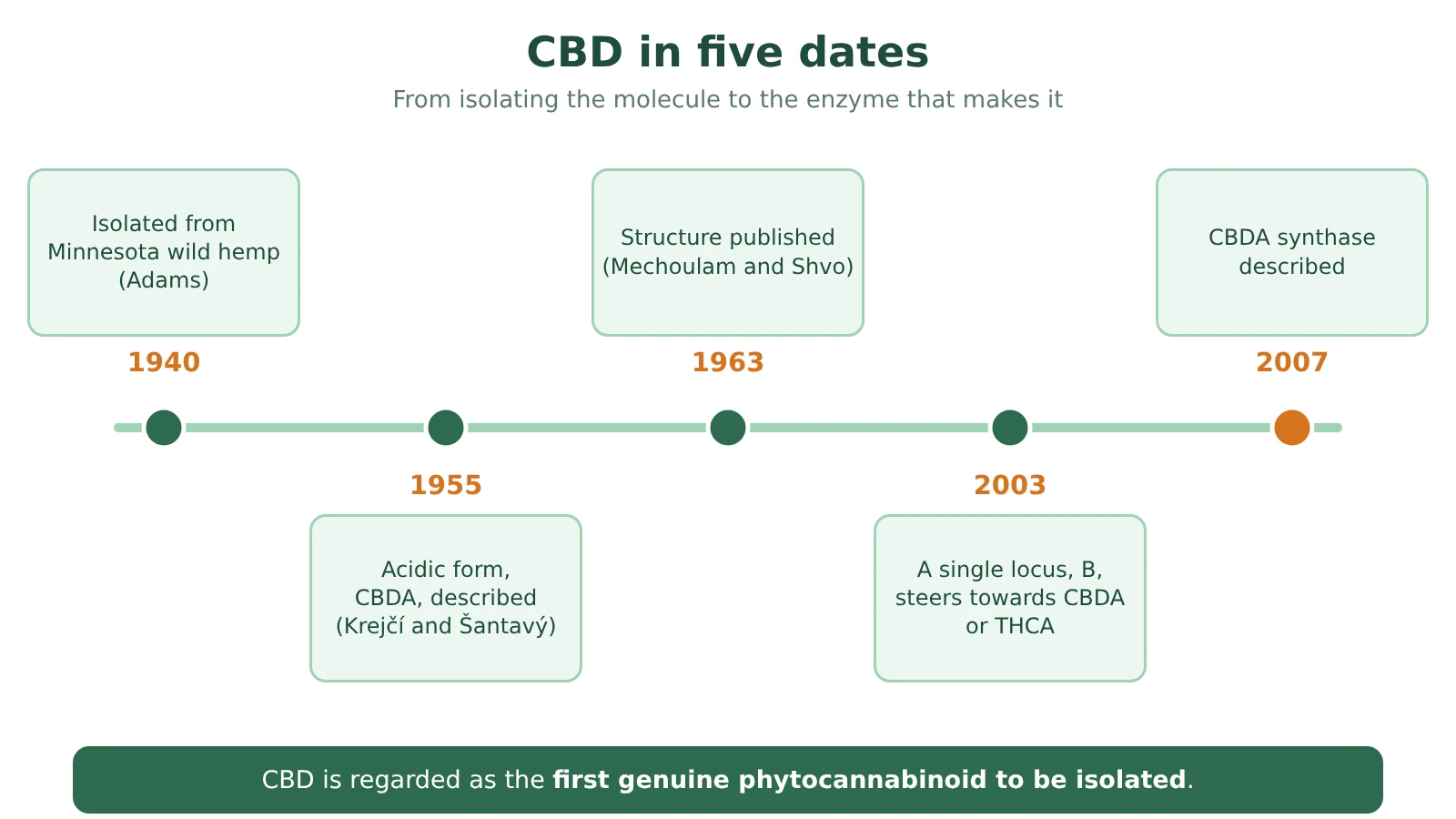
CBD was first isolated in 1940 by the team of American chemist Roger Adams, from an extract of wild Minnesota hemp. Two other chemists, Jacob and Todd, also obtained it, from Egyptian hashish. Our guide to hemp cannabinoids places CBD among the plant's other molecules.
It is regarded as the first true phytocannabinoid to be isolated. CBN had been obtained earlier, as far back as the late 19th century, but it comes from the breakdown of THC and not from a plant enzyme, as our article on CBN and the minor cannabinoids explains.
The exact structure of CBD took longer to pin down. In 1963, Raphael Mechoulam and Shvo published the correct structure, with a spatial arrangement that was later corrected. Its acidic form, CBDA, had been described as early as 1955 by two researchers from the University of Olomouc, Krejčí and Šantavý.
The molecule in figures
CBD has the molecular formula C21H30O2 and a molar mass of 314.46 g/mol. Its structure combines an aromatic ring carrying two hydroxyl groups, a chain of five carbon atoms and a ring of terpene origin.
It shares this molecular formula with THC and CBC: the three molecules contain the same atoms, arranged differently. In THC, the terpene part closes onto one of the hydroxyl groups and forms an extra ring; in CBD, it stays open.
| Characteristic | CBD |
|---|---|
| Common chemical name | Cannabidiol |
| Molecular formula | C21H30O2 |
| Molar mass | 314.46 g/mol |
| Form in the plant | CBDA, cannabidiolic acid (C22H30O4) |
| Forming enzyme | CBDA synthase |
| INCI name in cosmetics | Cannabidiol |
| Swiss list of narcotics | Not listed |
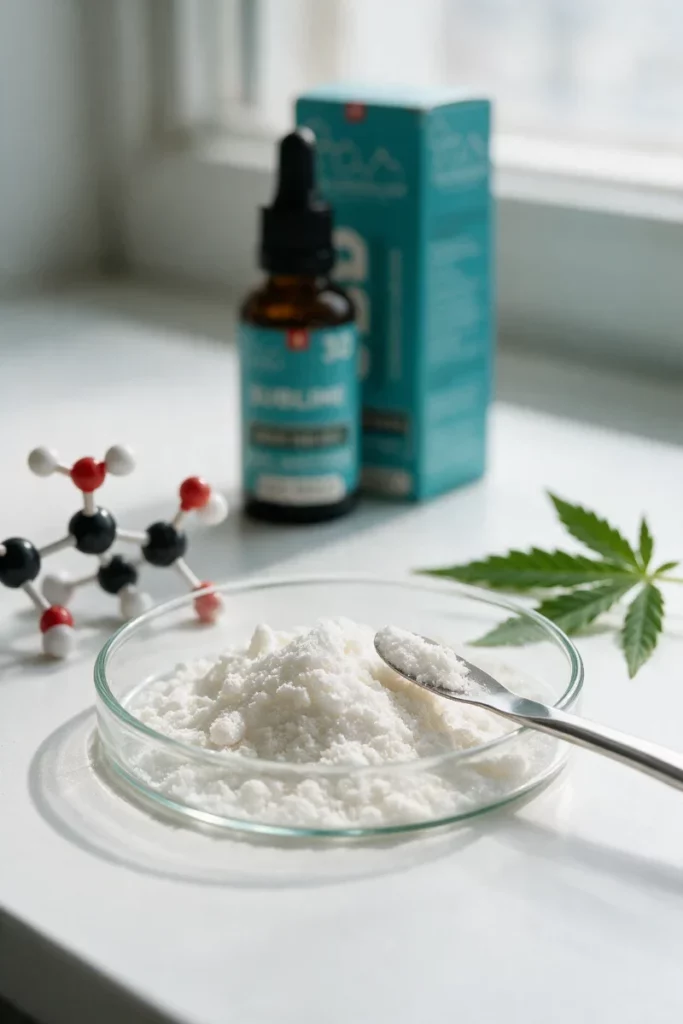
In its pure state, CBD forms a white crystalline powder. This is isolate, obtained by crystallisation from a purified extract, a step described in our article on Full Spectrum, Broad Spectrum and isolate.
How the plant makes CBD
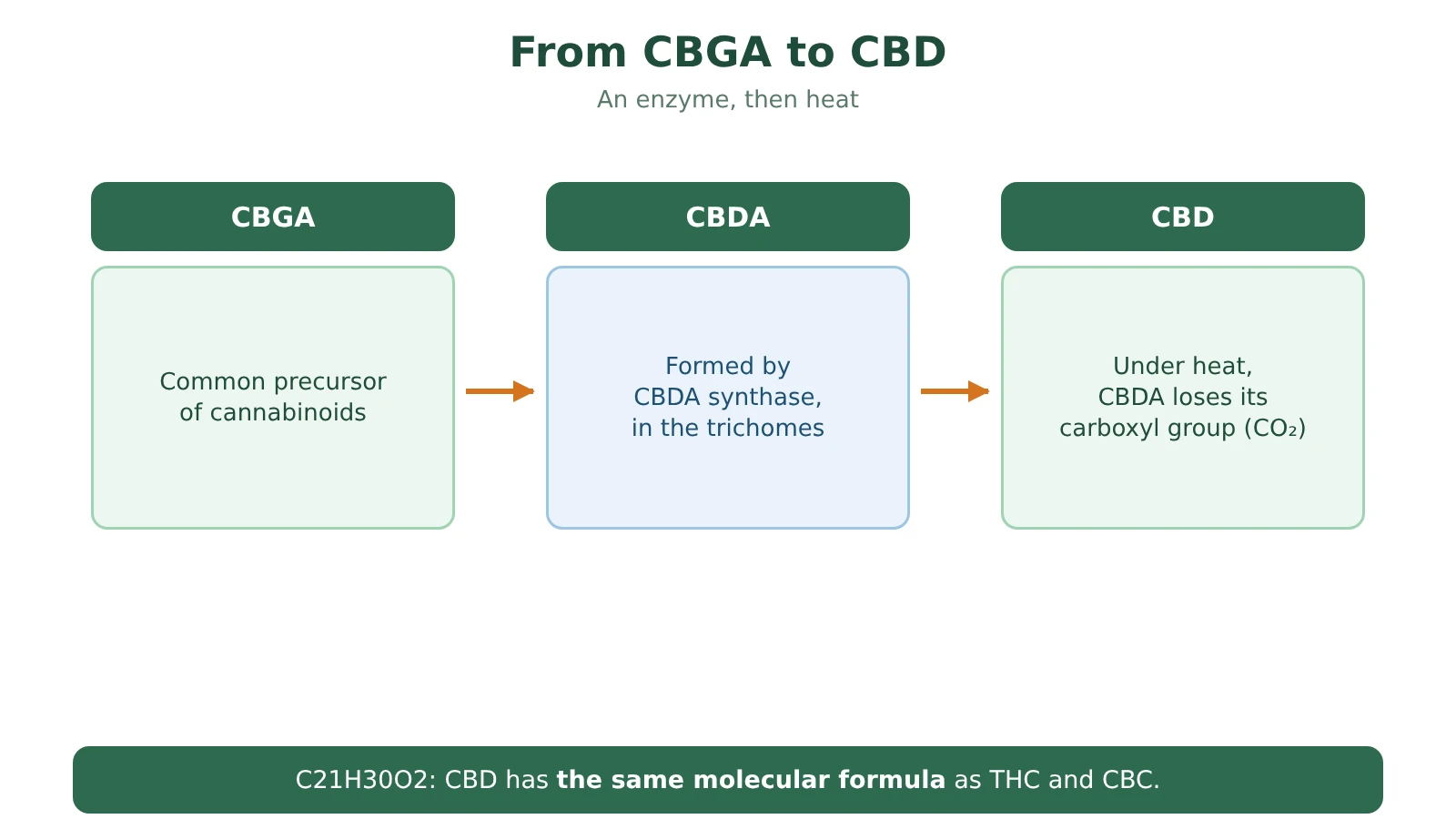
CBD originates in the trichomes of female flowers. The plant first assembles CBGA from olivetolic acid and a terpene precursor, geranyl pyrophosphate; the role of this hub molecule is detailed in our article on CBG. An enzyme, CBDA synthase, then converts CBGA into CBDA. Described in 2007, it is presented by its discoverers as the enzyme that determines the chemotype of fibre hemp.
A plant's profile depends on the version of the gene it carries. Work by de Meijer and colleagues, published in 2003, showed that a single locus, called B, exists in two forms: one steers towards CBDA, the other towards THCA. A plant carrying the first form twice produces mainly CBDA. This is chemotype III, the one found in CBD-rich varieties.
From CBDA to CBD
In the flower, CBD exists mainly in its acidic form. When heated, CBDA loses a carboxyl group as carbon dioxide and becomes CBD. The conversion also happens slowly at room temperature during prolonged storage. To produce an oil, it is triggered deliberately during decarboxylation.
The conversion is not perfect. In a 2016 study, part of the CBDA disappeared during heating without turning up as CBD, 18 to 25% depending on the conditions. This is one of the reasons why the percentage of a crude extract and that of a finished oil cannot be compared directly, as our article on the acidic forms of cannabinoids explains in detail.
Point to watch
On a label or an analysis report, CBD and total CBD do not mean the same thing. The latter adds the measured CBD to the share of CBDA that could convert.
CBD in Swiss law and in our oils
CBD does not appear on the Swiss list of narcotics, which covers THC as well as hemp and products with 1% total THC or more. The rules for a CBD product therefore depend on the category under which it is sold: our oils are declared as cosmetics. In the ingredient list of a cosmetic, CBD appears under its INCI name, Cannabidiol.
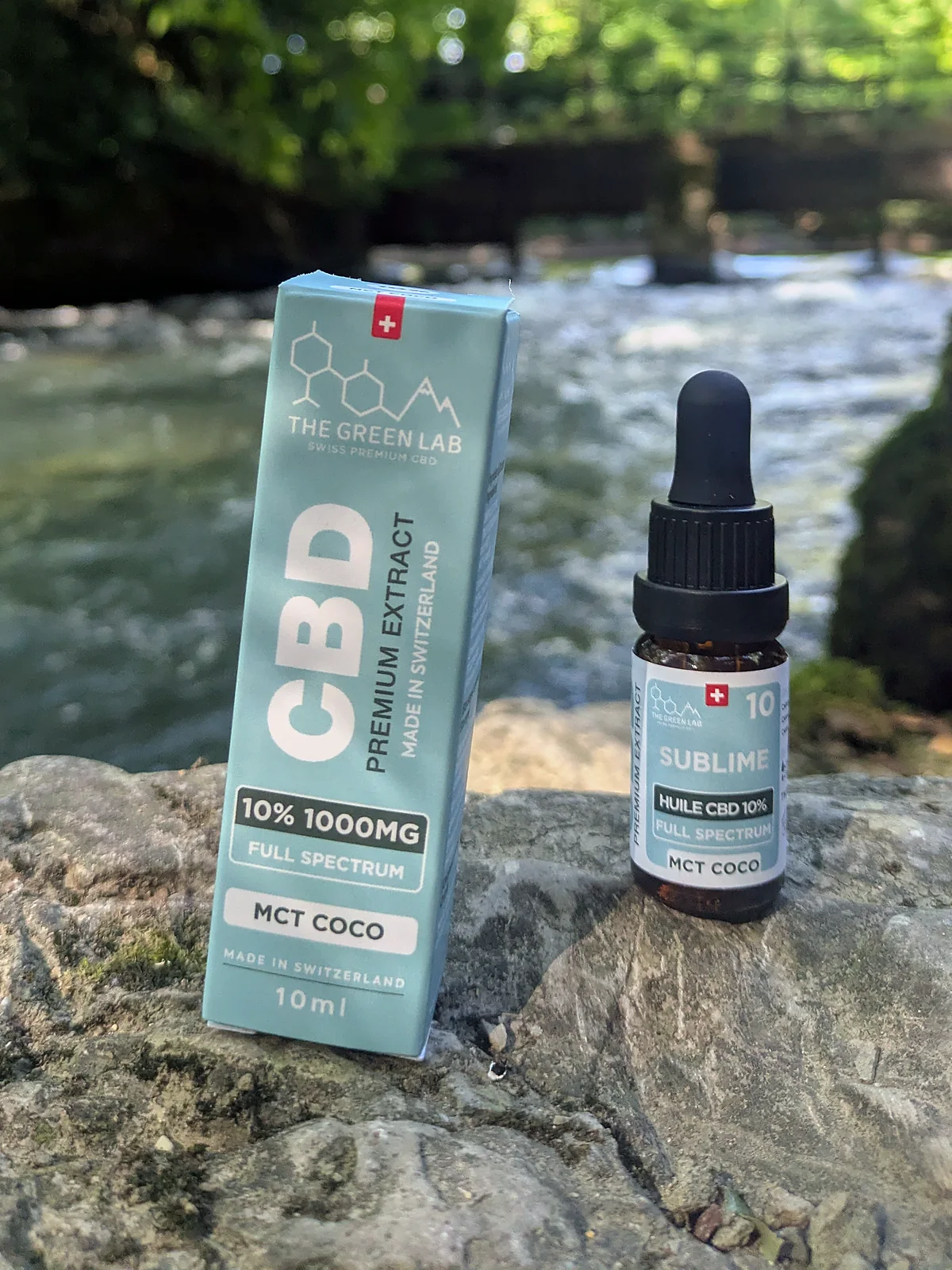
The percentage shown on our bottles refers to CBD, by mass per volume: a 10% oil contains 100 mg of CBD per millilitre. The Sublime range on MCT coconut oil runs from 10 to 40%, the Hemp oil from 10 to 30%, and all our products are gathered on our CBD oils page.
The CBD figure does not sum up an oil. The other cannabinoids, the remaining acidic forms and the terpenes that come with it complete its profile.
Our laboratory
We buy crude hemp extracts containing less than 1% total THC, as well as CBD isolates, and process them in Gland: decarboxylation, vacuum short-path distillation, spectrum adjustment and dilution in the carrier oil. The cannabinoid levels of our oils are checked regularly by an external laboratory. Discover the laboratory →
Frequently asked questions
Who discovered CBD?
CBD was isolated in 1940 by the team of American chemist Roger Adams, from wild Minnesota hemp. Jacob and Todd also obtained it from Egyptian hashish. Its structure was established in 1963 by Mechoulam and Shvo.
What is the formula of CBD?
C21H30O2, with a molar mass of 314.46 g/mol. THC and CBC have the same molecular formula, with the atoms arranged differently. Its acidic form, CBDA, has the formula C22H30O4: it carries one more carboxyl group.
Is CBD present as such in the plant?
Mostly in acidic form. The plant makes CBDA, which turns into CBD when heated or, more slowly, over time. A fresh flower therefore contains considerably more CBDA than CBD.
What is a CBD isolate?
A white crystalline powder that contains only purified CBD, obtained by crystallising an extract. Unlike a Full Spectrum extract, it contains neither the other cannabinoids nor the terpenes of the plant.
Is CBD on the list of narcotics?
No. The Swiss list covers THC as well as hemp and products whose total THC content reaches 1%. A CBD product follows the rules of its sales category; our oils are declared as cosmetics.