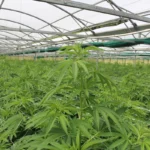
CBD distillate is a hemp extract purified by distillation, here concentrated to 89% CBD. We present it like our e-liquids: a product for vaporisation, in a device designed for concentrates, reserved for adults. Here is where it comes from, what sets it apart from other extracts and how to keep it.
On this page
What a distillate is
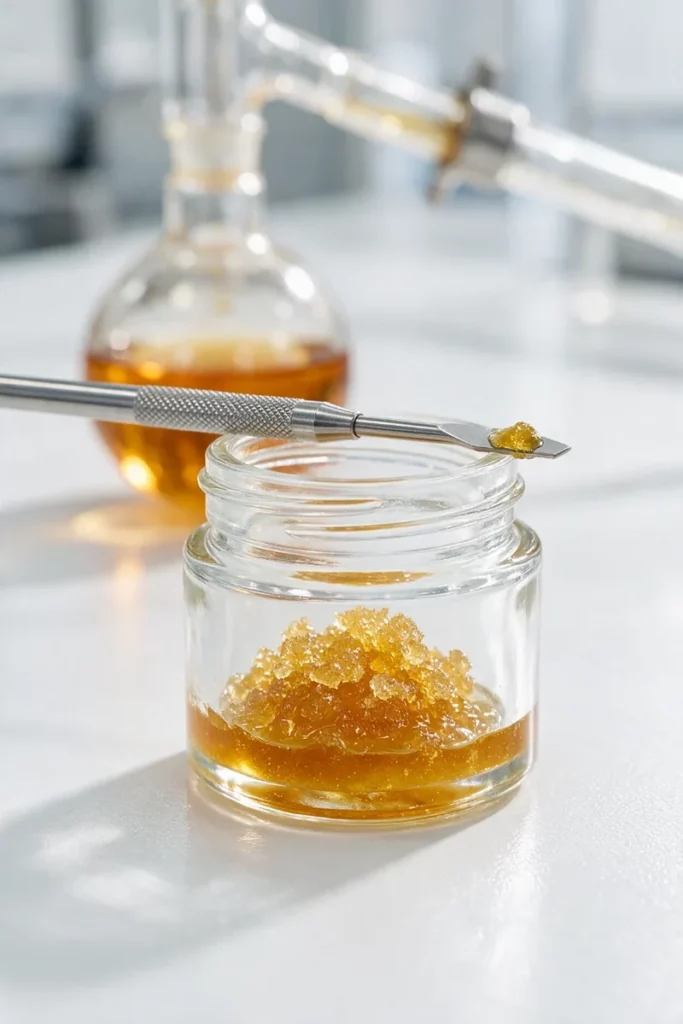
A distillate is a hemp extract whose cannabinoids have been separated from the rest by distillation. This is done under vacuum, in a short path apparatus: the vacuum lowers the temperature at which cannabinoids evaporate, so they can be collected apart from waxes, pigments and plant residues.
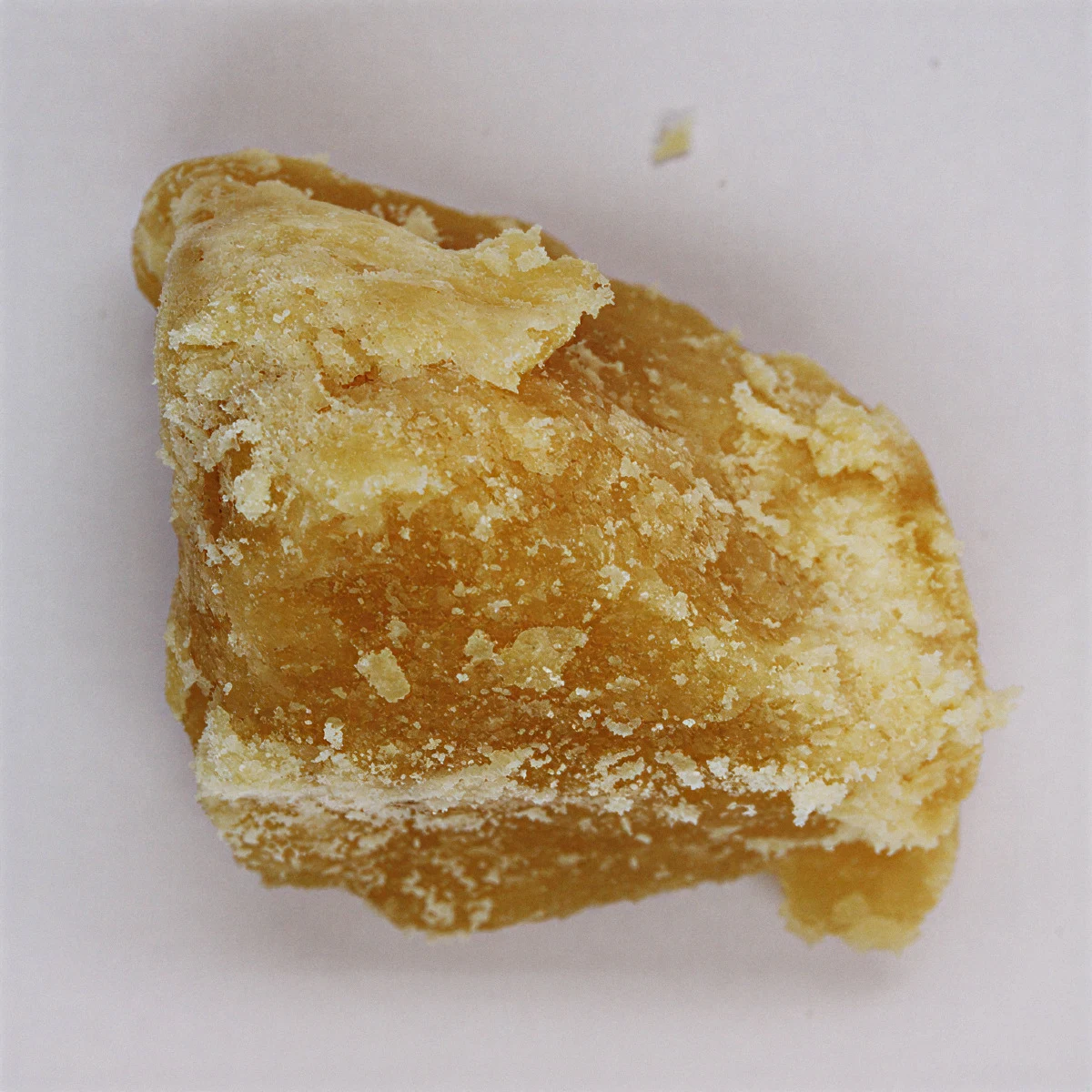
The result is a golden concentrate, very rich in cannabinoids. Our yellow distillate contains 89% CBD, alongside other cannabinoids naturally present in the plant, such as CBG. Its consistency changes with temperature: firmer when cool, softer once warmed.
From crude extract to distillate
A distillate is obtained in several steps. The crude extract, which must contain less than 1% total THC, is first winterised to remove the waxes, then decarboxylated, then distilled by short path under vacuum. We carry out these steps in our laboratory in Gland, and our article on how CBD oil is made explains them one by one.
The yellow distillate we sell is a product in its own right, which serves as the base for none of our other products. Sold as it is, it is a concentrate for vaporisation, presented within the same framework as our vape products.
Crumble, wax, distillate: names of textures
This product was long sold under the name “crumble”. In the concentrate trade, crumble, wax or shatter mainly refer to textures: crumbly, waxy or glassy. They depend on whether the concentrate crystallises or stays amorphous, not on a different molecule.
Today we prefer the name distillate, which says how the product is obtained. The 89% figure gives the share of CBD; the rest consists of other cannabinoids and plant compounds that came through the distillation.
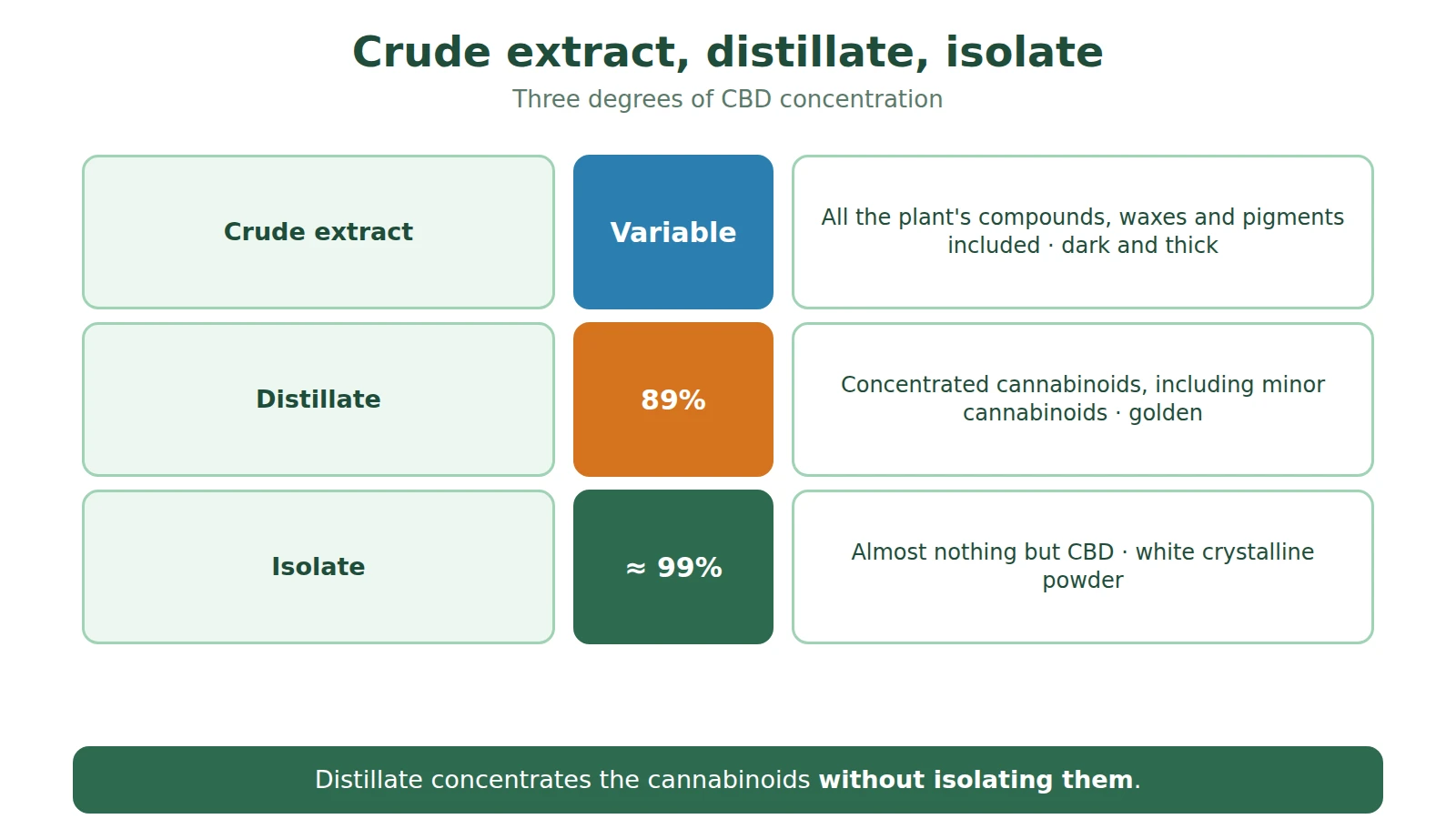
Distillate sits between two other forms of extract. Crude extract keeps all of the plant’s compounds, including waxes and pigments, with a lower CBD content. Isolate, by contrast, contains almost nothing but CBD, as a white crystalline powder. Distillate concentrates the cannabinoids without isolating them: it keeps part of the minor cannabinoids, which gives it its golden colour and its characteristic hemp smell.
A concentrate for vaporisation
A distillate is not smoked like a flower and is not poured into the tank of a standard electronic cigarette. It is vaporised in a device designed for concentrates, which heats it on a surface or in a dedicated chamber, at a temperature high enough to turn it into vapour without burning it. A lower temperature preserves more of the aroma.
The word “dab”, often used for this, simply refers to the small amount of concentrate placed on the hot surface. Devices range from the concentrate pen, which looks like an electronic cigarette but heats a small chamber, to the tabletop device with a glass, quartz or ceramic surface. In every case, the device must be designed for concentrates and used according to its instructions.
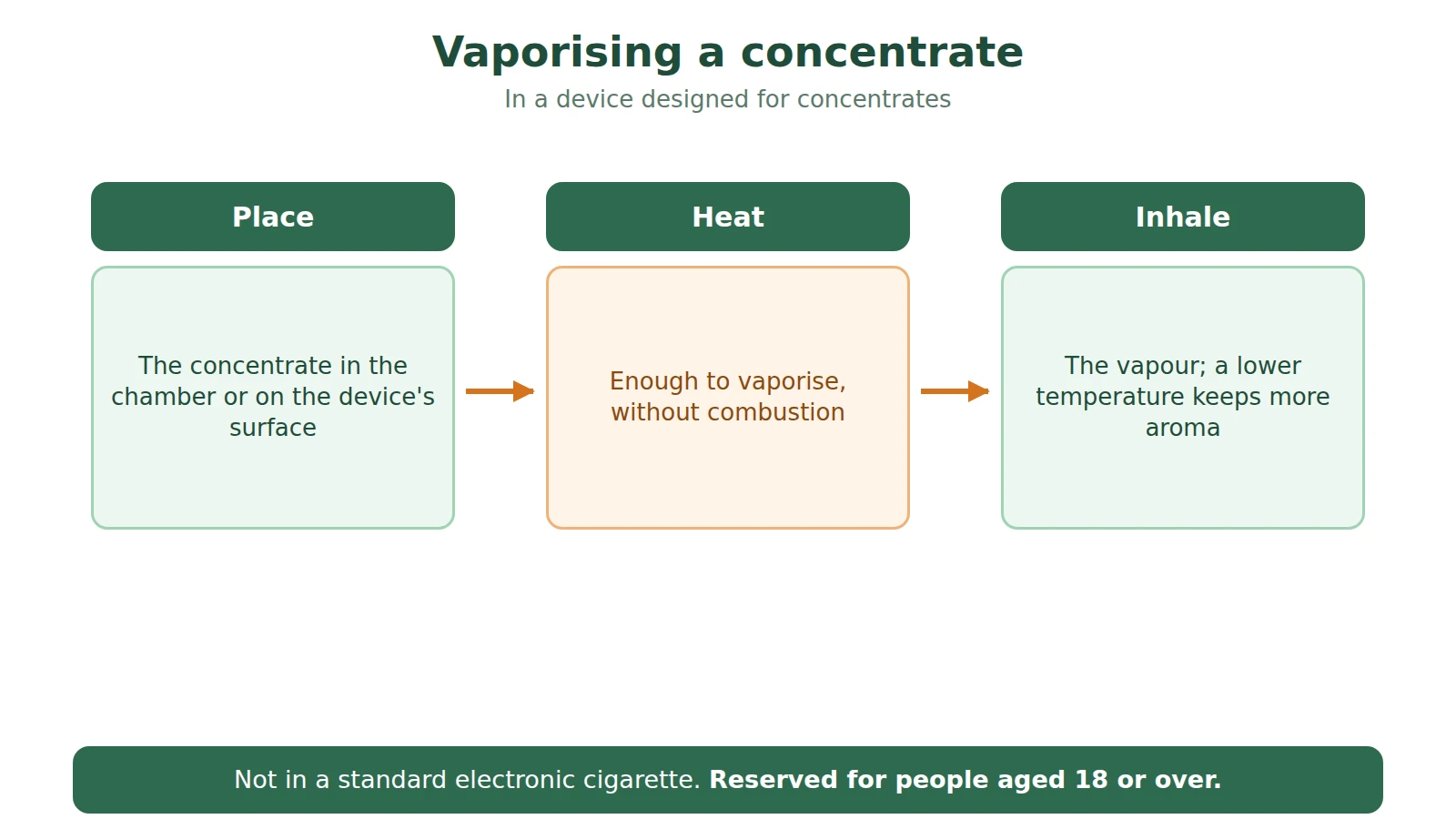
Like our e-liquids and cartridges, it is reserved for people aged 18 or over. Our article on CBD vapes presents the other way of vaping CBD, with a cartridge or an e-liquid, and our guide to using a CBD product places each product within its framework.
Point to watch
A distillate is vaporised in a device designed for concentrates. A standard electronic cigarette is not made for such a thick product: its wick does not absorb it.
Storing a distillate
A distillate is kept in its closed container, away from light and heat. Air and light slowly darken and change concentrates, and heat softens them. A cool, dark place is enough; if it has hardened in the cold, it becomes supple again at room temperature.
To take some out, a clean, dry stainless steel tool avoids introducing moisture or residue. Our article on storing CBD products compares these rules with those for other products.
Our yellow distillate with 89% CBD is presented with our vaping products, alongside the cartridges and e-liquids on our CBD vapes page.
Our laboratory
In our laboratory in Gland, we work hemp extracts from crude extract to finished product, including winterisation at −80 °C and short path distillation under vacuum. Our crude extracts contain less than 1% total THC. Discover the laboratory →
Frequently asked questions
What is the difference between a distillate and CBD crumble?
Crumble refers to a crumbly texture; distillate refers to the production method, distillation. Our yellow distillate used to be sold under the name crumble. Its texture can vary with temperature, but it is the same product with 89% CBD.
How is a CBD distillate vaporised?
In a device designed for concentrates, which heats it on a surface or in a dedicated chamber until it turns into vapour, without combustion. It is not smoked like a flower and not poured into the tank of a standard electronic cigarette.
Does CBD distillate contain THC?
Very little. Like every CBD product sold in Switzerland, it must stay below 1% total THC, and this limit applies to every production step, distillate included.
Do you have to be 18 to buy CBD distillate?
Yes. We present distillate like our e-liquids and cartridges, as a vaping product: it is reserved for people aged 18 or over.
How should CBD distillate be stored?
In its closed container, away from light and heat. Cold makes it firmer, heat softens it; at room temperature it returns to its usual consistency.