Online, CBD oils are still presented as food supplements. In Switzerland, that status does not exist for them: no hemp extract and no cannabinoid has received the authorisation needed to be sold as food. Here is why, and which categories a CBD oil can actually belong to.
On this page
CBD, a “novel food” without authorisation
Swiss food law requires authorisation for novel foods: foods or ingredients that were not eaten to a significant degree before a reference date, so that their safety has not been established through use. Hemp extracts and cannabinoids, including CBD, fall into this category.
The Federal Food Safety and Veterinary Office (FSVO) is clear about the outcome: to date, no product of this kind has been authorised as a novel food. In the European Union, the assessment of the applications filed for CBD is on hold. In Switzerland, as in neighbouring countries, there is therefore no legal way to sell a CBD oil as food.
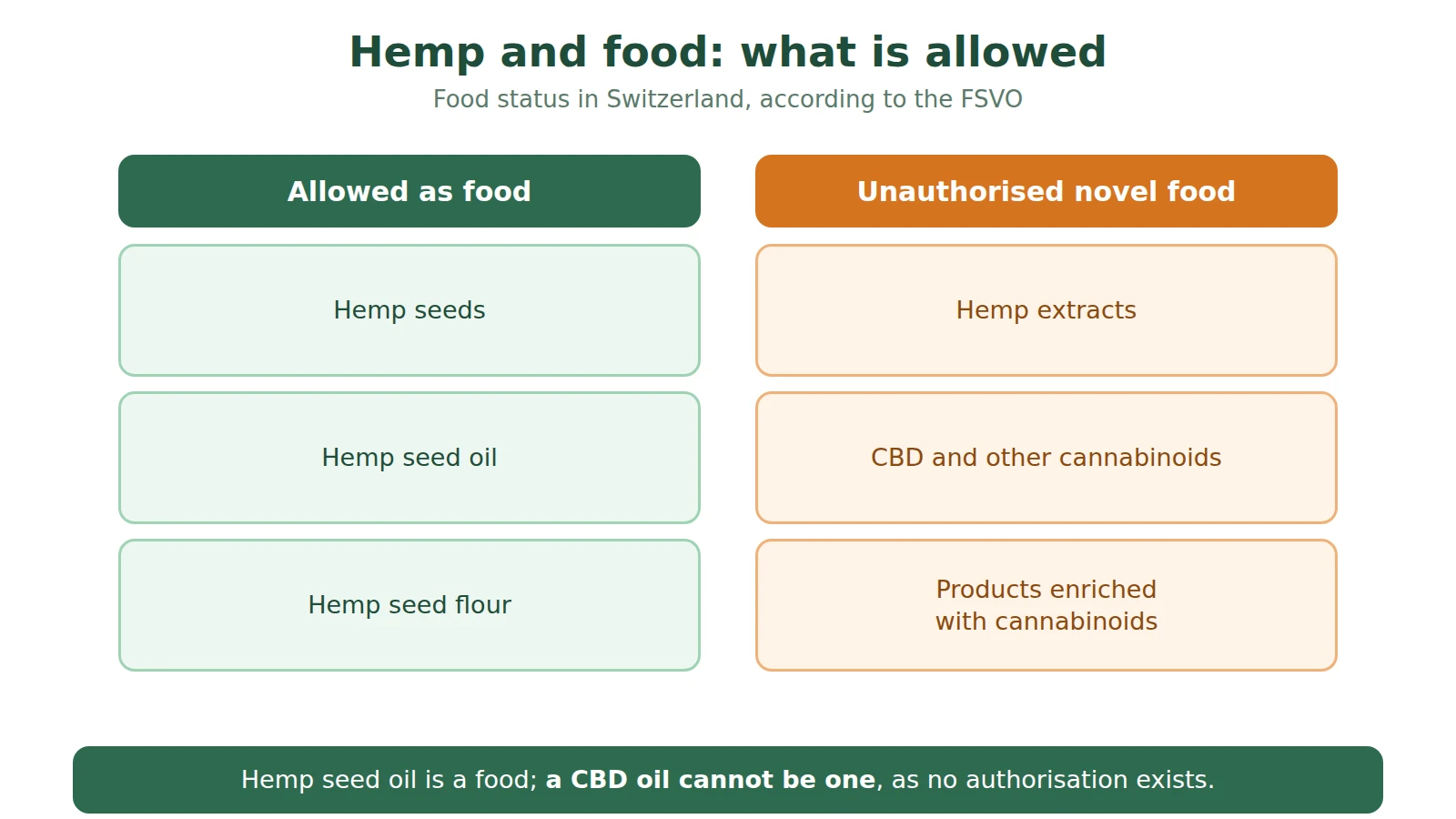
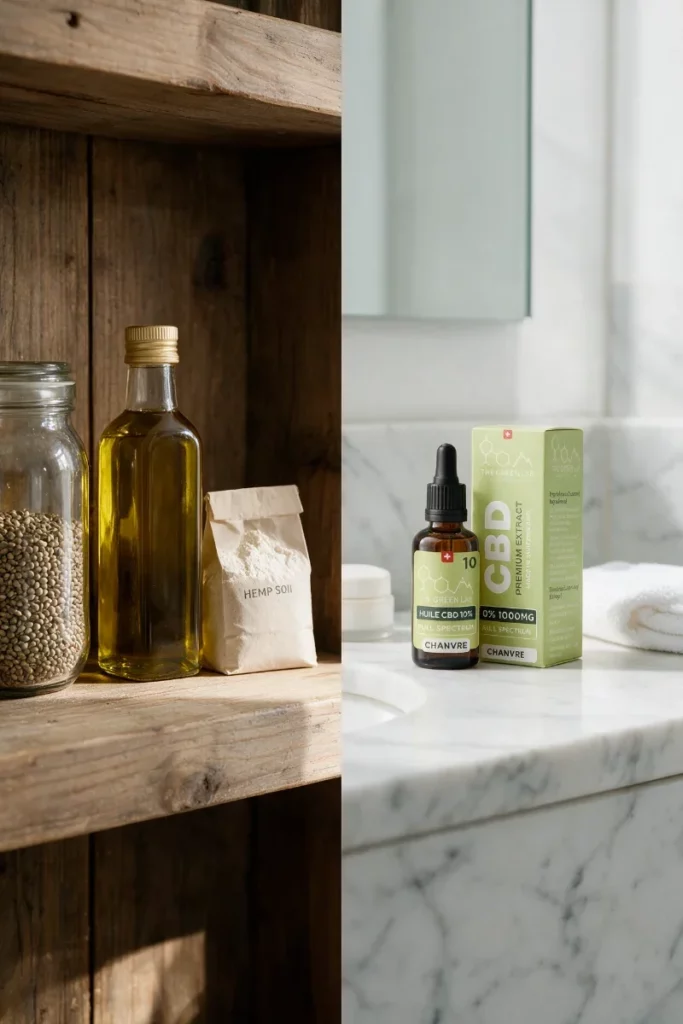
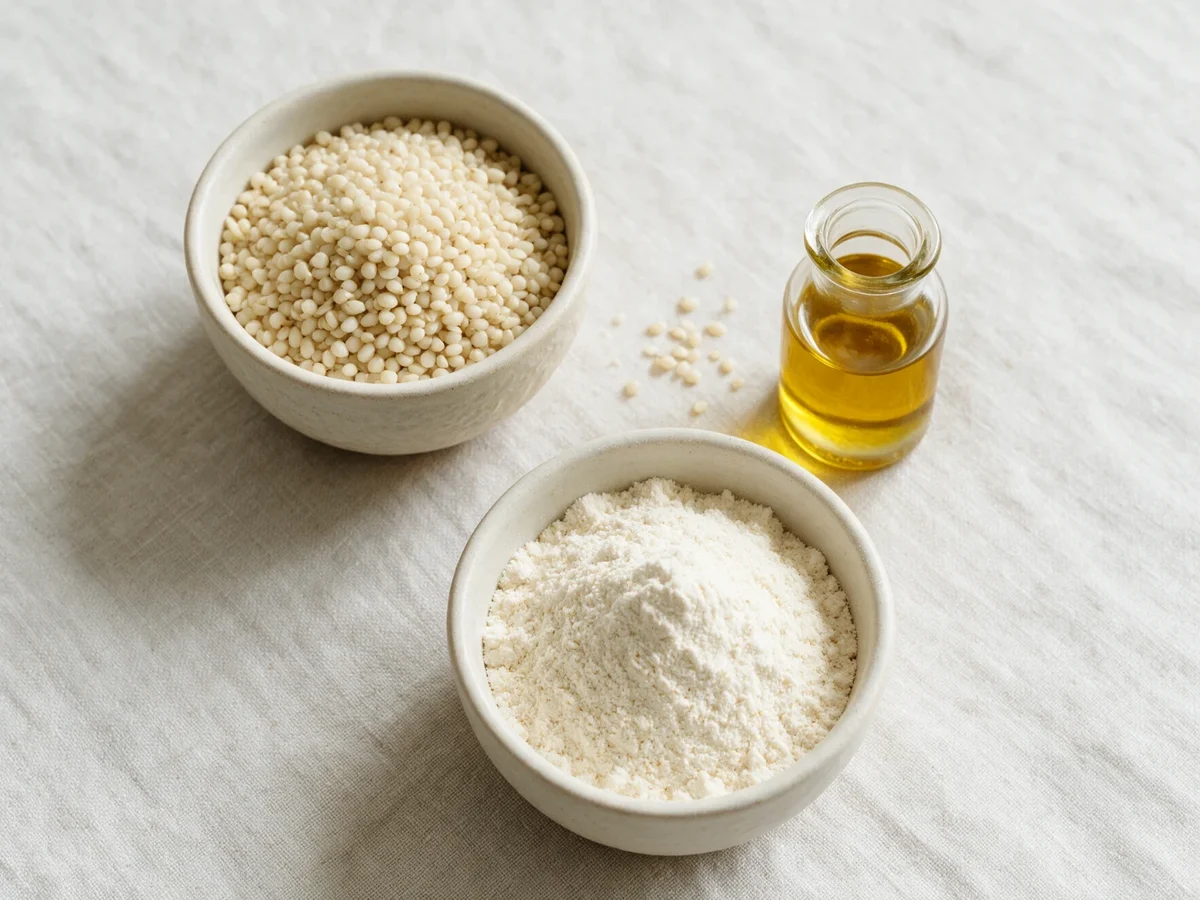
That does not exclude hemp from food. Its seeds, the oil pressed from those seeds and seed flour can be sold as food without any particular authorisation. The difference lies in what is sold: a food made from the seed on one side, an extract concentrated in cannabinoids on the other.
CBD “supplements” sold anyway
A CBD oil labelled as a food supplement is therefore not an authorised product in Switzerland, whichever website sells it. A food supplement is a category of food, and it cannot contain an unauthorised novel food ingredient.
Cantonal chemists, who are responsible for food control, regularly examine these products and order sales bans and recalls when they find them non-compliant. For buyers, the words “food supplement” on a CBD oil are therefore less a guarantee than a warning sign.
Cosmetic status: what it allows and what it requires
Most CBD oils sold legally in Switzerland, ours included, are declared as cosmetic products. This status is not a shortcut: it commits the manufacturer on several points, summed up below.
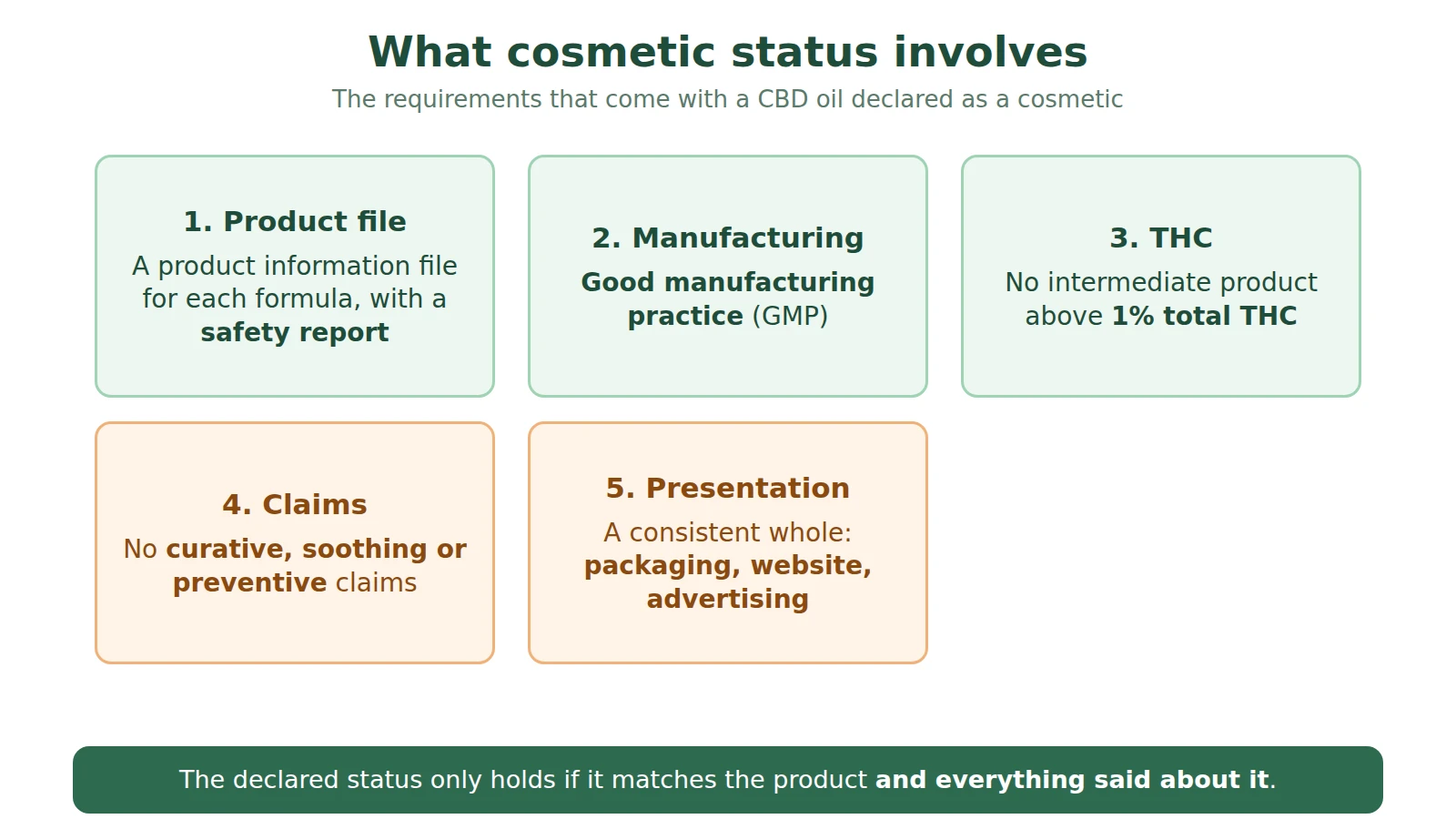
Each formula has a product information file containing a safety report. Manufacturing follows good manufacturing practice, and no intermediate product may exceed 1% total THC at any stage. Above all, a cosmetic may not claim any curative, soothing or preventive effect. The FSVO also states that it advises against using oils containing CBD for oral hygiene.
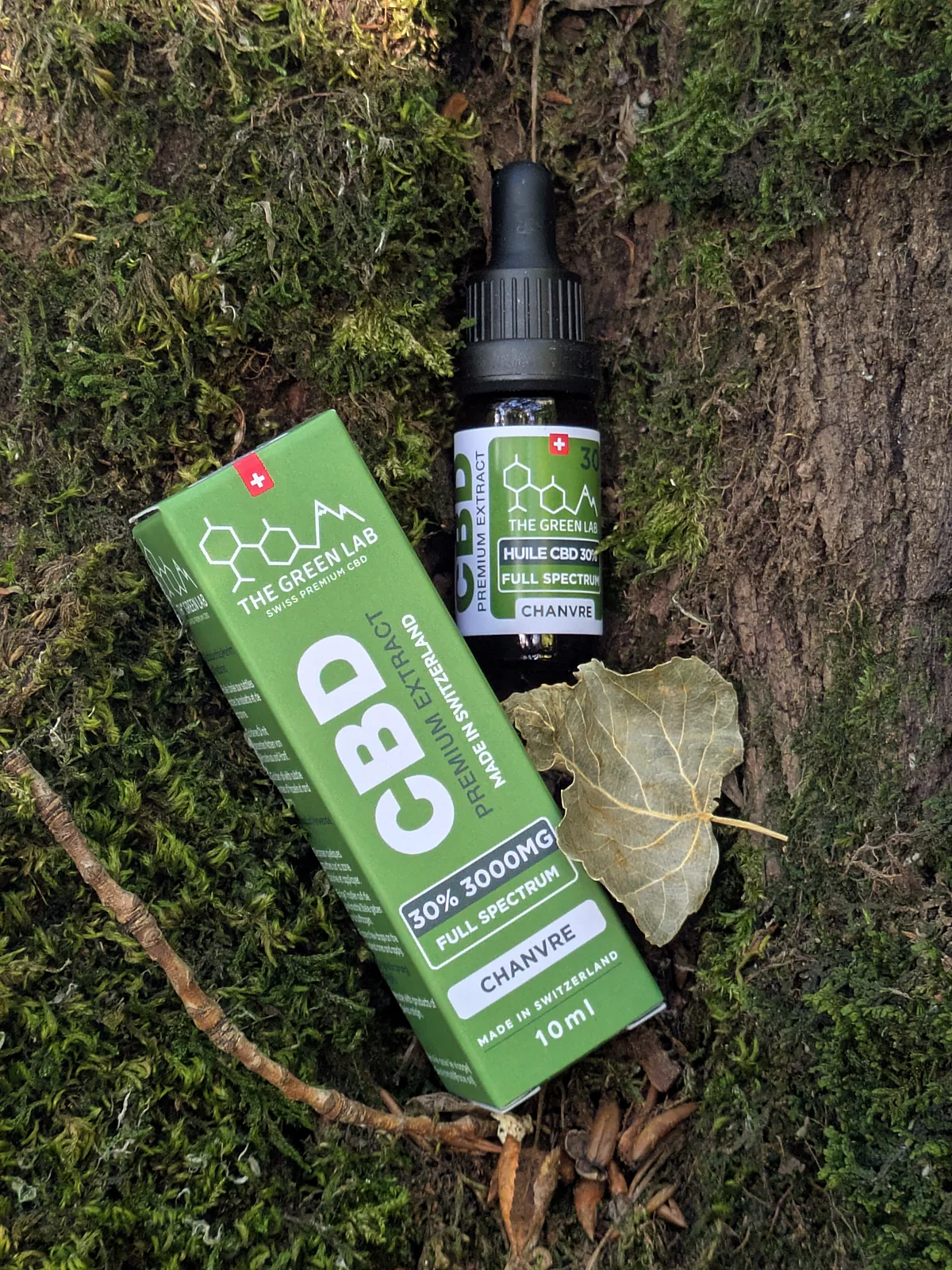
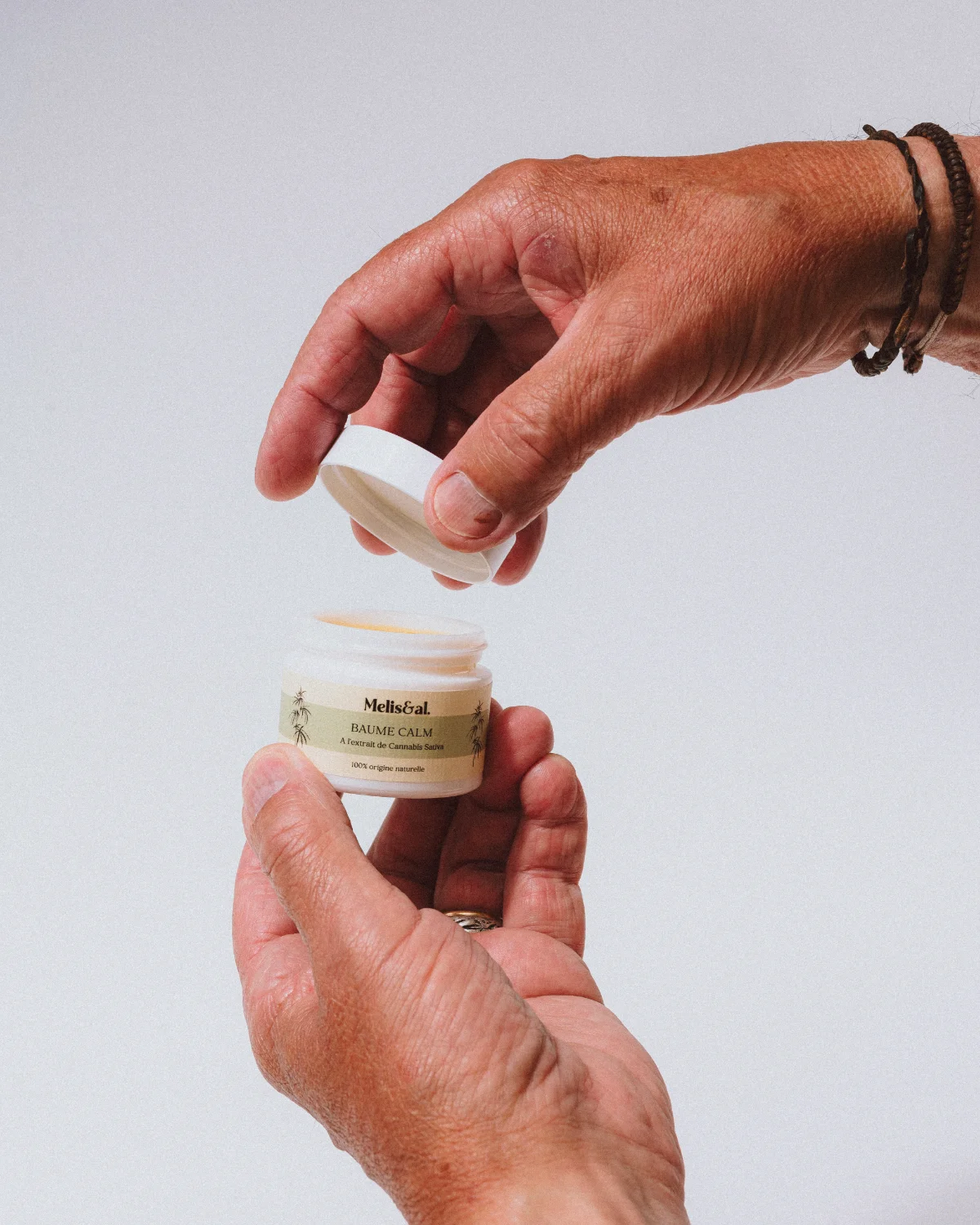
The authorities do not stop at the label. Cantonal chemists have already reclassified oils sold as cosmetics as foods after examining the product’s overall presentation, and a cantonal court upheld their decision. The declared status only holds if it matches the product and everything said about it, on the packaging and online.
“Aromatic” oils: a dead end
Some CBD oils have been sold as “aromatic” or “scented” oils, in other words as chemical products. That route has been closed: since 29 March 2022, a general ruling by the notification authority for chemicals requires these oils to be denatured.
A denatured oil is made unfit for any use on the body. A CBD oil presented as aromatic is therefore neither a food nor a cosmetic, and cannot be used as either.
What about medicines?
A CBD product intended for medical use is a medicine. It must be authorised by Swissmedic, the Swiss agency for therapeutic products, after an assessment of its quality, safety and efficacy. The federal authorities’ enforcement guide cites a single CBD medicine authorised in Switzerland, Epidyolex, since 10 February 2021, available on prescription.
No CBD oil sold in shops or online has this status. That is one of the reasons why a CBD cosmetic cannot make any health-related promise: it would otherwise stray into medicinal territory without the authorisation to do so.
How to recognise the status of a CBD oil
An oil’s status can be read from its overall presentation: the label, the packaging, the leaflet and everything the seller says about it. A cosmetic oil presents itself as such and promises no effect. The words “food supplement”, a promise of wellbeing or relief, or an “aromatic” oil sold for use on the body all point to a product that does not respect its framework.
Point to watch
A CBD oil sold as a food supplement, or as an aromatic oil for use on the body, does not comply with Swiss law. Cosmetic status, for its part, only protects a product if the packaging, website and advertising stay consistent with it.
The 1% total THC threshold does not settle this question: it separates legal hemp from narcotics, nothing more. We explain it in our article on the 1% THC threshold, and our guide to Swiss CBD law presents the other regimes, product by product.
A CBD oil therefore cannot be a food supplement in Switzerland: CBD is a novel food, and none has been authorised. Three possible statuses remain, with very different requirements: cosmetic, which rules out any health promise; medicine, which needs Swissmedic authorisation; and chemical product, which requires denaturing. Intended use and overall presentation decide, and the authority has the final say.
Our laboratory
Our oils are declared as cosmetics. Each formula has its product information file, and manufacturing follows good manufacturing practice, in Gland, from crude extracts containing less than 1% total THC. Their cannabinoid levels are checked regularly by an external laboratory. We describe each step in our article on how CBD oil is made, and our laboratory has its own page.
Further reading: flowers, hash and vapes under the Tobacco Products Act, the history of CBD in Switzerland and our guide to choosing a CBD oil.
Also in our shop: all our CBD oils.
Frequently asked questions
Can you buy a CBD oil as a food supplement in Switzerland?
No. Hemp extracts and cannabinoids are novel foods, and the FSVO states that none has been authorised to date. A CBD oil therefore cannot be sold legally as a food supplement in Switzerland.
Why is hemp seed oil a food, but not CBD oil?
Hemp seeds, their oil and their flour can be sold as food without authorisation. A CBD oil contains a hemp extract concentrated in cannabinoids, which is a novel food and is not authorised.
What is an “aromatic” CBD oil?
It is an oil sold as a chemical product, for scenting or flavouring. Since 29 March 2022, these oils must be denatured, which makes them unfit for any use on the body.
Can a cosmetic CBD oil promise an effect?
No. A cosmetic may not claim any curative, soothing or preventive effect, on the packaging, online or in advertising. The authorities judge the product’s overall presentation.
Is there a CBD medicine in Switzerland?
Yes. The federal authorities’ enforcement guide cites Epidyolex, authorised by Swissmedic on 10 February 2021 and available on prescription. Oils sold in shops or online do not have this status.