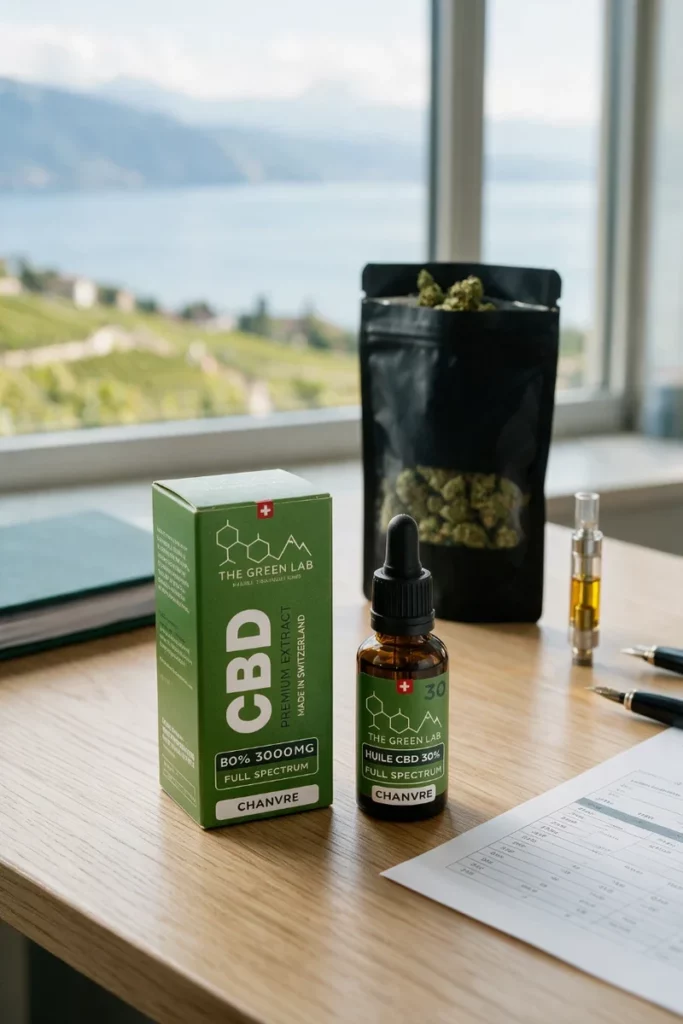
CBD is legal in Switzerland as long as the product contains less than 1% total THC: below that threshold, hemp falls outside the Narcotics Act. That figure does not settle everything, though. An oil, a balm, a flower or an e-liquid each fall under a different law, determined by the product’s intended use. Here is how the framework is organised, product by product.
On this page
The 1% total THC threshold
The dividing line comes from narcotics law. Hemp with a total THC content of 1% or more is a narcotic: growing, processing or selling it is banned outside authorised medical use. Below that level, the Federal Office of Public Health (FOPH) puts it plainly: such hemp does not fall under the Narcotics Act. CBD is not a narcotic.
The word “total” matters. In the plant, THC is largely present in its acidic form, THCA, which turns into THC when heated. Both are therefore counted together to assess a product, which reflects what it would contain once heated. For a manufacturer, this means monitoring the total THC of its materials, not only the THC already present.
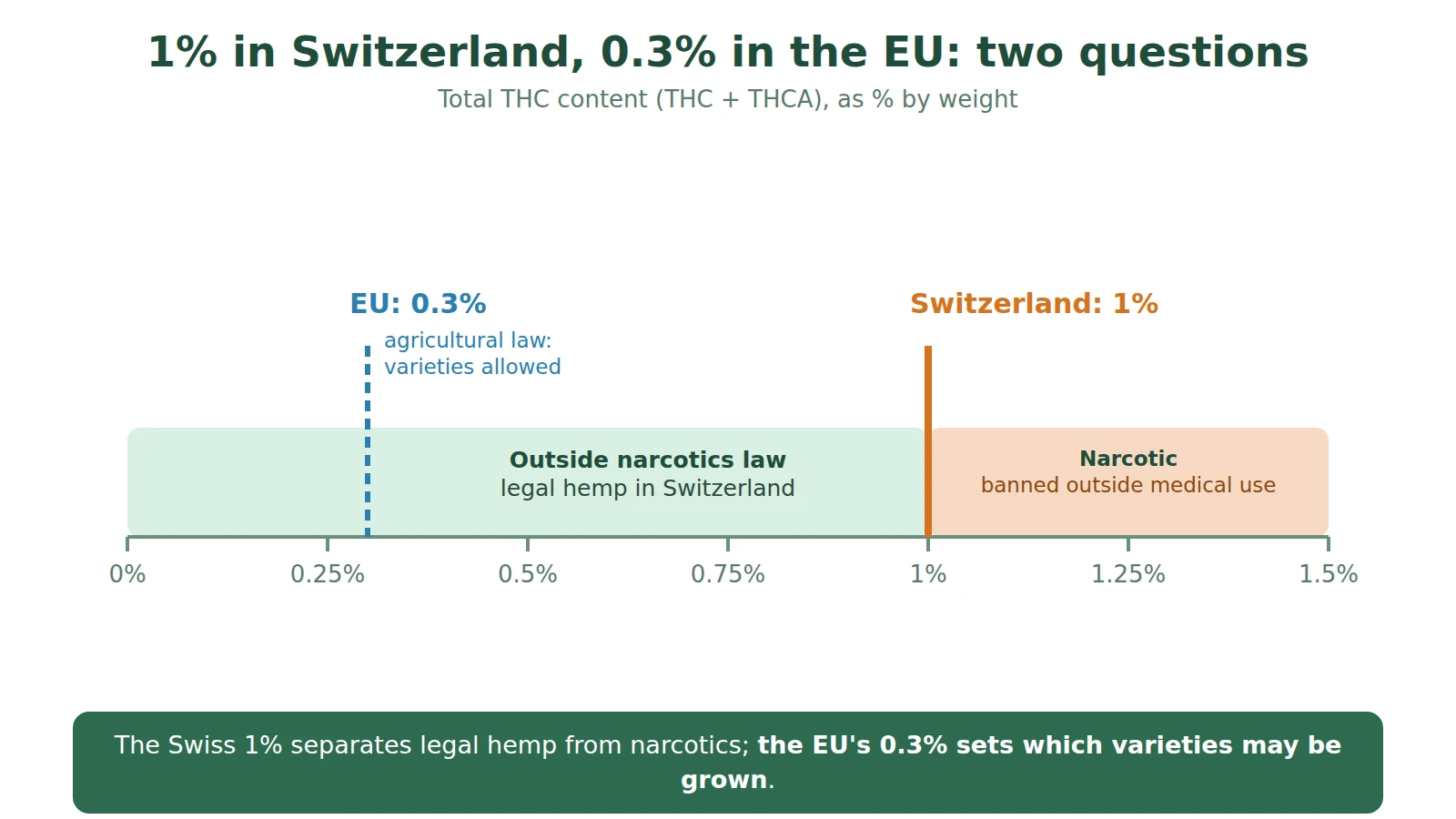
The same threshold applies in the field. The Federal Office for Agriculture states that hemp containing less than 1% THC is not controlled as cannabis; Swiss growers use seed of varieties certified in the European Union, since hemp has no longer been listed in the Swiss variety catalogue since 2021.
The Swiss threshold is not the European Union’s. The 0.3% often quoted by our neighbours comes from EU agricultural law, where it determines which hemp varieties may be grown. The two figures answer different questions and cannot be compared like for like. A product that complies in Switzerland does not necessarily comply elsewhere, a point we come back to below.
Intended use decides which law applies
Being below 1% total THC is not enough to make a product saleable. Swissmedic, the FOPH, the Federal Food Safety and Veterinary Office (FSVO), cantonal pharmacists and cantonal chemists have jointly published an enforcement guide on CBD products. Its principle fits in one sentence: the intended use and overall presentation of the product determine the applicable law, and the enforcement authority has the final say.
The same extract can therefore end up in very different categories, with requirements that have nothing in common.
| Intended use | Legal category | What it involves |
|---|---|---|
| Applied to the skin | Cosmetic | No curative, soothing or preventive claims; safety report; good manufacturing practice |
| Food or supplement | Food (novel food) | Prior authorisation required; none granted to date for a hemp extract |
| Medical use | Therapeutic Products Act | Swissmedic approval |
| Smoking or vaping | Tobacco product (TobPA) | Notification to the FOPH, sale from 18, warnings |
| Scent or room aroma | Chemical product | Denaturing required since 2022 |
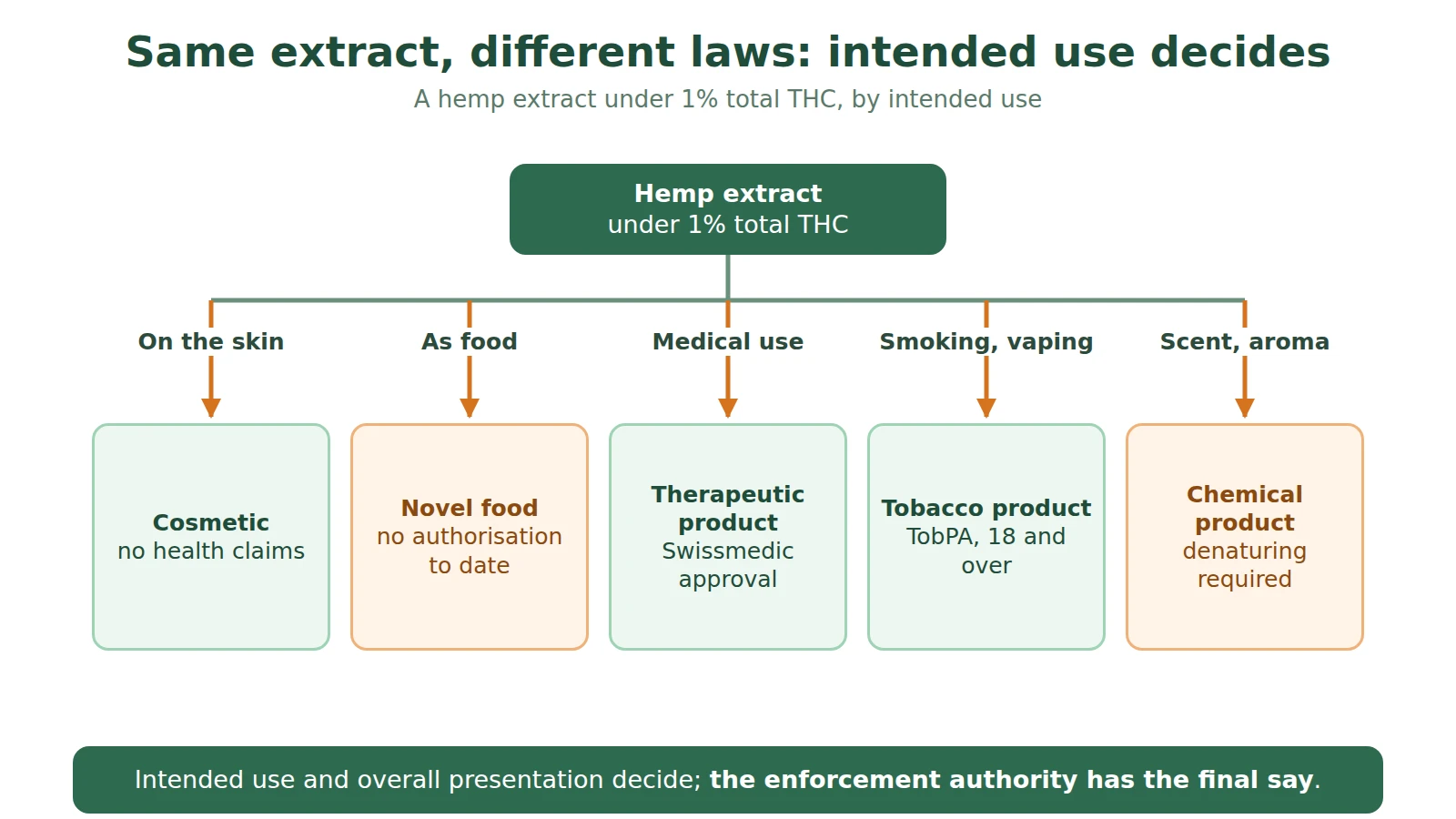
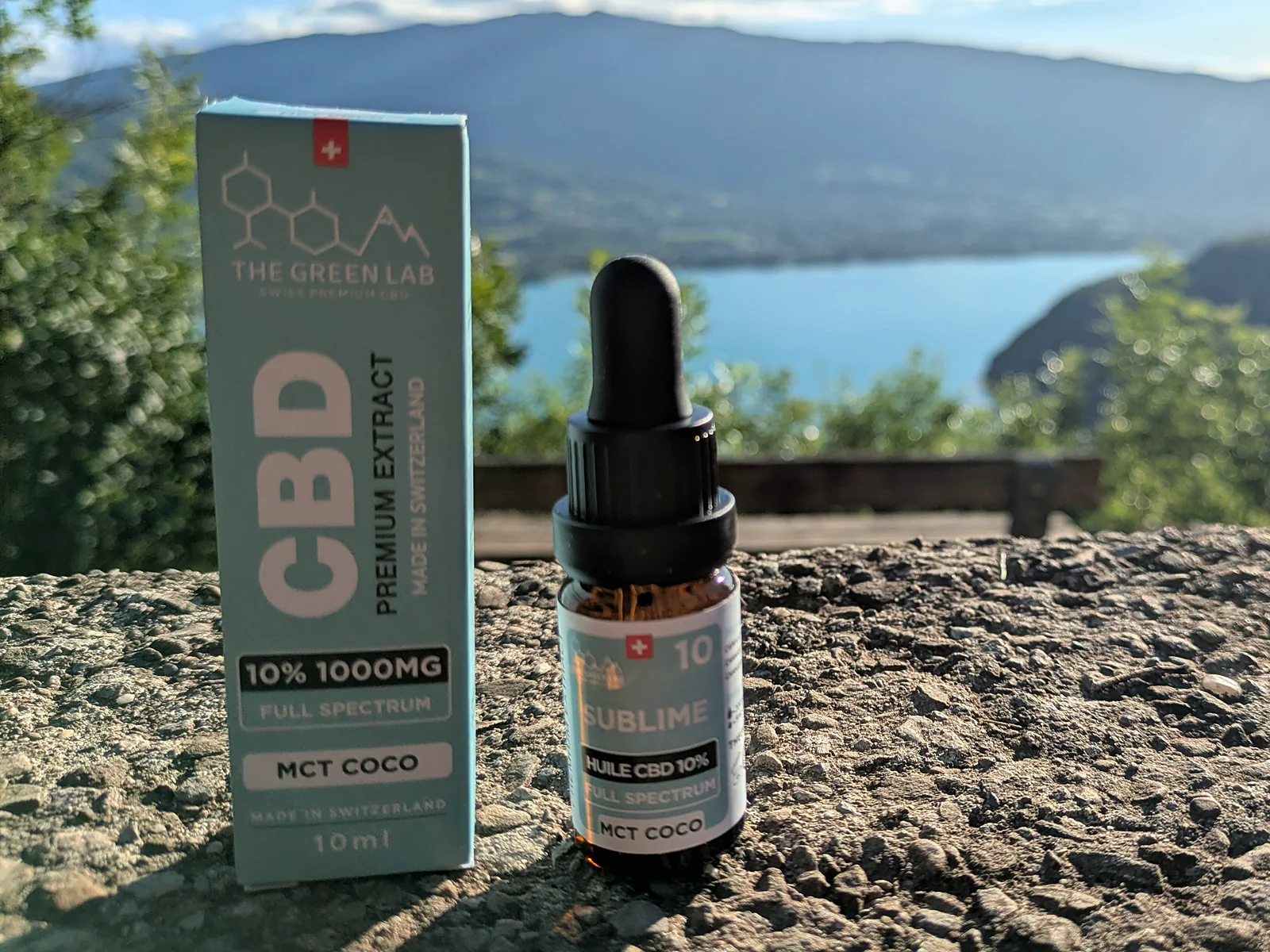
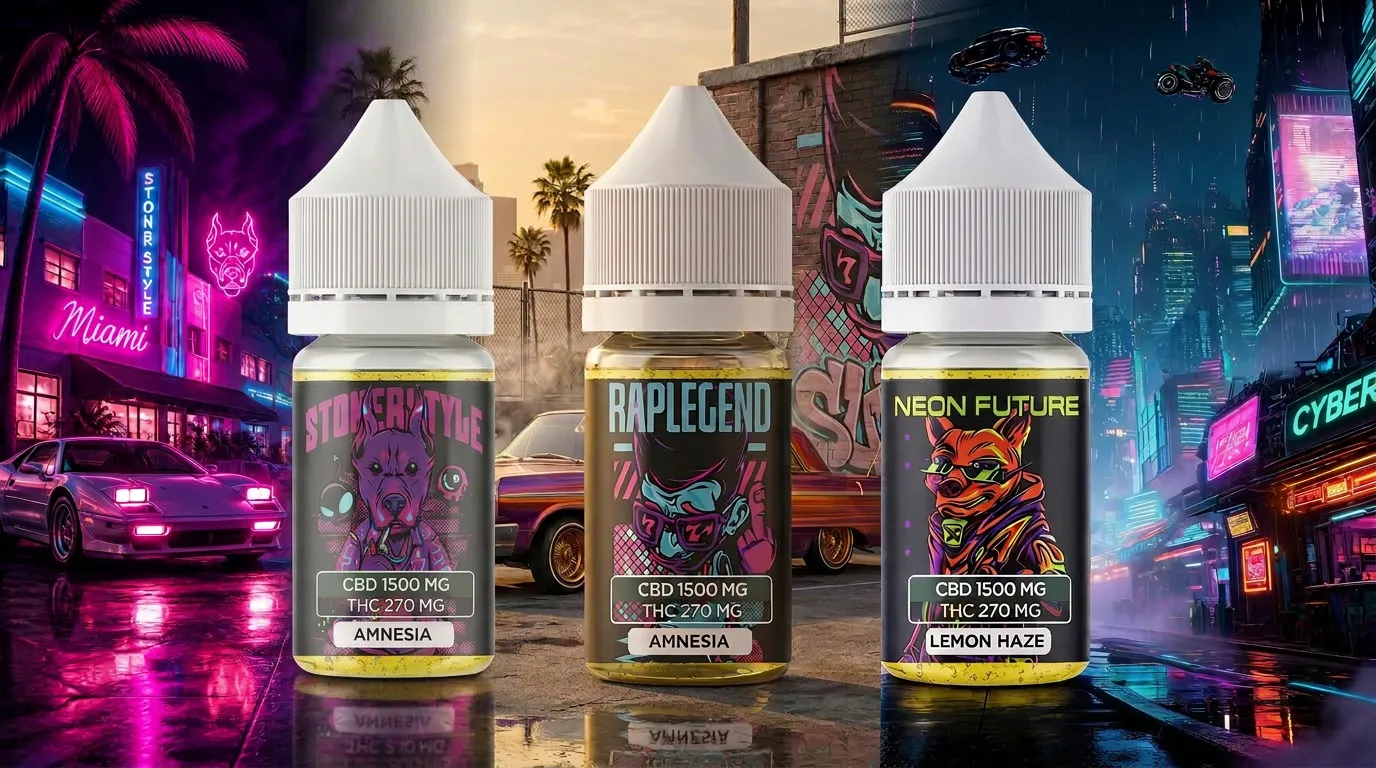
For buyers, two consequences follow from this table. In Switzerland, no CBD oil may be sold as a food or a supplement: hemp extracts and cannabinoids are novel foods, and no authorisation has been granted to date. Only hemp seeds, hemp seed oil and hemp seed flour are exempt. Secondly, CBD oils presented as “aromatic” or “scented” fall under chemicals law: since March 2022 they must be denatured, which makes them unfit for any use on the body.
Oils and balms: what cosmetic status requires
Our oils are declared as cosmetic products, as are the balms. This status places obligations on the manufacturer. Each formula has a product information file (PIF) containing a safety report: this is where the manufacturer shows that the product is safe under its intended conditions of use. Manufacturing follows good manufacturing practice (GMP).
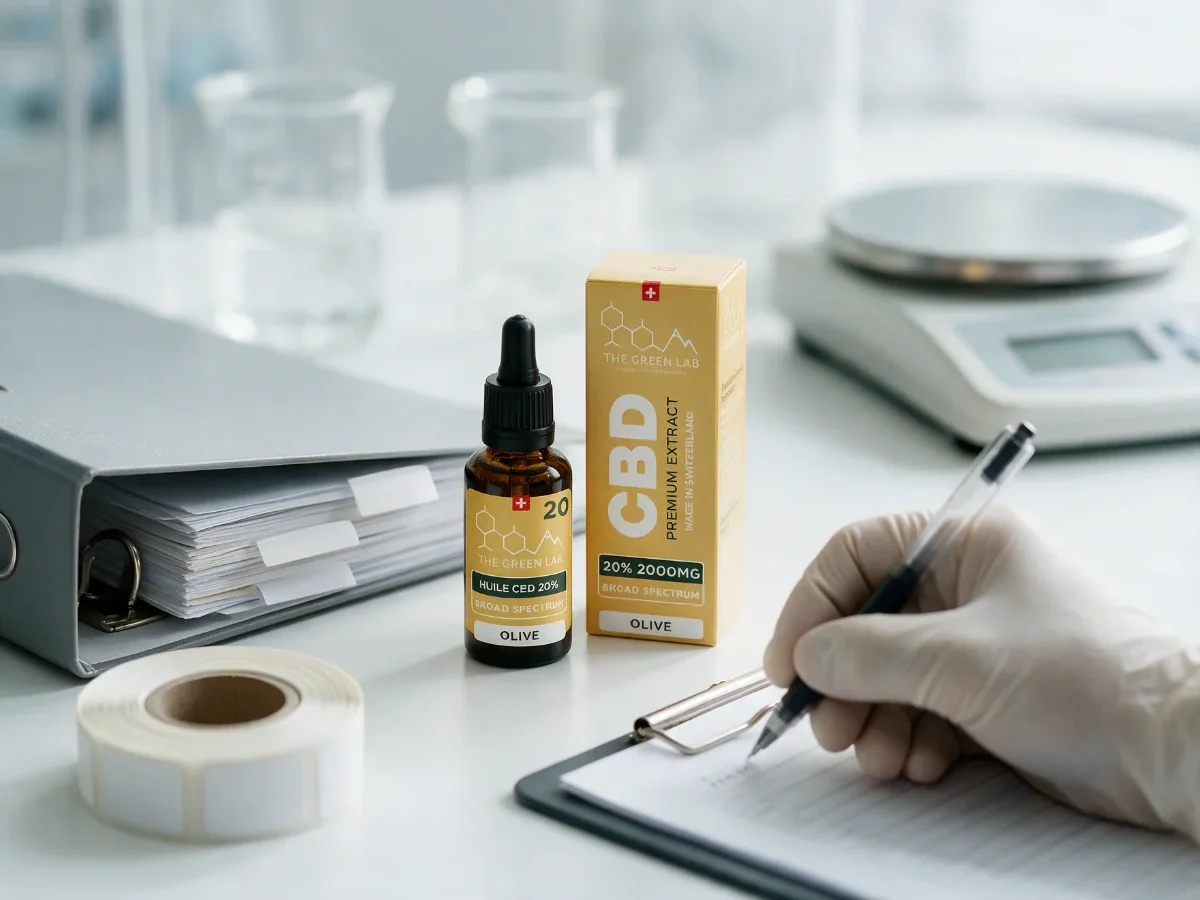
The most visible rule concerns what may be said. A cosmetic may not claim any curative, soothing or preventive effect, whether on the packaging, on a website or in advertising. That is why you will find no health-related promise from us.
The authorities do not stop at the label. Cantonal chemists have already reclassified oils sold as cosmetics as foods, after examining the product’s overall presentation, and a cantonal court upheld their decision. A declared status only holds if it matches the product and everything that is said about it.
Finally, one requirement concerns manufacturing itself: no intermediate product may exceed 1% total THC at any stage. The starting extract, the distillate and the final blend must all stay below that threshold. We describe these steps in our article on how CBD oil is made, and our CBD oil guide explains how to choose a concentration and a spectrum.
Flowers, hash and e-liquids: the Tobacco Products Act
Since 1 October 2024, the Federal Act on Tobacco Products (TobPA) also covers herbal smoking products, including hemp flowers and hash below 1% total THC, as well as electronic cigarettes, with or without nicotine. A CBD e-liquid or cartridge therefore falls within its scope. The federal enforcement guide states that adding CBD to these liquids is permitted in principle.
These products follow common rules. They may only be supplied to people aged 18 or over, in shops and online alike, where a simple tick box is not enough. Each one is notified to the FOPH within a year of being placed on the market. The packaging carries official warnings, including a statement on the ability to drive for smoking products containing hemp. Any presentation that would mislead about health effects is prohibited. Advertising is regulated too: it may not target minors, and a revision of the act adopted in 2025 is set to restrict it further from 2027.

A common belief holds that CBD flowers are subject to tobacco tax. That is wrong: the regulation of the Federal Office for Customs and Border Security excludes smokable legal cannabis flowers and products that contain no tobacco, and in 2020 the Federal Supreme Court ruled that there was no legal basis for taxing them. Blends with tobacco are taxed, as are disposable electronic cigarettes, with or without nicotine.
The cantons add their own rules. In the canton of Vaud, selling smokable hemp or electronic cigarettes requires a tobacco retail licence. Geneva and Valais ban the sale of disposable electronic cigarettes. Our CBD flowers and our CBD vapes are reserved for adults.
Travel, import, driving
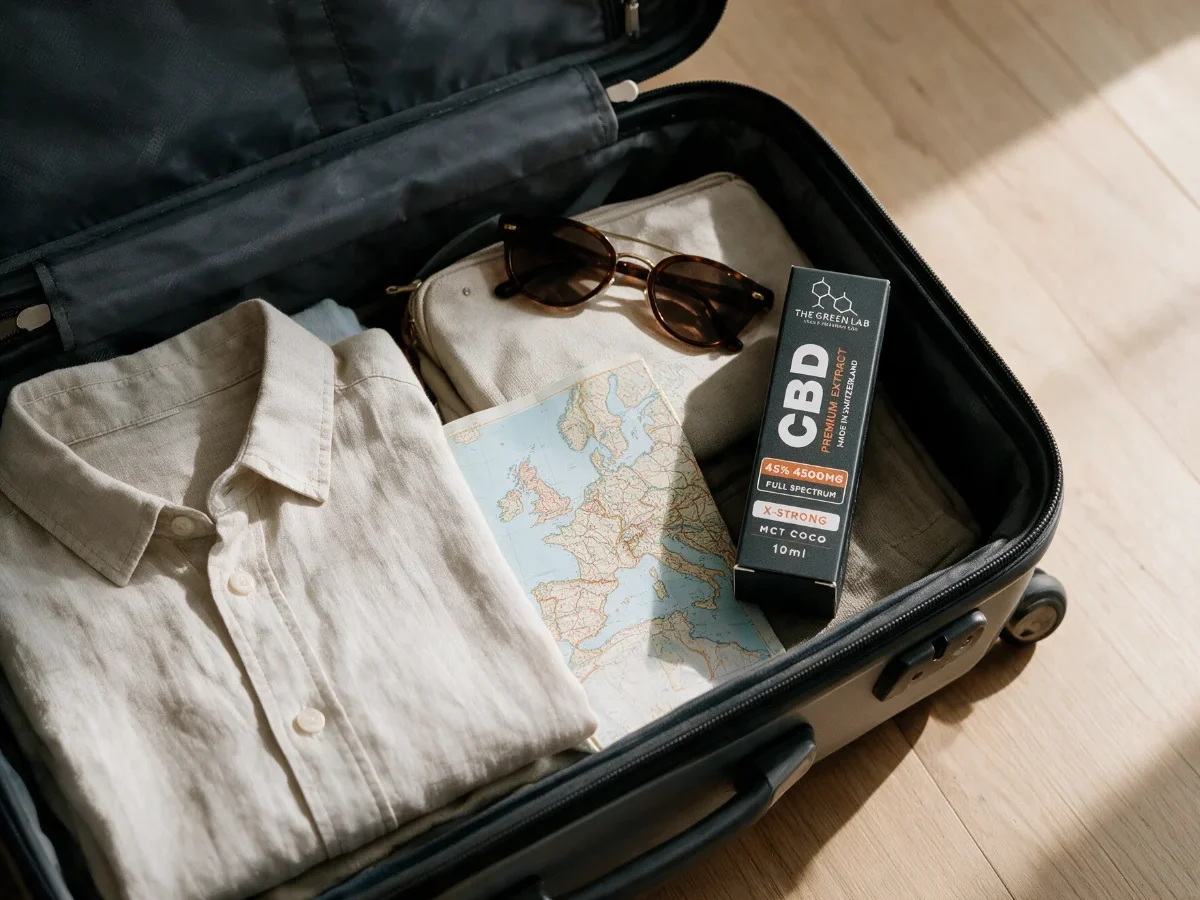
The 1% threshold only applies in Switzerland. THC limits vary from country to country, and the FOPH points out that people who take CBD products abroad expose themselves to criminal prosecution. Before travelling, the only reliable reference is the law of the destination country, and of any country you pass through.
For imports, no Swissmedic document is required for hemp below 1%. Compliance is proven by a batch-specific certificate of analysis covering the goods actually delivered, issued by a laboratory accredited to ISO/IEC 17025 or recognised for good manufacturing practice.
Behind the wheel, the limit concerns not CBD but THC measured in the blood: 1.5 micrograms per litre. A product below 1% total THC still contains a little, hence the driving warning required on hemp-based smoking products.
Point to watch
Legal in Switzerland does not mean legal elsewhere. A bottle or a pouch that complies here may be treated as a narcotic across the border, where the THC threshold, and sometimes the status of CBD itself, differ. Check the law of your destination country before you leave.
What the draft cannabis products act provides
Parliament is preparing a law to regulate psychoactive cannabis (parliamentary initiative 20.473). The National Council’s health committee adopted a preliminary draft in February 2025, which was put out to consultation until December 2025. The report on the results, published in May 2026, shows that a majority of cantons reject the text in its current form; the committee is continuing its work and revising it. No date of entry into force has been set.
For CBD, the key point is in the explanatory report: the draft does not concern products with a THC content below 1%, such as CBD-based products. The 1% threshold is kept. If the law is passed, it will regulate high-THC cannabis without changing the rules described here.
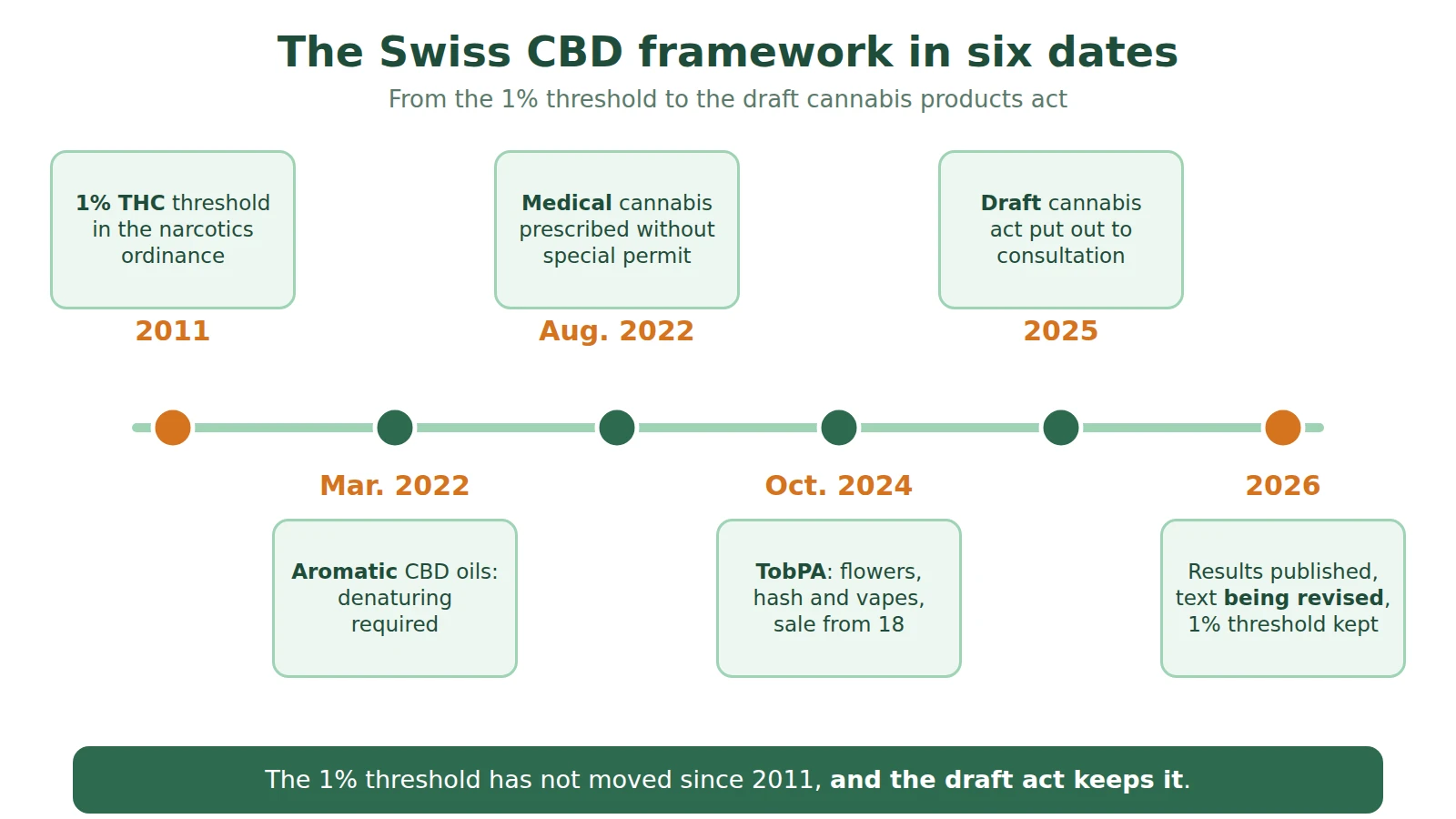
Since August 2022, medical cannabis can also be prescribed without an exceptional authorisation. That change does not concern freely sold CBD products either.
The detailed topics
Each point in this guide is covered in a more detailed article.
The 1% total THC threshold: what the limit actually measures, why “total” and “average” matter, and why dilution is not enough. Read the full article →
CBD oil and food supplements: why no CBD oil can be sold as food, and what cosmetic status requires. Read the full article →
Flowers, hash and vapes: age, notification, warnings, tobacco tax and disposable vapes: what the Tobacco Products Act requires. Read the full article →
Travelling and driving: why the threshold stops at the border, and what the road rule on THC measures. Read the full article →
The cannabis bill: what it plans, where it stands, and why it leaves CBD products aside. Read the full article →
The history of CBD in Switzerland: from the 2011 threshold to the bill, the steps that shaped the market. Read the full article →
At heart, the whole Swiss framework rests on a measurement of composition. A product is legal because its total THC stays below 1%, and the way it may be sold then depends on its use. For an oil, it is the balance between its cannabinoids, plenty of CBD, some CBG or CBC depending on the spectrum, and THC kept low at every stage, that sets both its character and its place in the law.
Our laboratory
In Gland, we start from crude extracts containing less than 1% total THC and carry out every step through to the bottle, following good manufacturing practice, with a product information file for each formula. The cannabinoid levels of our oils are checked regularly by an external laboratory. Discover the laboratory →
Further reading: the difference between Full Spectrum, Broad Spectrum and isolate.
Also in our shop: all our CBD oils.
Frequently asked questions
Is CBD legal in Switzerland?
Yes, as long as the product contains less than 1% total THC, with THC and THCA counted together. Below that threshold, hemp falls outside the Narcotics Act. The product must then comply with the law that matches its use: cosmetics, tobacco products or chemicals, for example. Intended use and presentation are what decide the category.
Can CBD oil be bought as a food supplement in Switzerland?
No. Hemp extracts and cannabinoids are novel foods, which require prior authorisation, and none has been granted to date. Only hemp seeds, hemp seed oil and hemp seed flour may be sold as food. CBD oils sold legally in Switzerland are sold under another status, most often as cosmetics.
Do you have to be 18 to buy CBD for smoking or vaping?
Yes. Since 1 October 2024, the Tobacco Products Act sets the minimum age at 18 for all the products it covers, including hemp flowers and hash and CBD electronic cigarettes. The rule applies in shops and online alike, where confirming your age with a single click is not enough.
Are CBD flowers subject to tobacco tax?
Not if they contain no tobacco. The regulation of the Federal Office for Customs and Border Security excludes smokable legal cannabis flowers and products without tobacco, and the Federal Supreme Court ruled in 2020 that there was no legal basis for taxing them. Blends with tobacco, on the other hand, are taxed.
Can I travel abroad with Swiss CBD?
It is risky. The 1% total THC threshold only applies in Switzerland, and limits vary from country to country. The FOPH warns that you may face criminal prosecution abroad. Before leaving, check the law of your destination and of the countries you cross: a product that complies here may be treated as a narcotic there.
What does the draft cannabis law change for CBD?
Nothing, as the text currently stands. The draft cannabis products act targets psychoactive cannabis, and its explanatory report excludes products containing less than 1% THC, such as CBD products. The threshold is kept. The text is being revised in Parliament and no date of entry into force has been set.
Why is the threshold 1% in Switzerland and 0.3% in the European Union?
The two figures answer different questions. The Swiss 1% total THC threshold separates legal hemp from narcotics. The European 0.3% comes from agricultural law and sets which hemp varieties may be grown. They therefore cannot be compared directly, and a Swiss product cannot be assumed to comply in an EU country.