On 24 September 2026, the 2nd Hemp Conference organised by Agridea and IG Hanf brought farmers, processors, researchers and traders together in Zollikofen (BE). Their conclusion: Switzerland knows how to grow industrial hemp and has the expertise to process it, yet a large share of the value is still created abroad. Shrinking acreage, fibre, construction, seeds and new THC limits: here are the key points.
On this page
A conference dedicated to industrial hemp
The conference took place at Inforama Rütti, the Bernese centre for agricultural training and advice. It was organised by Agridea, the Swiss agricultural advisory centre, together with IG Hanf Schweiz (CI Chanvre in French), the sector’s association.
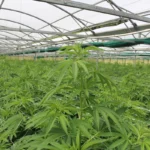
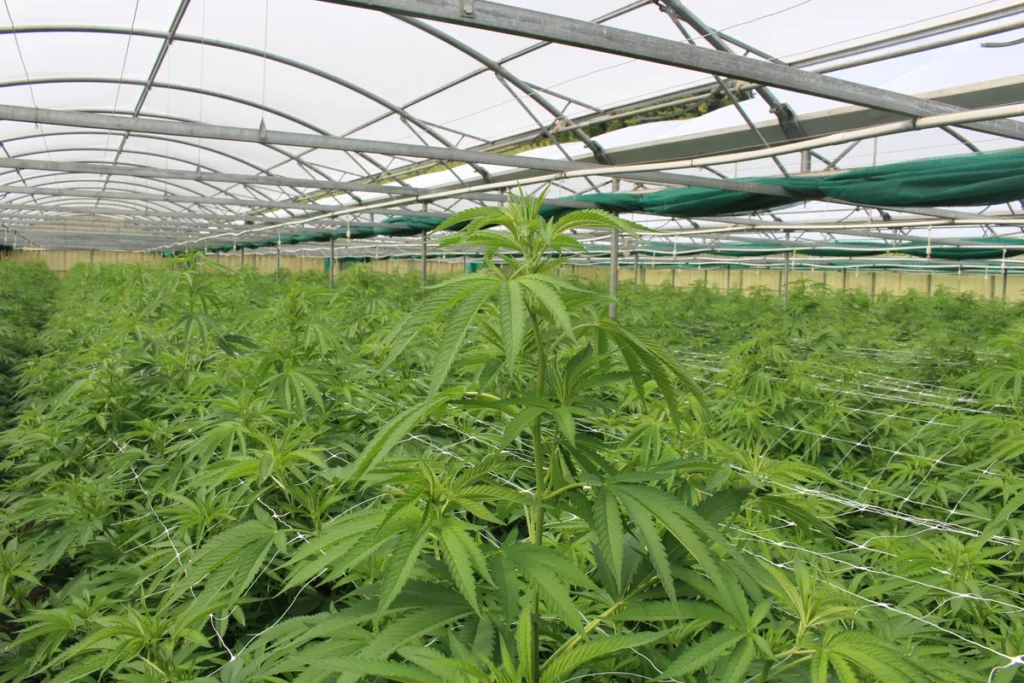
The topic was hemp grown for its seeds, fibre and stalk, known as industrial hemp. Flowers, the source of CBD products, were not on the agenda. Both are the same species, Cannabis sativa, and must stay below 1% total THC to be grown freely in Switzerland, a benchmark explained in our article on the 1% THC threshold.
IG Hanf published a review of the day in its newsletter. Its main message: hemp is versatile and the know-how exists in Switzerland, but processing, which creates the most value, mostly happens elsewhere.
Acreage down by almost five times
According to Federal Statistical Office figures quoted by IG Hanf, the area under classic industrial hemp peaked at around 290 hectares in 2019 and 2020. It fell back to around 60 hectares in 2025.
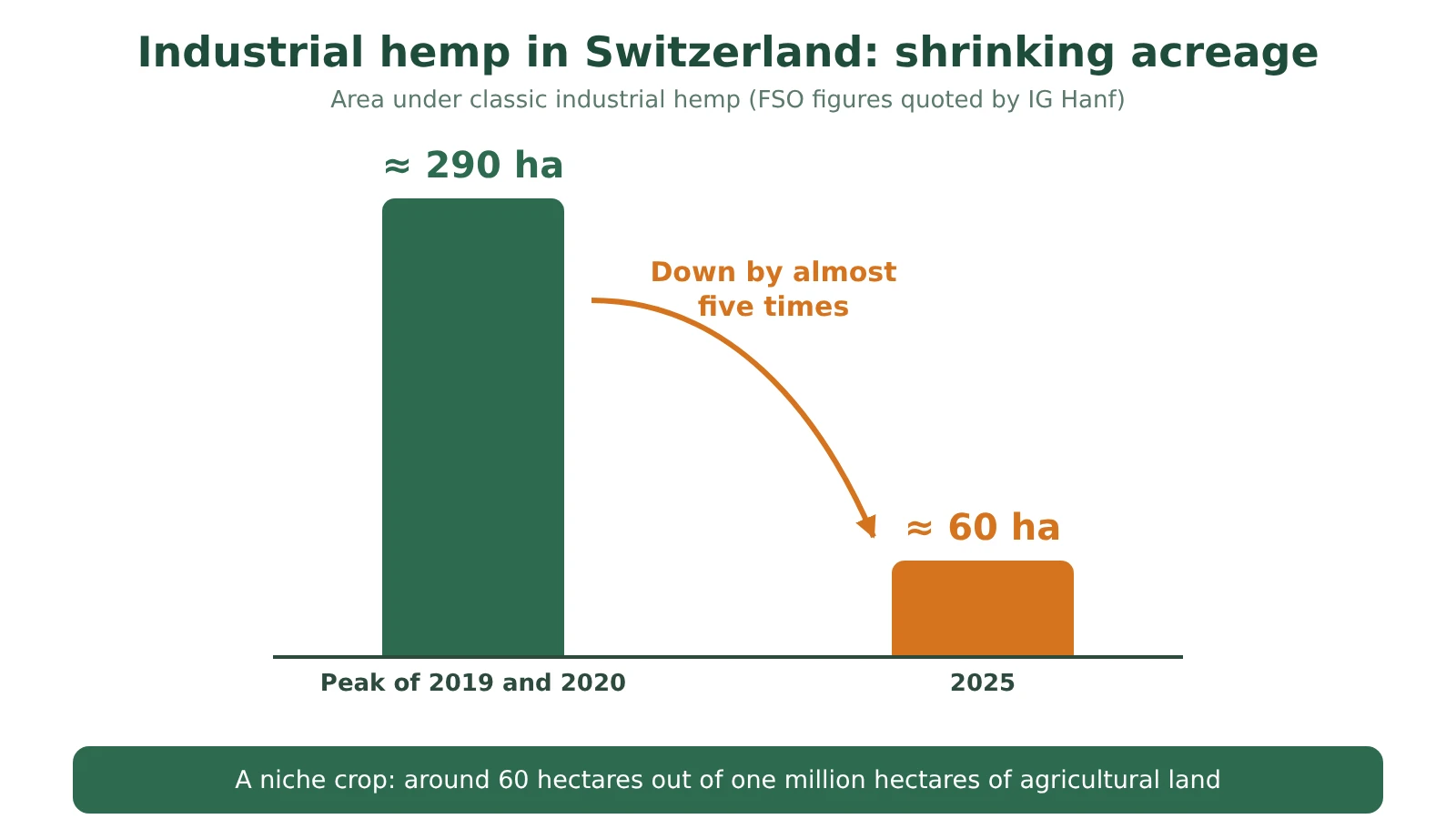
Measured against the country’s one million hectares of agricultural land, hemp remains a niche crop. The discussions therefore focused on the outlets that could revive this acreage: construction, fibre and food.
Construction and fibre: the know-how is there, the equipment is not
Hemp building materials are well established. The best known is hempcrete, a mix of hemp shives and lime used as insulating infill, alongside fibre panels and insulation. According to the conference review, these materials are manufactured abroad, and their raw material does not come from Switzerland either.
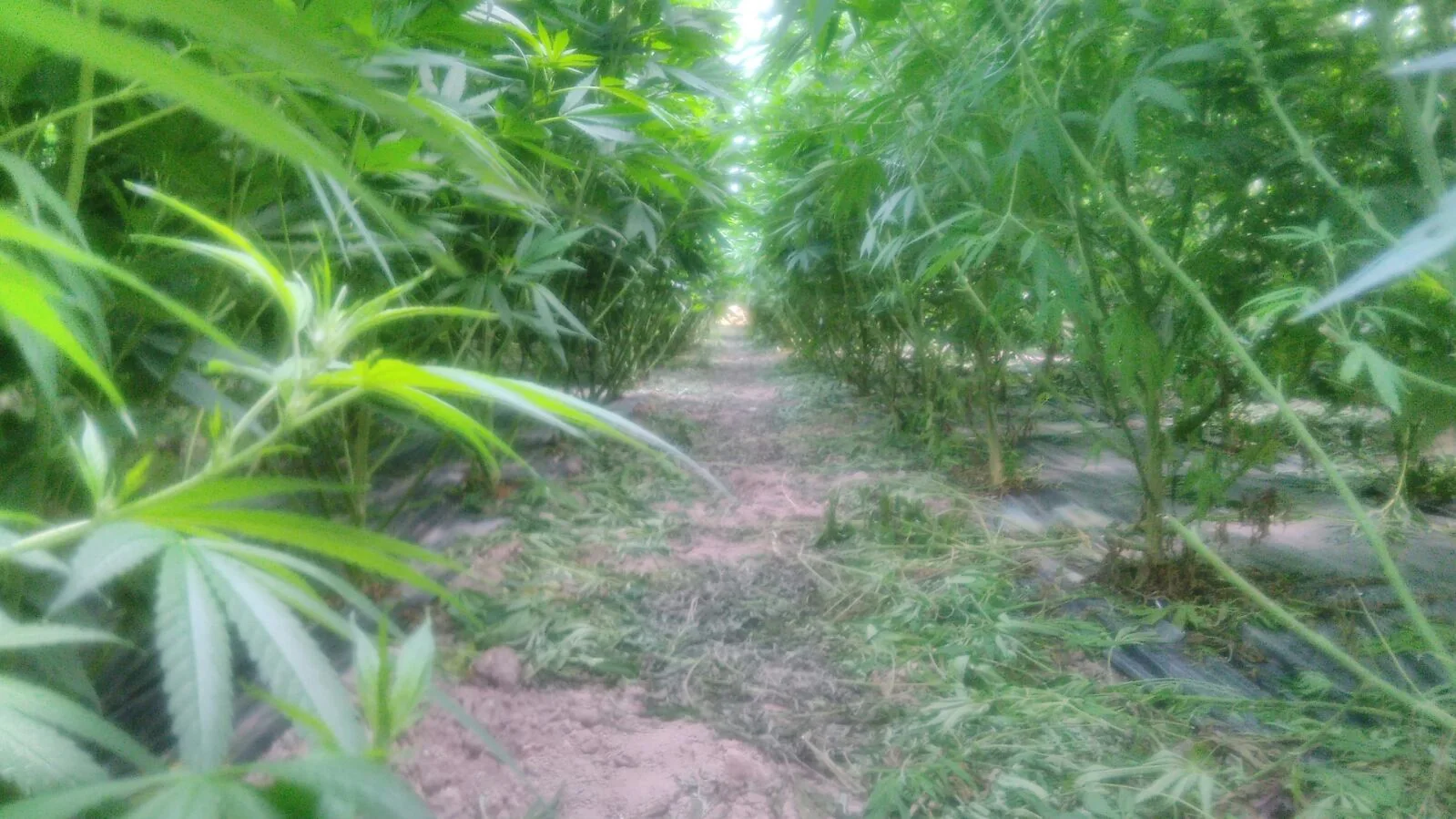
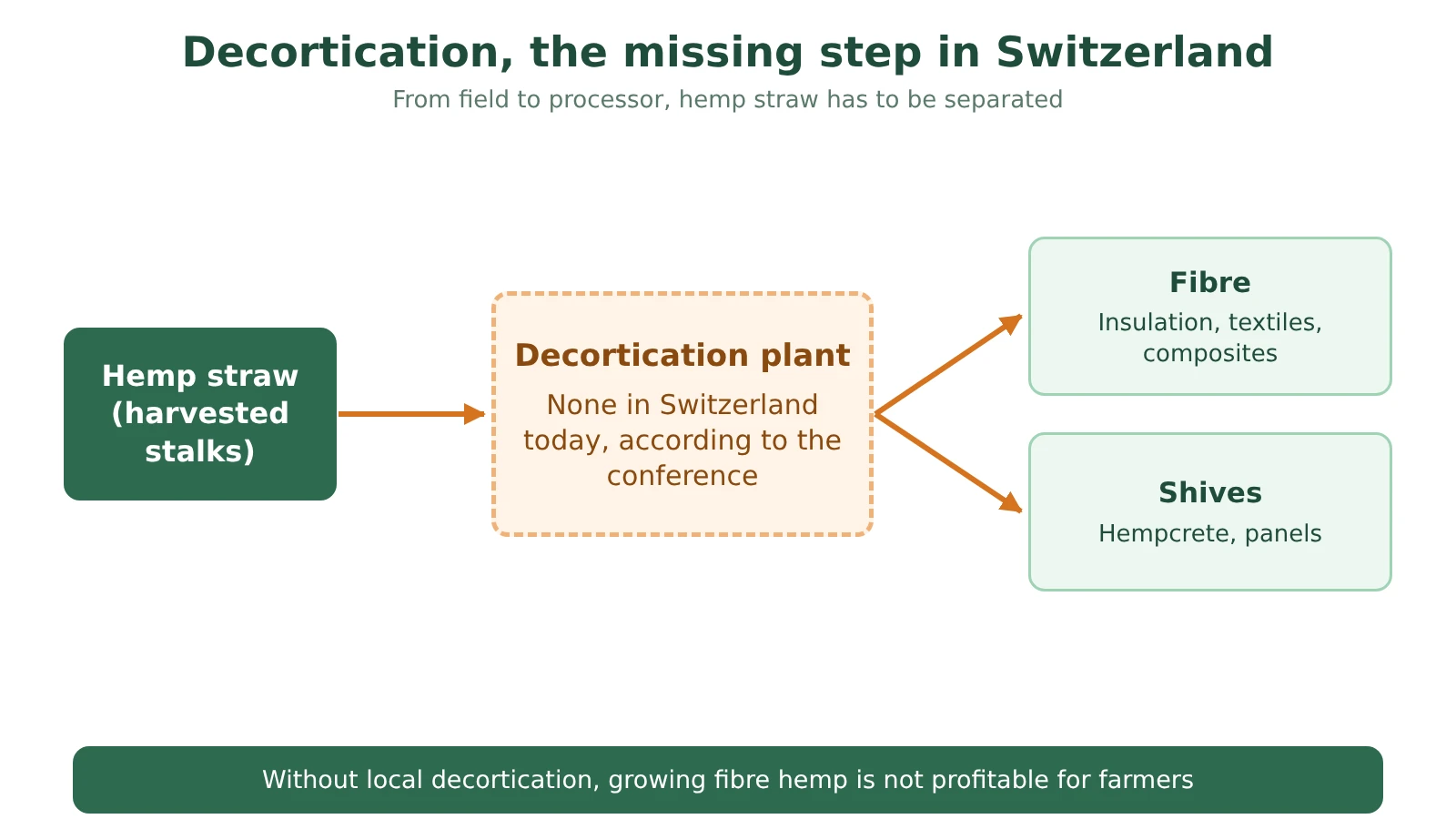
Fibre hemp nevertheless grows without difficulty in the country. Growing it is not yet profitable because there is no decortication plant, the machine that separates hemp straw into fibre and shives, the woody part of the stalk. Without this step, farmers cannot sell their straw to any Swiss processor.
Seeds and foods: what has changed for THC
Swiss hemp seeds are in demand. In shops, however, they cost about twice as much as imported seeds, according to the conference review.
The seeds themselves contain no cannabinoids. THC can end up on them at harvest, through contact with flowers and leaves. This is why food law sets maximum levels for seeds and the products made from them.
Since July 2025, the FDHA Ordinance on Maximum Levels for Contaminants (CMLO) applies to these products the same values the European Union has used since 2023. They are stricter than the previous Swiss values and cover the sum of THC and its acid form, THCA.
| Product | Maximum THC level |
|---|---|
| Hemp seeds | 3.0 mg/kg |
| Ground, defatted and other products made exclusively from the seeds | 3.0 mg/kg |
| Hemp seed oil | 7.5 mg/kg |
These maximum levels only apply to seeds and their derivatives. Other hemp-based foods, including hemp leaf tea, no longer have a specific THC limit in Switzerland. They remain subject to the general food safety rules. According to the FSVO, hemp leaf tea is not a novel food requiring authorisation, unlike cannabinoid-rich extracts.
From 2027, the European Union sets limits for hemp tea
On 28 July 2026, the European Union adopted Regulation (EU) 2026/1828. From 1 January 2027, hemp leaves intended for infusion may not exceed 40 mg/kg of THC, and ready-to-drink infusions 0.02 mg/kg. The label on the leaves must state that they are only for preparing an infusion in water, that they are not suitable for infants and young children, and that no fatty ingredient such as milk or cream should be added.
Switzerland does not adopt this regulation automatically. Swiss producers selling hemp tea in the European Union, however, will have to meet these values from 2027.
Point to watch
Hemp seed oil and CBD oil are two different products. The first is pressed from the seeds, which contain no cannabinoids. The second is made with a flower extract. Both carry the word hemp, but their composition differs: the ingredient list and the CBD content stated on the label tell them apart.
Using the whole plant
The idea that drew the most attention is to use the whole plant: seeds for food, fibre and shives for construction. A single harvest then finds several outlets, which makes it more attractive for the farmer.
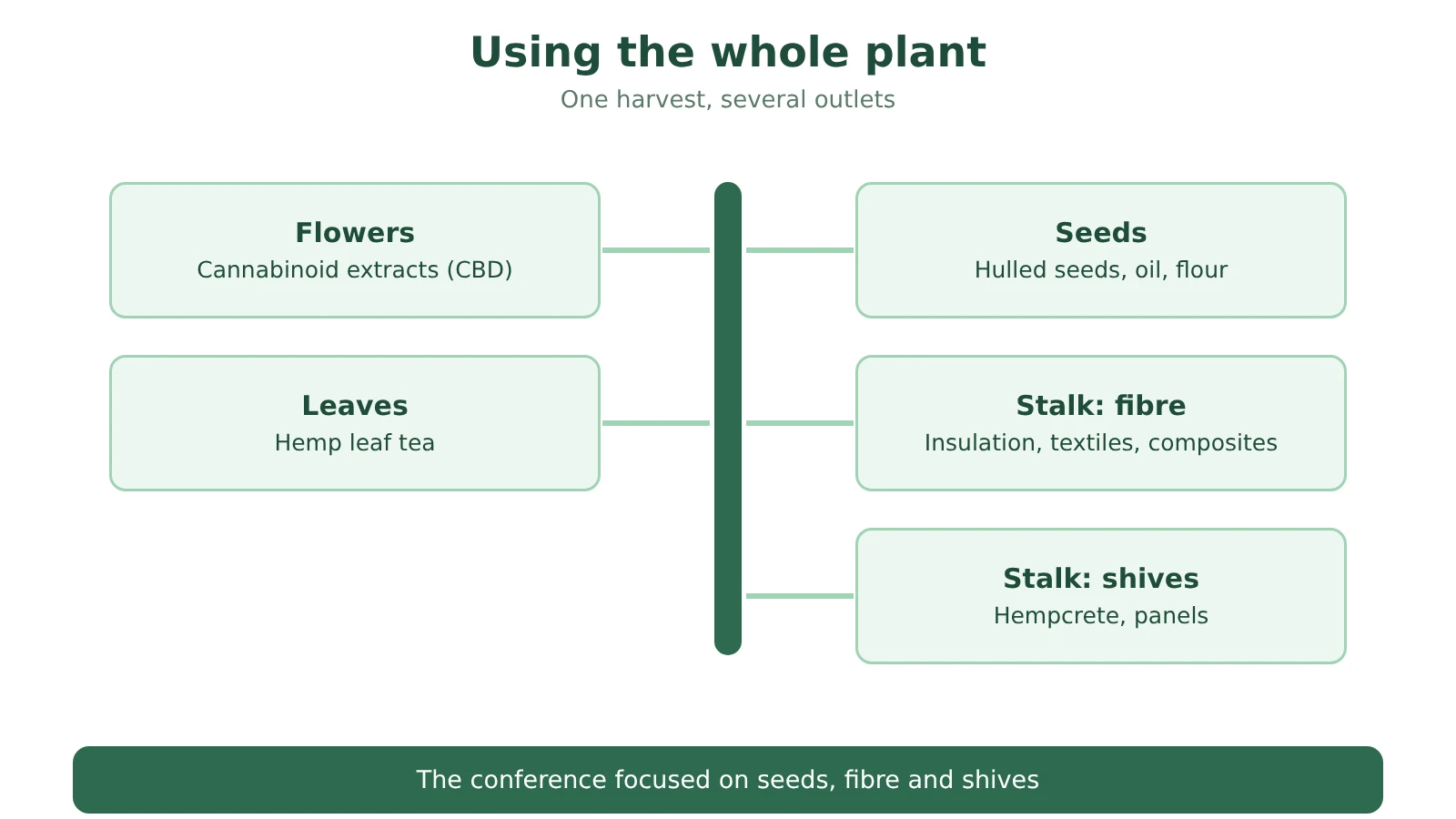
Flowers, absent from this review, belong to another sector, CBD. They are grown for their profile of hemp cannabinoids, with different growing choices from fibre hemp. Our article on growing flowers indoors, in a greenhouse or outdoors describes what each method changes for the flower.
Our view
This review shows a plant that is well known in Switzerland but still little processed locally. The agricultural and technical skills are there. What is missing is industrial equipment, such as a decortication plant, and enough volume to keep it running.
For CBD companies, the industrial hemp sector remains a close neighbour: same plant, same THC requirements, same traceability questions. We will follow how THC rules for foods evolve, in Switzerland and in the European Union. The legal framework for CBD products is summarised in our guide to Swiss legislation.
Our laboratory
In Gland, we process hemp flower extracts from crude extract to finished bottle. The cannabinoid composition and the balance of their ratios give each of our oils its character. Discover the laboratory →
Frequently asked questions
How many hectares of industrial hemp are grown in Switzerland?
According to Federal Statistical Office figures quoted by IG Hanf, around 60 hectares of classic industrial hemp were grown in 2025. The area had peaked at around 290 hectares in 2019 and 2020. Hemp remains a niche crop compared with the country’s one million hectares of agricultural land.
Why is fibre hemp not profitable in Switzerland?
The plant grows well, but Switzerland lacks a decortication plant to separate the straw into fibre and shives. Without this step, the straw finds no processor in the country. The hemp building materials used in Switzerland are manufactured abroad, with raw material that does not come from Switzerland.
What is the maximum THC level for hemp seeds in Switzerland?
Since July 2025, the Contaminants Ordinance (CMLO) sets 3.0 mg/kg for seeds and products made exclusively from the seeds, and 7.5 mg/kg for hemp seed oil. These values cover the sum of THC and THCA. They are identical to those of the European Union.
Does hemp tea have a THC limit in Switzerland?
No specific limit. In Switzerland, maximum THC levels only apply to seeds and their derivatives. Hemp leaf tea remains subject to the general food safety rules. According to the FSVO, it is not a novel food requiring authorisation, unlike cannabinoid-rich extracts.
What does the 2027 EU regulation change for hemp tea?
From 1 January 2027, Regulation (EU) 2026/1828 limits THC to 40 mg/kg in hemp leaves intended for infusion and to 0.02 mg/kg in ready-to-drink infusions. Labels on the leaves must carry mandatory statements. Switzerland does not adopt the regulation automatically, but products sold in the European Union will have to comply.
Do hemp seeds contain CBD?
No. Hemp seeds contain no cannabinoids, neither CBD nor THC. Traces can appear at harvest through contact with flowers and leaves, which is why maximum THC levels are set for seeds. CBD is found in the flowers, from which extracts are made.