In Switzerland, everyone knows the figure: below 1% THC, hemp is not a narcotic. But 1% of what, measured on what, and proven how? The rule covers the plant, the product and even the material the product is made from. It speaks of “total” THC and of “average” content. Here is exactly what the limit covers, and what it does not say.
On this page
Where the 1% threshold comes from
The threshold sits in narcotics law. The Federal Narcotics Act refers to an ordinance of the Federal Department of Home Affairs (FDHA) that lists controlled substances. Its Annex 1 classes hemp as a narcotic from 1% total THC. Above that, growing, importing, processing or selling it is prohibited outside authorised medical use.
Below it, the Federal Office of Public Health (FOPH) sums it up in one sentence: hemp containing less than 1% THC is not subject to the Narcotics Act. That is the legal basis of the whole Swiss CBD market, from flowers to oils.
Leaving narcotics law does not make a product saleable, though. It then falls under another law, chosen according to its intended use: cosmetics, food, tobacco products or chemicals. Our guide to Swiss CBD law describes these regimes product by product. Here, we focus on the figure itself.
What the ordinance actually covers
The wording of the ordinance, as quoted by the Federal Supreme Court in a 2023 judgment, covers three things. First, the plant or parts of the plant with an average total THC content of 1% or more. Second, any object or preparation with a total THC content of 1% or more. Third, any object or preparation made from hemp with a total THC content of 1% or more.
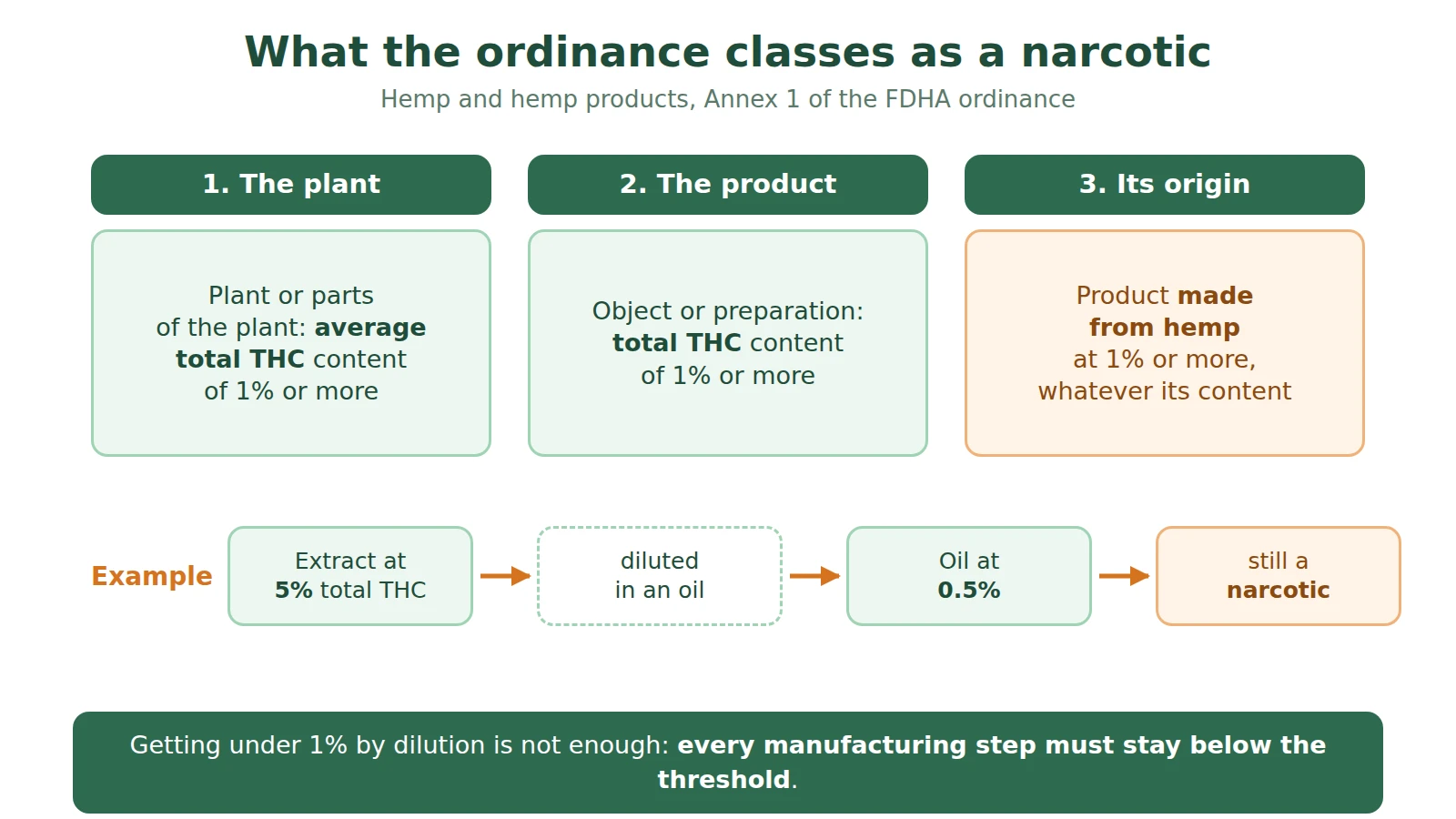
The third case is the least known, and it matters a great deal to a manufacturer. A product that drops below 1% because it has been diluted does not leave narcotics law if its starting material exceeded the threshold. The rule mirrors the one the authorities apply to cosmetics: no intermediate product may exceed 1% total THC, at any stage of manufacture.
For an oil, this covers the crude extract and then each processing step up to the bottle. The crude extracts we use contain less than 1% total THC, and we describe the following steps in our article on how CBD oil is made.
Why “total” and “average” matter
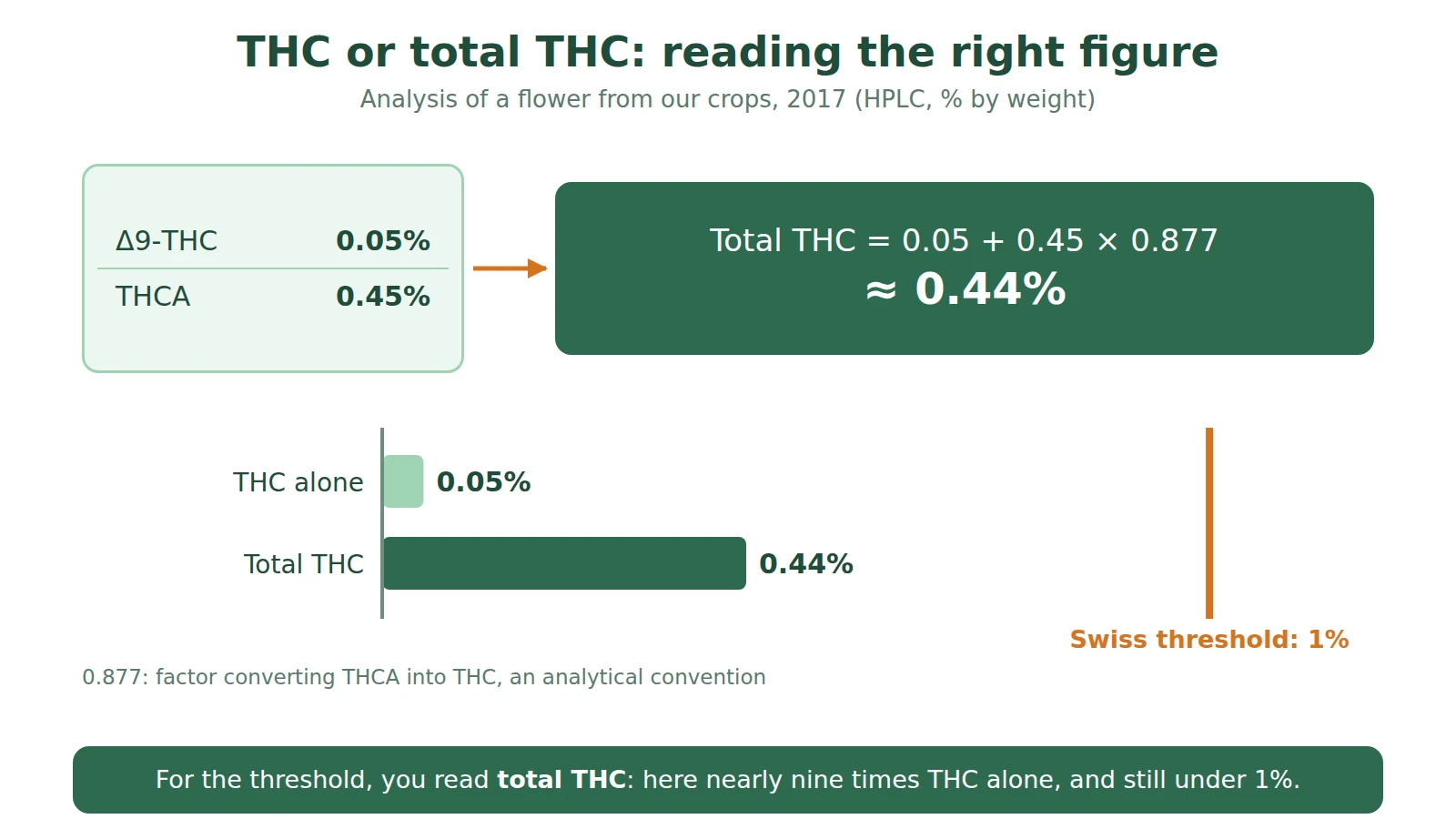
In the plant, THC is mostly present in its acid form, THCA, which turns into THC when heated. The threshold applies to total THC: the THC already present plus the THC that THCA would yield once converted. Laboratories calculate it by multiplying THCA by 0.877, the ratio between the masses of the two molecules. This is an analytical convention: the ordinance speaks of total THC without giving a formula.
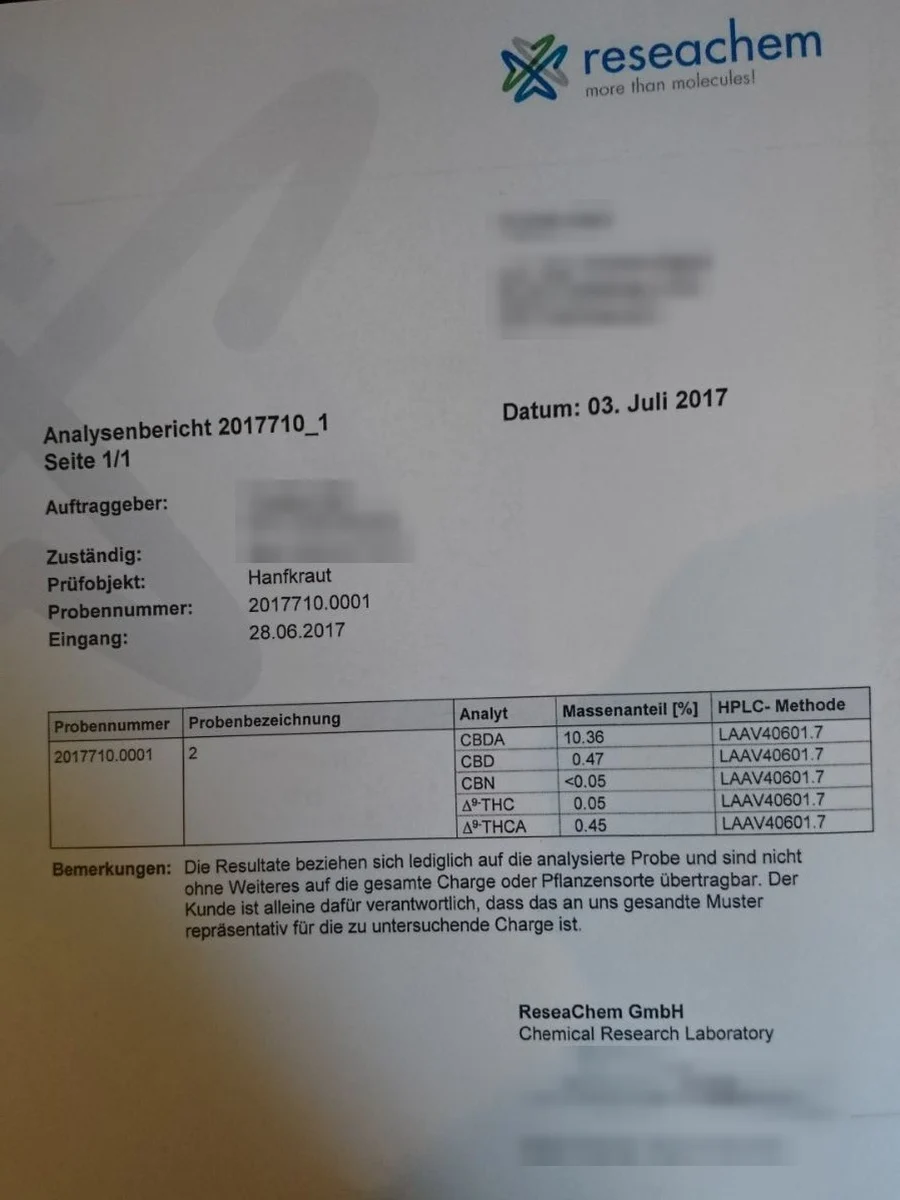
The gap can be large. In 2017, a flower from our crops in the Seeland was analysed by an external laboratory: 0.05% THC and 0.45% THCA. Reading the “THC” line alone would give 0.05%. Total THC comes to about 0.44%, nearly nine times more, and still below the threshold. We explain how acid and neutral forms relate in our article on the profile of a hemp extract.
For the plant, the ordinance speaks of “average” total content. One flower does not have the same content as another, nor the top of a plant the same as the bottom. The 2017 report said so itself: the result applies only to the sample analysed, and it is up to the client to make sure that sample represents the batch.
Measuring, and proving without measuring
When you need to show that hemp is below the threshold, for example on import, the analysis is what counts. Hemp under 1% needs no Swissmedic authorisation to cross the border, but the federal authorities expect a batch-specific certificate of analysis covering the actual consignment, issued by an accredited laboratory (ISO/IEC 17025) or one recognised under good manufacturing practice.
The reverse is also true. In a 2023 judgment (6B_1215/2022), the Federal Supreme Court held that the 1% threshold does not require a product to be analysed before it can be classed as a narcotic. Even without a measured content, a set of converging indications can be enough to establish that goods exceed the limit.
Point to watch
The figure is not everything. A product diluted below 1% is still a narcotic if its starting material exceeded the threshold, and a court can find that goods are a narcotic on the basis of converging indications, without any analysis. Conversely, a certificate of analysis only applies to the sample and batch it describes.
In the field: the same threshold
The limit applies from cultivation onwards. The Federal Office for Agriculture (FOAG) states that hemp containing less than 1% THC is not controlled as cannabis. Hemp has not been listed in the Swiss variety catalogue since 1 January 2021: growers use seed of varieties certified in the European Union.
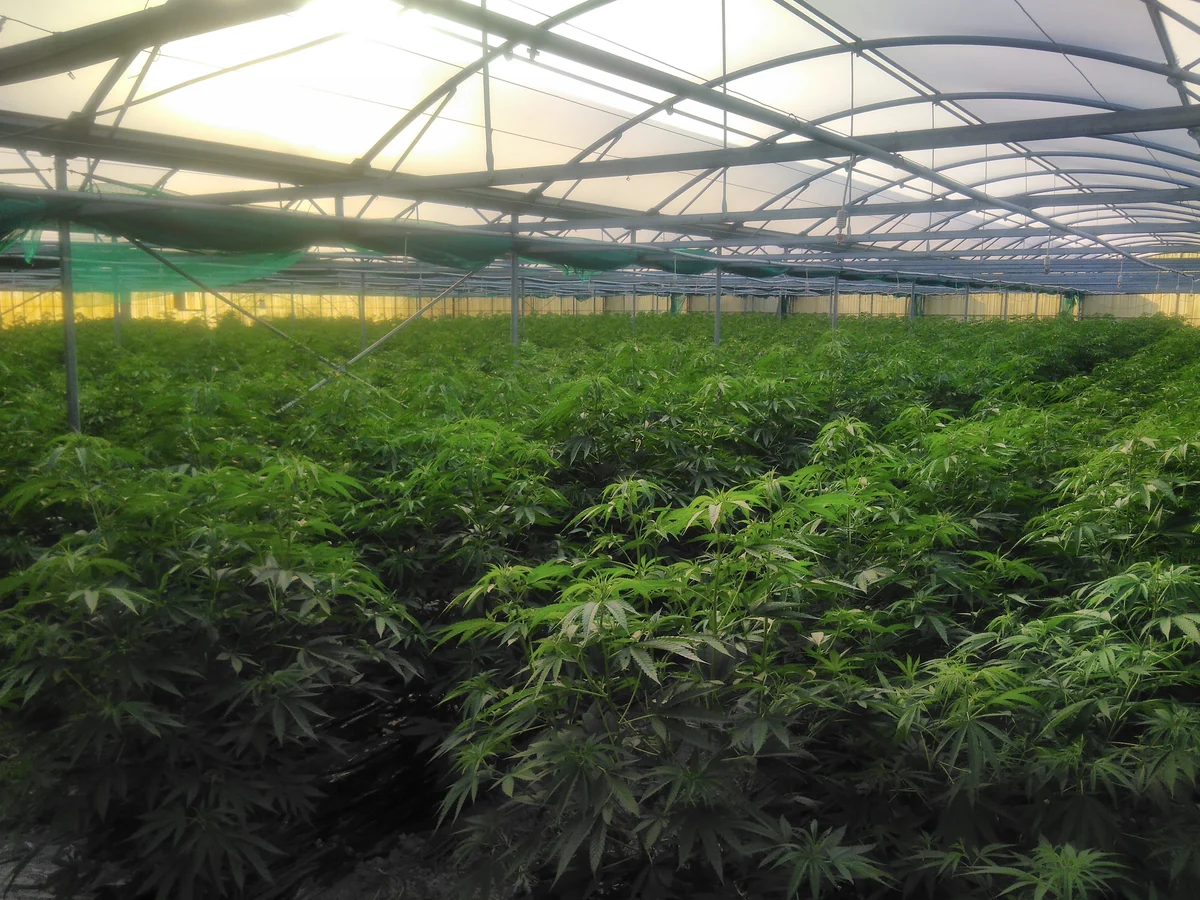
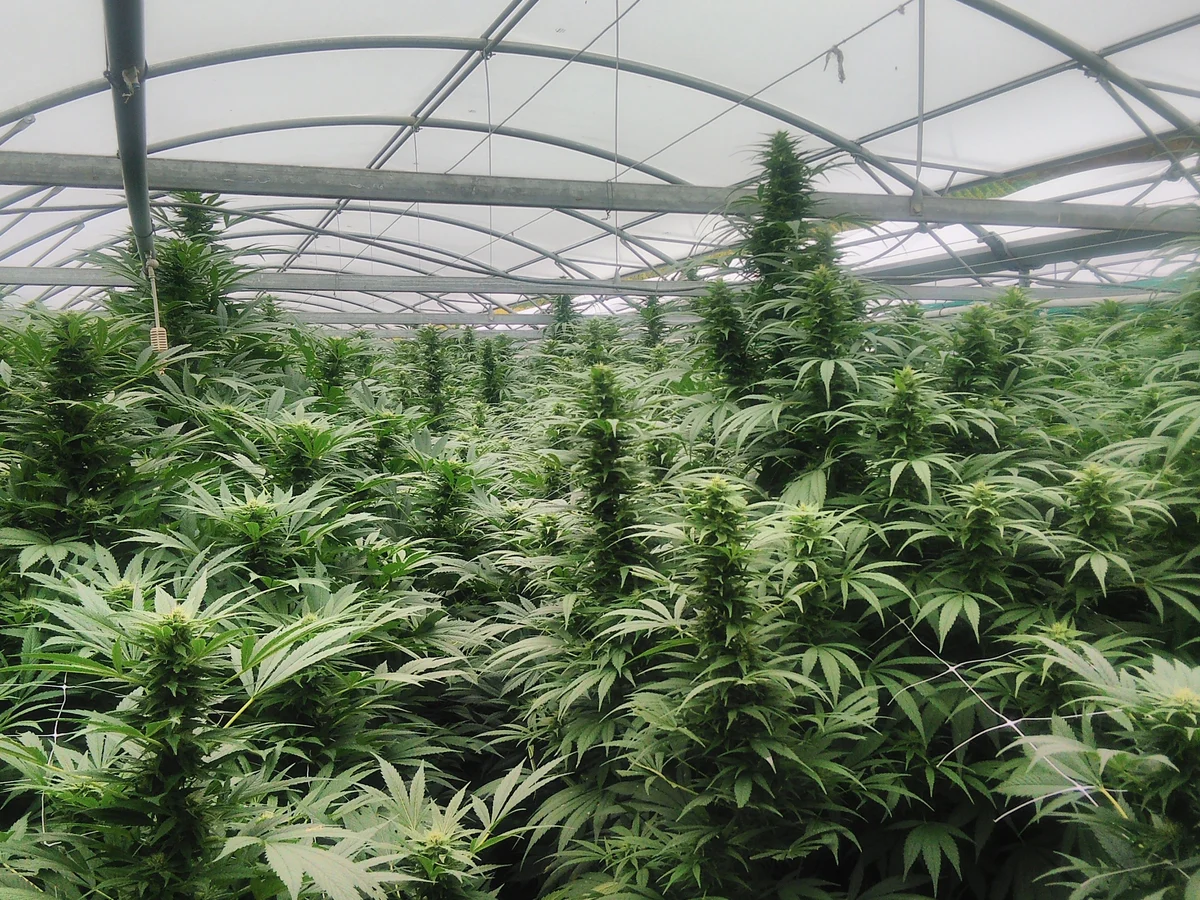
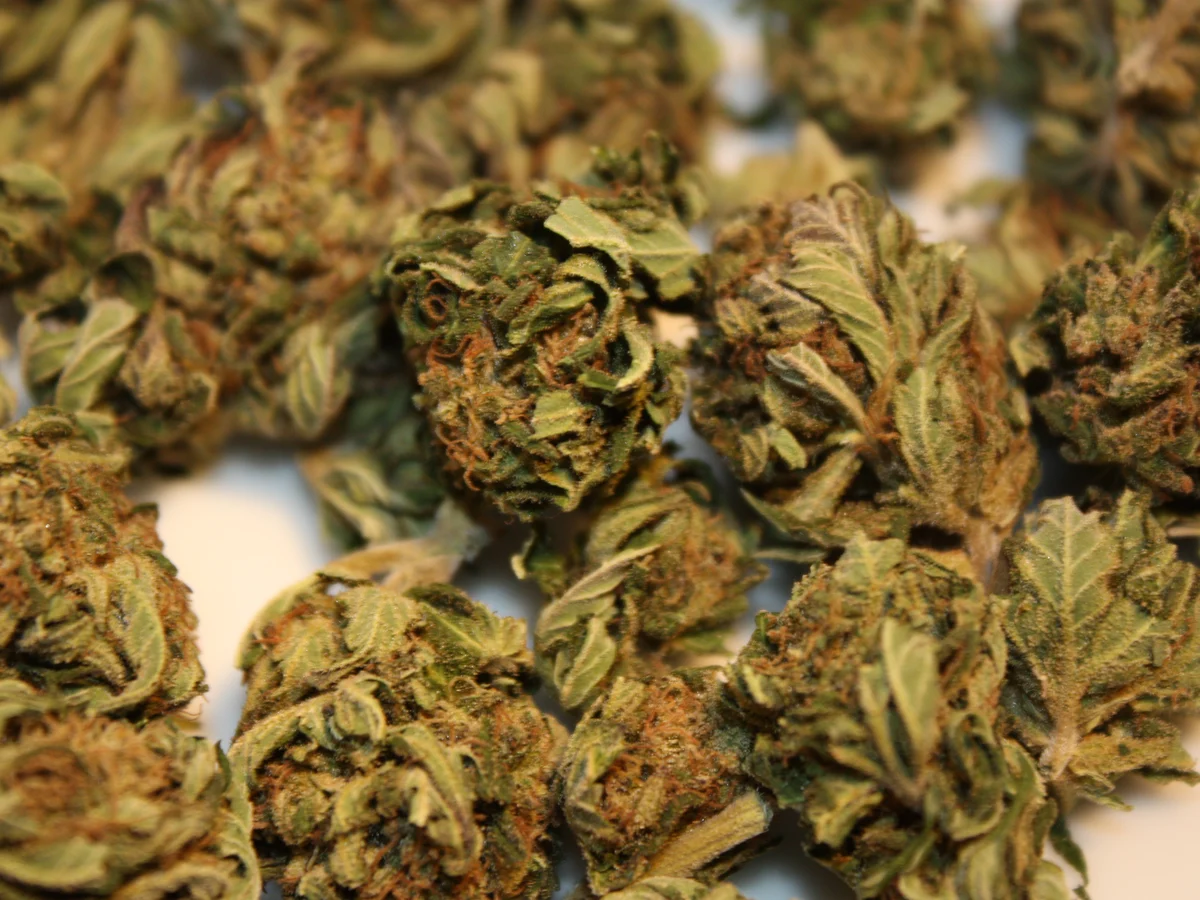
A certified variety is no excuse for not checking the harvest: content varies from one plant and one harvest to the next. What the threshold targets is the content of the harvested material, and then of every product made from it.
1% in Switzerland, 0.3% in the European Union
The 0.3% figure often quoted by our neighbours answers a different question. It comes from EU agricultural law: since 1 January 2023, it sets the maximum content of cultivated hemp varieties eligible for farm subsidies, and of imported raw hemp and seed. It replaced the former 0.2% limit.
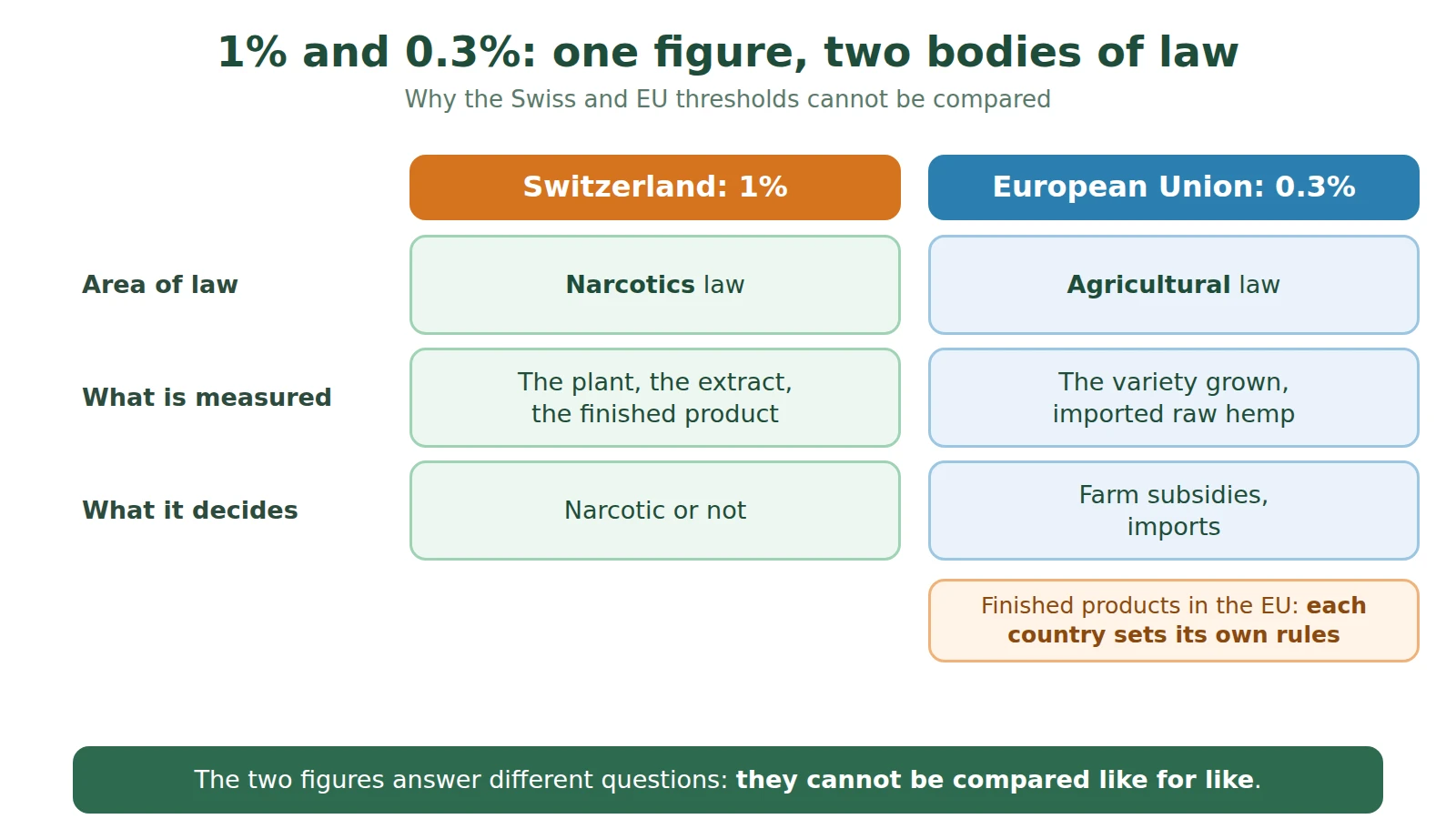
For finished products, each member state applies its own rules. Comparing “1% in Switzerland versus 0.3% in Europe” therefore sets a narcotics-law rule next to an agricultural-policy rule. A product that complies in Switzerland does not necessarily comply elsewhere, and the FOPH points out that travellers who take CBD abroad risk prosecution.
What the threshold does not say
The 1% threshold separates legal hemp from narcotics, nothing more. It is not a quality label, not a marketing authorisation and not an indication of CBD content. It applies in the same way to flowers, hash, e-liquids, oils and balms, and each of these products must then comply with the law that matches its use.
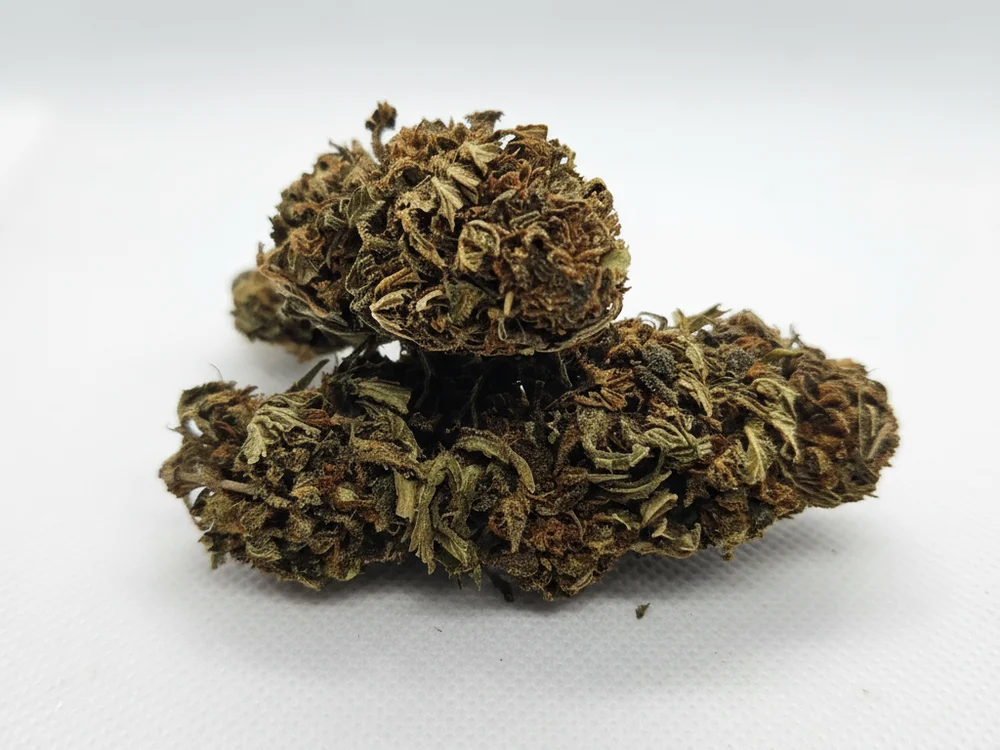
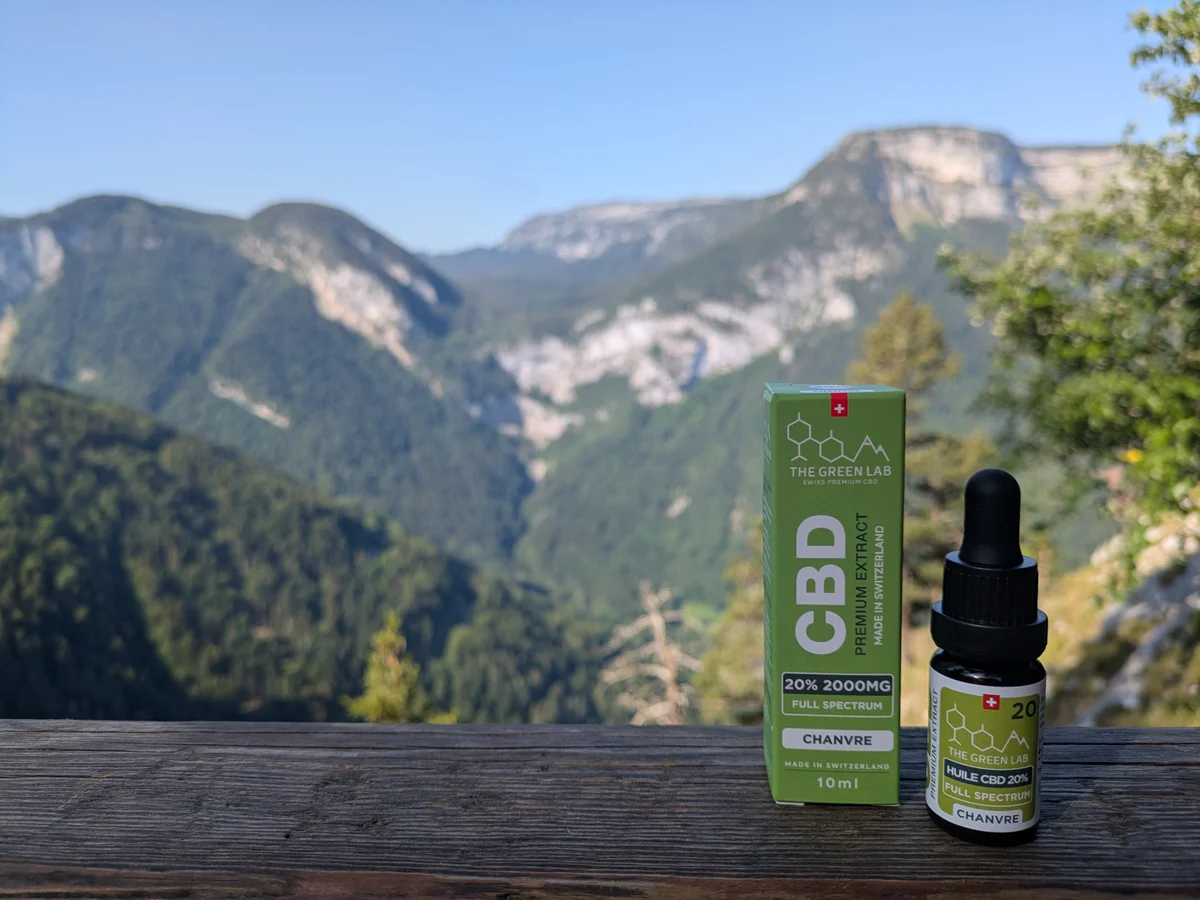
CBD flowers therefore fall under the Tobacco Products Act, with sales restricted to adults, while our oils are declared as cosmetics.
Nor should the threshold move with the draft cannabis products act (parliamentary initiative 20.473). Its explanatory report states that products with a THC content below 1%, such as CBD products, are not affected, and keeps the limit. In October 2026 the text was still being reworked by the parliamentary committee.
The 1% threshold can therefore be summed up in three words: total, average, and every step. It is read on total THC, not on THC alone. It applies to an average content, which only a representative sample can approach. And it follows the product throughout its manufacture, since a product made from hemp above the threshold remains a narcotic, even when diluted.
Our laboratory
Our oils are made in Gland from crude extracts containing less than 1% total THC, and every step, from crude extract to bottle, takes place in our laboratory. Their cannabinoid levels are checked regularly by an external laboratory. Declared as cosmetics, they have a product information file for each formula and are made under good manufacturing practice. To find out more, discover our laboratory.
Further reading: the difference between Full Spectrum, Broad Spectrum and isolate.
Frequently asked questions
Is CBD legal in Switzerland?
Hemp and hemp products with a total THC content below 1% are not subject to the Narcotics Act. They then fall under another law, chosen according to their intended use: cosmetics, tobacco products, food or chemicals.
What does “total THC” mean?
It is the THC already present plus the THC that THCA, its acid form, would yield once converted by heat. Laboratories calculate it by multiplying THCA by 0.877. The Swiss 1% threshold applies to this total THC.
Is a product diluted below 1% THC automatically legal?
No. The ordinance also covers products made from hemp with a total THC content of 1% or more. For cosmetics, no intermediate product may exceed 1% total THC at any stage of manufacture.
Does the 1% threshold apply abroad too?
No. Each country sets its own rules. The EU’s 0.3% comes from agricultural law and concerns cultivated varieties and imported raw hemp, not finished products directly. Before travelling, only the law of the destination country and of the countries you cross counts.
Will the draft cannabis act change the threshold?
According to the explanatory report on the draft (parliamentary initiative 20.473), products with a THC content below 1%, such as CBD products, are not affected and the limit is kept. In October 2026 the text was still being reworked and had no date of entry into force.