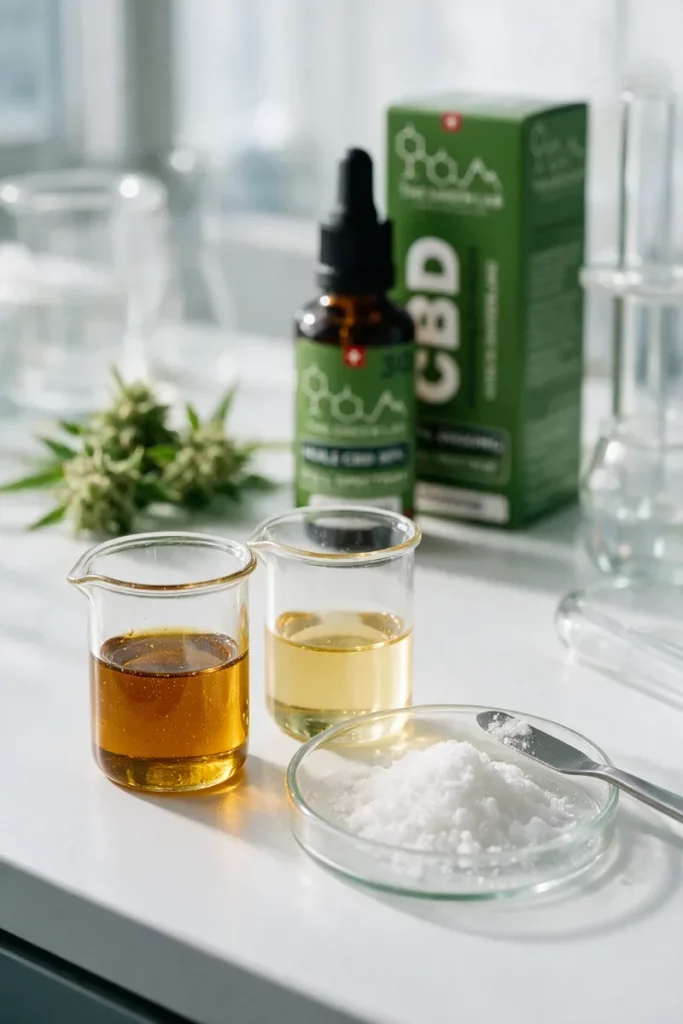
Full Spectrum, Broad Spectrum and isolate are the three words most often printed on CBD bottles, and no official text defines them. In trade usage, they describe what the extract has kept from the plant: almost everything, almost everything except THC, or cannabidiol alone. Here is what they really cover, how each is made, and what to read instead to know what a product contains.
On this page
Three words no text defines
You might expect these terms to refer to a standard. They do not. No pharmacopoeia, no ISO standard and no Swiss or European text defines Full Spectrum or Broad Spectrum. This is not an oversight: where authorities have regulated cannabis, they chose other criteria.
The European Pharmacopoeia adopted a monograph on cannabis flower in 2023, in force since 1 July 2024. It classifies the plant into three chemotypes according to the dominant cannabinoid: THC-dominant, intermediate and CBD-dominant. The word spectrum does not appear in it. On the standards side, the ISO technical committee for cannabis, ISO/TC 353, was set up in 2025 and holds its first meeting in October 2026: no standard has been published yet.
In Switzerland, the reference document on CBD products published jointly by Swissmedic, the FOPH and the FSVO does not use Full Spectrum, Broad Spectrum or isolate as categories. It speaks of extracts, preparations and pure substances, and classifies products by their intended use. The only written definitions of these three terms come from trade associations, mostly American, and carry no binding force.
What each term covers
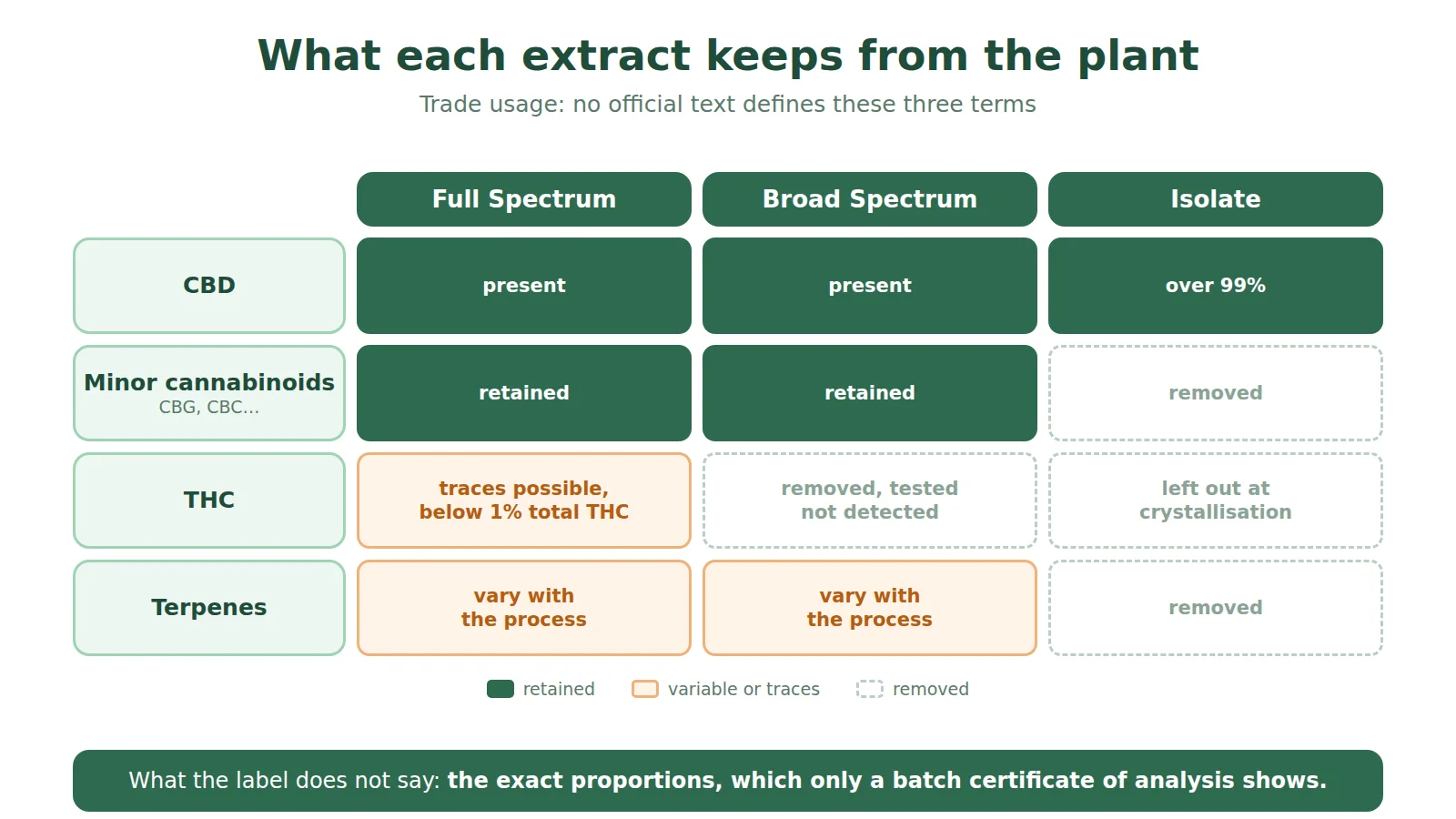
In the absence of an official definition, the trade relies on usage. A Full Spectrum extract keeps a broad range of hemp constituents: cannabidiol, minor cannabinoids such as CBG and CBC, part of the terpenes, and trace amounts of THC below the Swiss legal limit. A Broad Spectrum extract aims to keep the same range while removing THC as far as the process allows. An isolate contains nothing but purified cannabidiol, in the form of white crystals.
| Full Spectrum | Broad Spectrum | Isolate | |
|---|---|---|---|
| CBD | present | present | over 99% |
| Minor cannabinoids (CBG, CBC…) | retained | retained | absent |
| THC | traces possible, below 1% total THC | removed, tested for and expected not detected | left out at crystallisation |
| Terpenes | present, varying with the process | varying with the process | absent |
| What is removed | nothing intentionally | THC | everything that is not CBD |
| Appearance | golden, thick distillate | golden, lighter distillate | white crystalline powder |
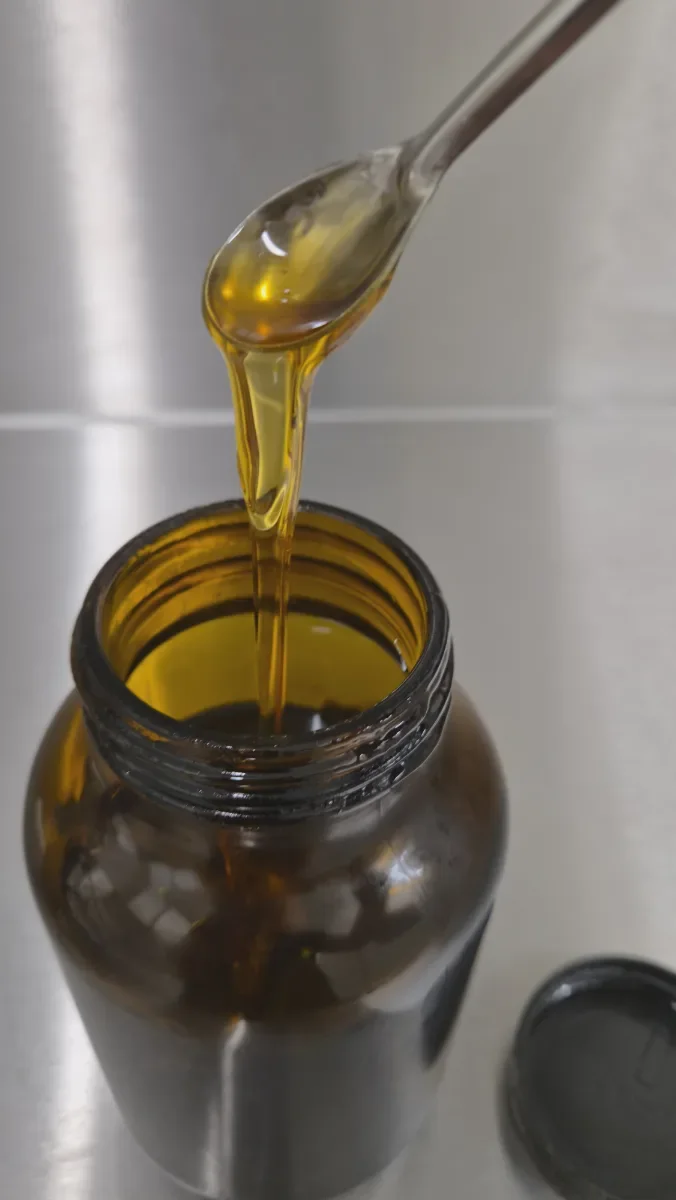
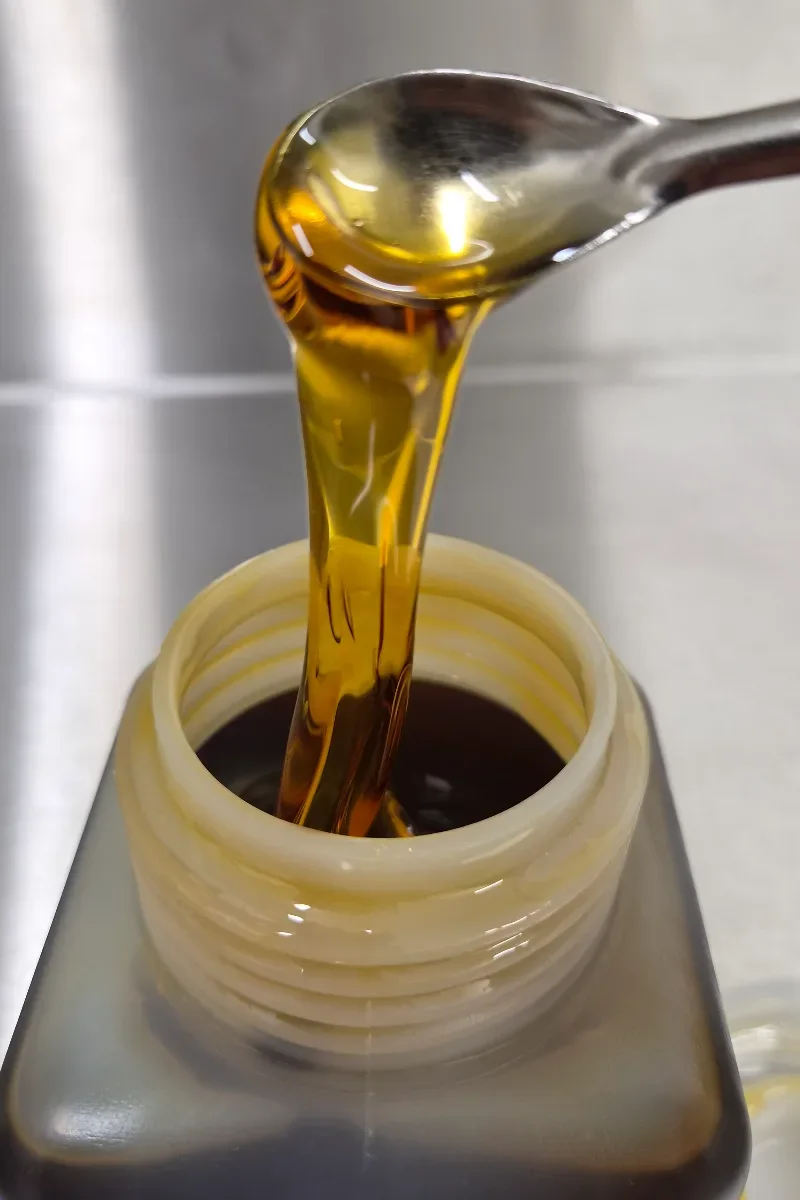
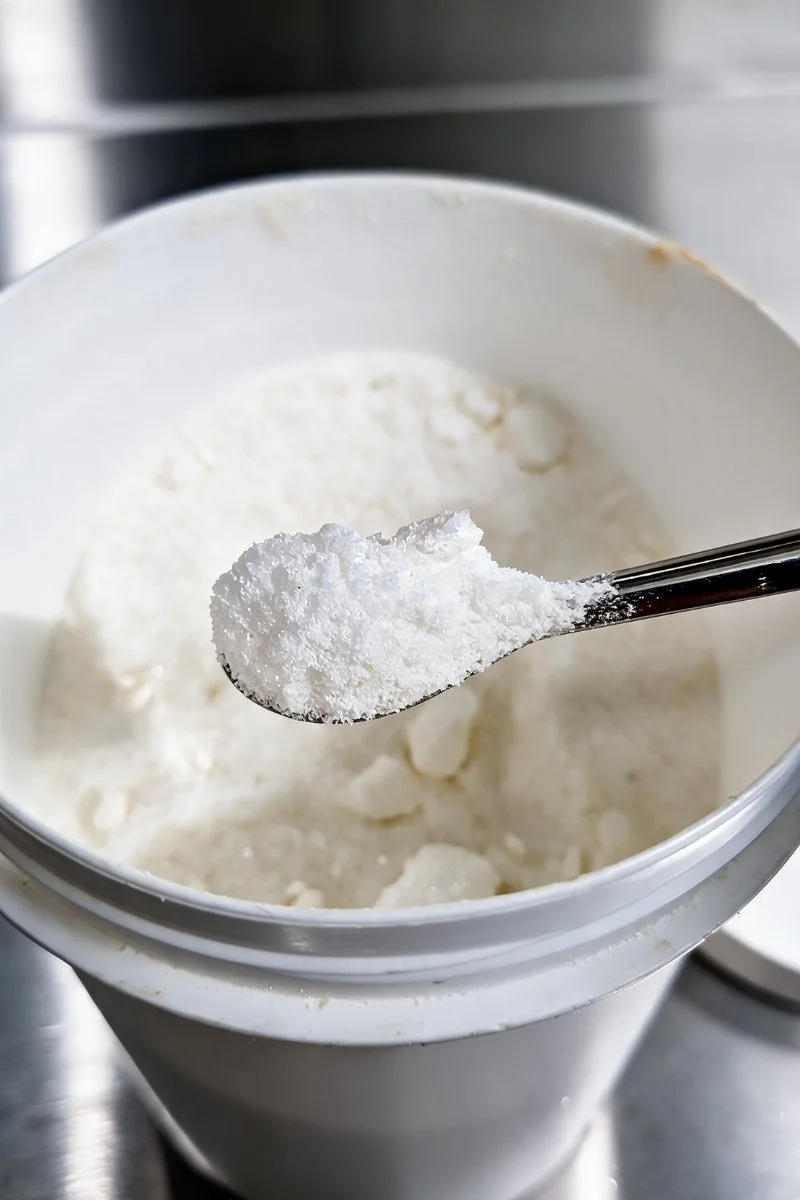
A Full and a Broad distillate look alike to the naked eye. The difference cannot be seen; it has to be measured. That is why an oil is chosen on its analysis rather than its colour.
How an isolate is made
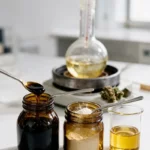
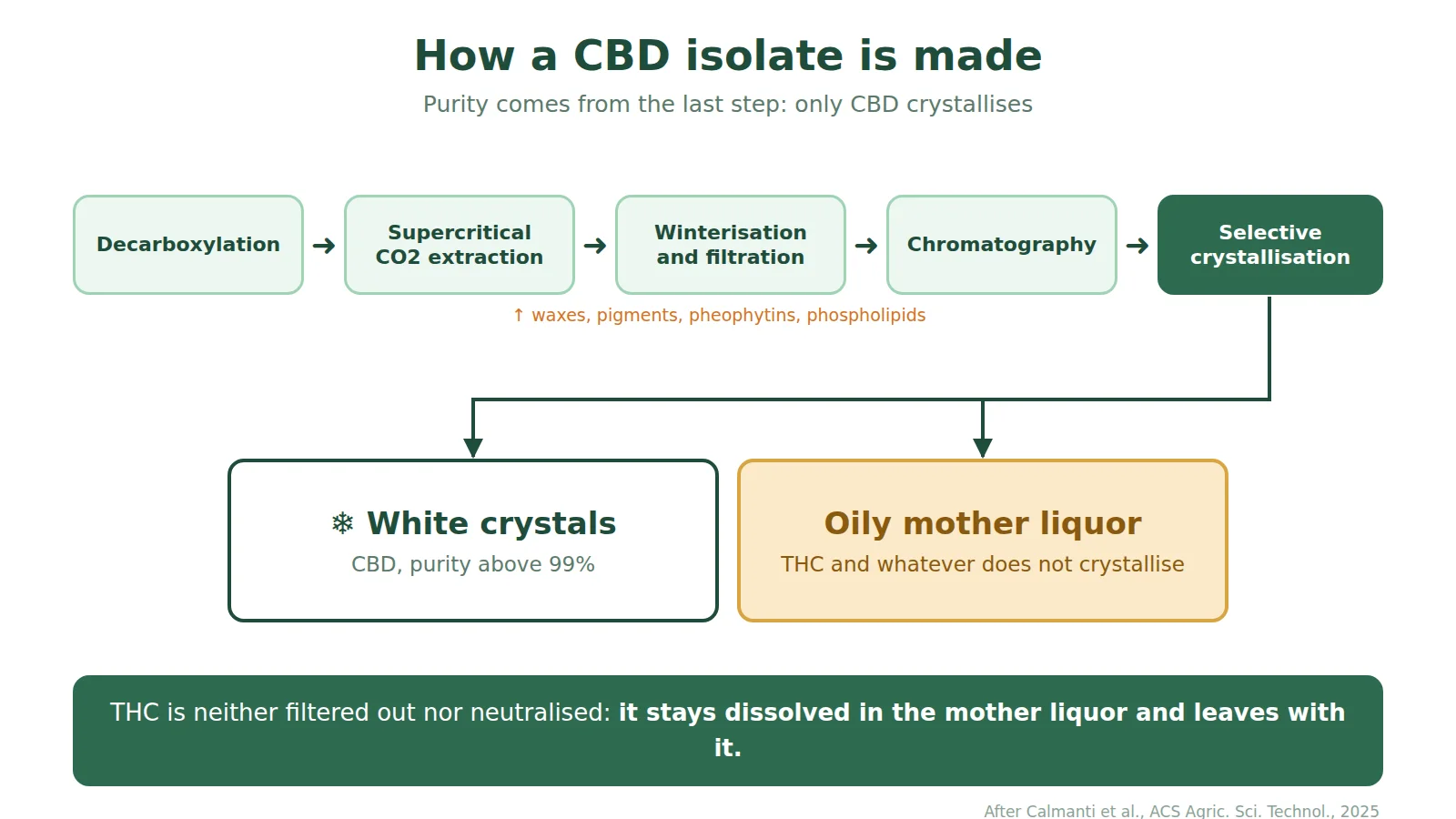
The word purification covers a more elegant operation than it seems. A study published in 2025 by a team at Ca’ Foscari University of Venice describes the whole chain: decarboxylation, supercritical CO2 extraction, winterisation, filtration, chromatography, then selective crystallisation. The result reaches a purity above 99%, confirmed by NMR and by an external laboratory using HPLC.
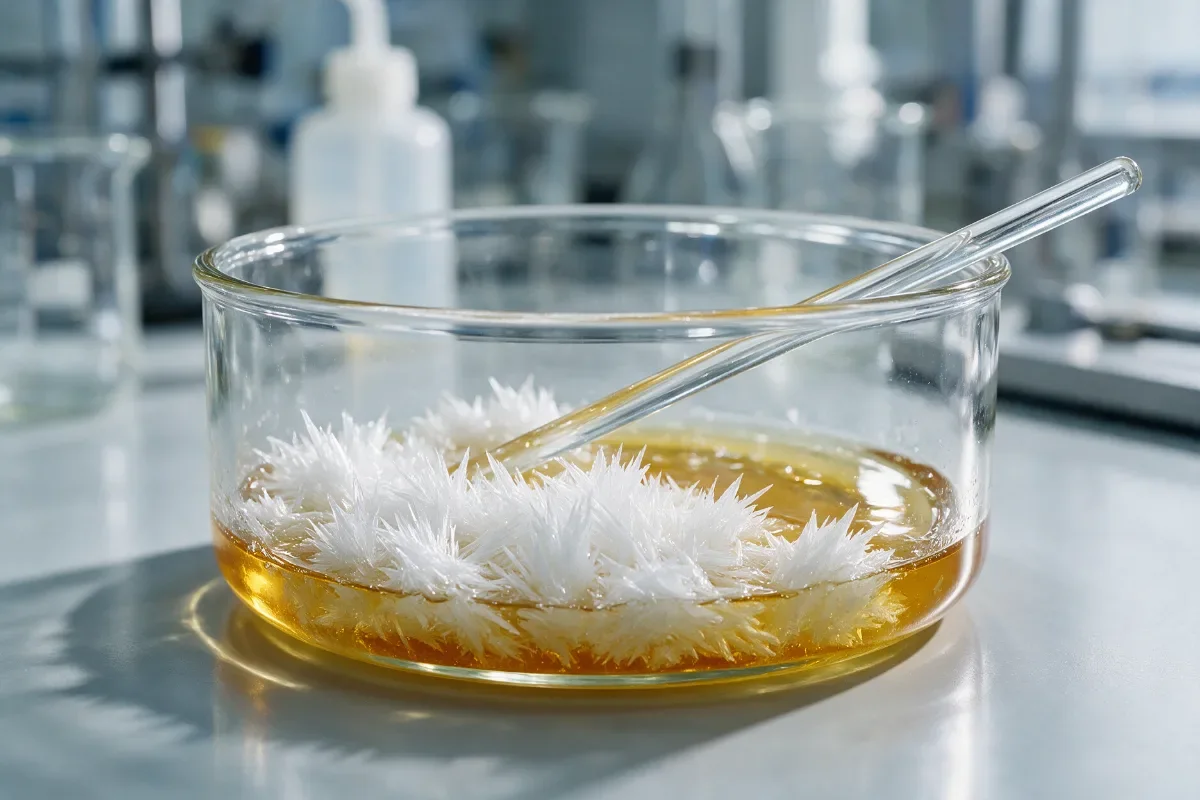
The most interesting part is the last step. THC is not removed by a filter or neutralised by a reagent. Under crystallisation conditions, cannabidiol is the only molecule in the mixture that forms crystals. THC stays dissolved in the oily mother liquor and leaves with it. Waxes, pigments, pheophytins and phospholipids were removed earlier, during winterisation and filtration. An isolate is pure because CBD crystallises and the rest does not.
The process matters more than the label
Two Full Spectrum extracts can differ more than a Full and a Broad. The reason lies in the extraction process. In 2024, researchers at Pennsylvania State University compared the three common commercial processes on the same raw material for the first time. The authors note that no direct comparison had been published before.
| Process | Cannabinoids | Terpenes | Takeaway |
|---|---|---|---|
| Supercritical CO2 | widest variety and highest amount (CBD 12.8 to 20.6 mg/g) | minimal variety | rich in cannabinoids, poor in terpenes |
| Hydrodistillation | few | widest variety (beta-caryophyllene 25 to 42 mg/g) | the opposite of CO2 |
| Ethanol | most acidic forms (CBDA 3.2 to 4.1 mg/g) | low | keeps the acidic cannabinoids |
The most telling result concerns supercritical CO2, often presented as the premium process that preserves everything. In this study, it gave the richest cannabinoid content but the smallest variety of terpenes of the three. No process keeps everything: each one trades off. Two oils labelled Full Spectrum can therefore have very different profiles, without the label saying so.
The entourage effect: where the term comes from
Most pages on the subject justify Full Spectrum with the entourage effect. The history of the term is worth knowing. It was coined in 1998 by Raphael Mechoulam’s team in Jerusalem, and it was not about plant extracts at all. It described molecules produced by the body itself, studied in cells and in mice. Its application to hemp came later, notably with a 2011 review whose title speaks of a “potential” synergy.
The assessments published since are cautious, sometimes severe. A 2020 pharmacology review calls it a hypothetical afterthought with ill-defined and unsubstantiated mechanisms. A 2024 review concludes that the data do not make it a stable and predictable phenomenon, and asks that it not be presented as proven science. A 2020 study tested five major hemp terpenes, alone and in mixtures: none changed the activity of the CB1 and CB2 cannabinoid receptors.
None of this proves there is nothing to look for there. It means that, to date, presenting the entourage effect as established fact is marketing talk, not the state of knowledge. We prefer to describe what our analyses measure.
The THC threshold: 1% in Switzerland, 0.3% in the EU
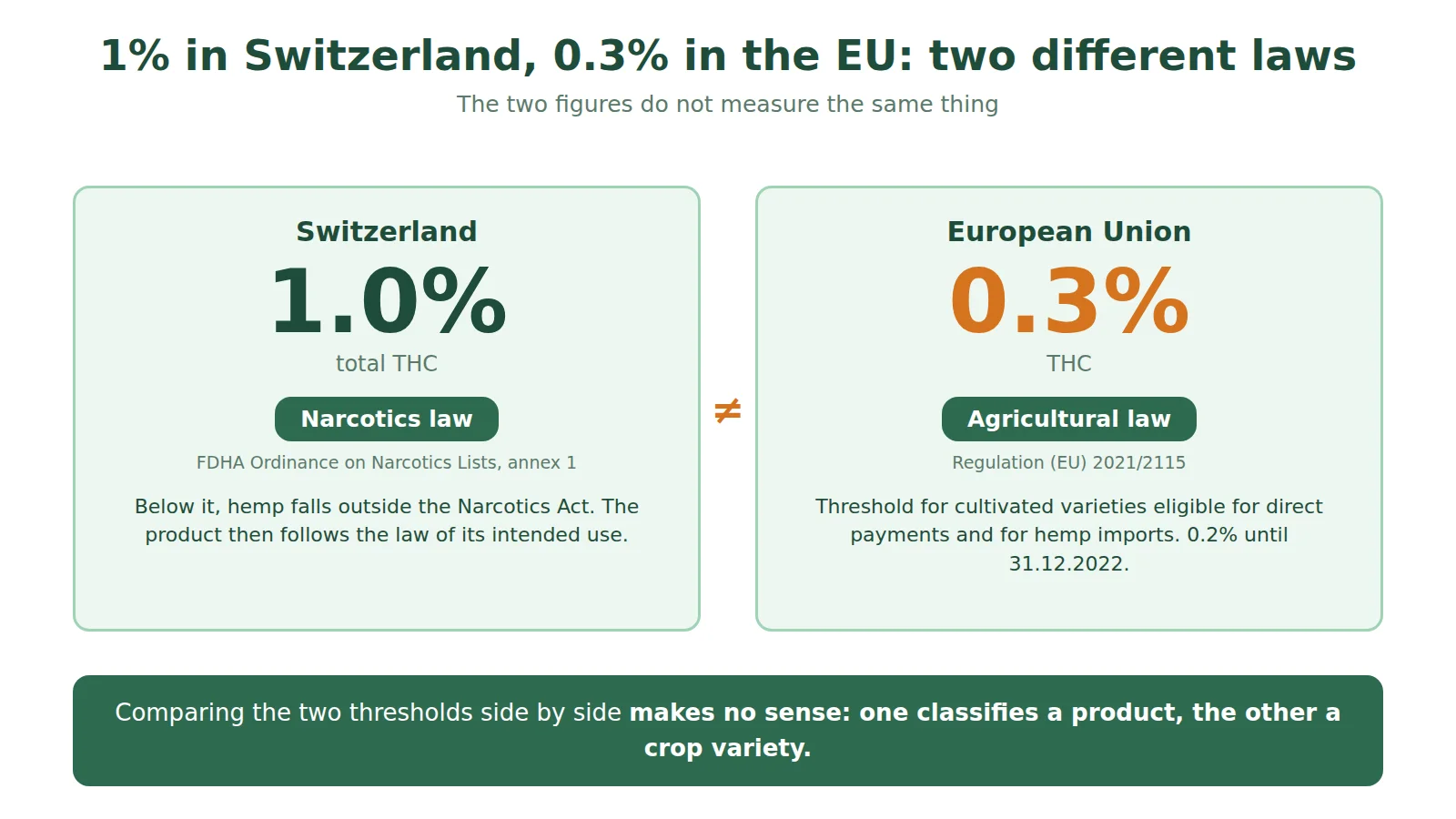
THC is the real dividing line between Full and Broad Spectrum, and two figures circulate. Switzerland uses 1% total THC: below it, hemp and its preparations fall outside the Narcotics Act (FDHA Ordinance on the Narcotics Lists, annex 1). The word total matters: it adds THC and its acidic form, THCA. Below this threshold a product is not automatically legal: it falls under the legislation of its intended use.
The European Union cites 0.3%, raised from 0.2% on 1 January 2023. But this threshold belongs to agricultural law: it sets the maximum content of cultivated hemp varieties eligible for direct payments and of hemp imports. It does not apply as such to finished products, for which each member state keeps its own regime.
Watch point
“THC-free” never means absolute zero. On a certificate, it means THC was not detected above the limit of quantification of the method used. A “THC-free” claim only makes sense together with that limit.
Reading a certificate of analysis
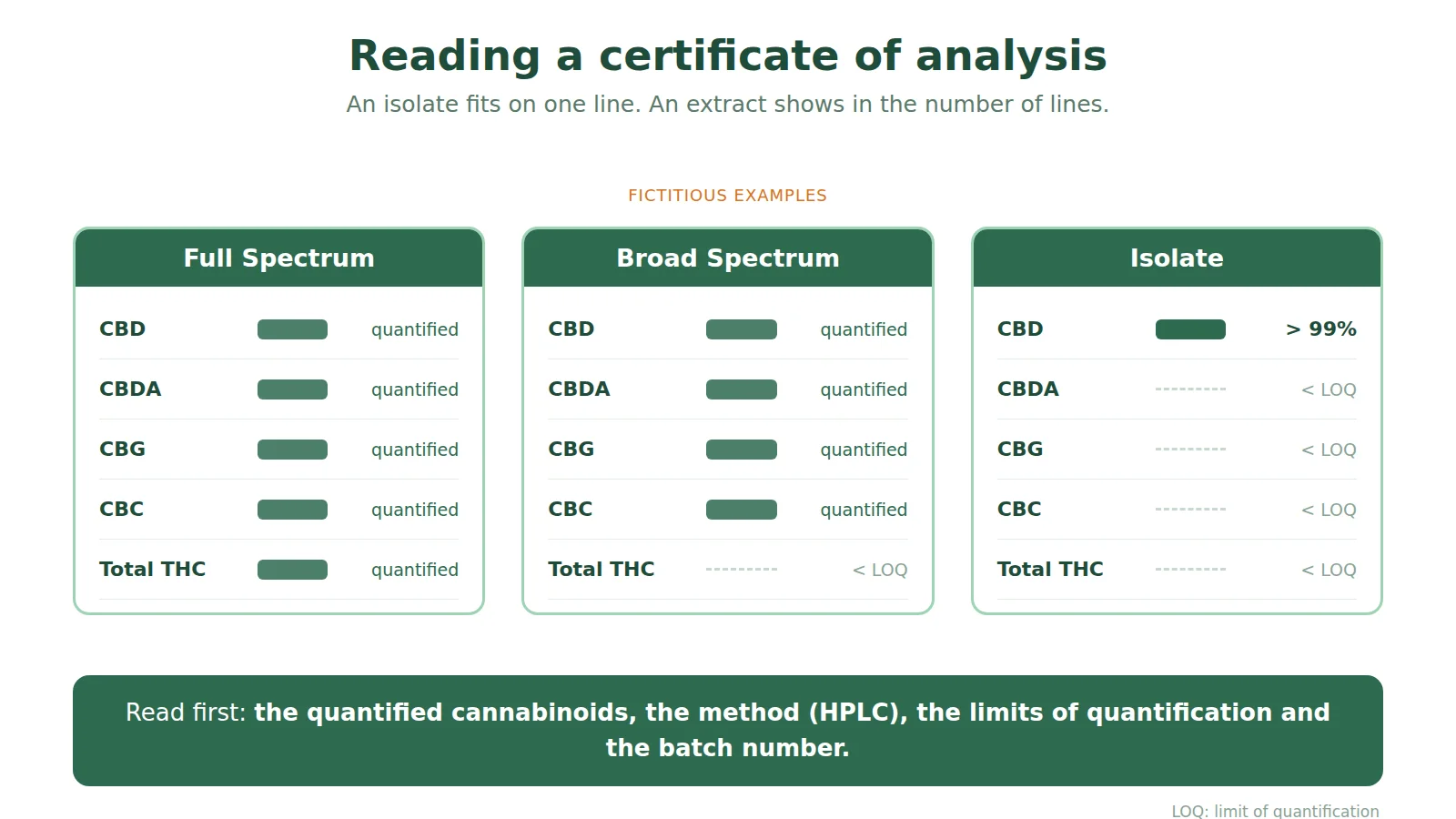
Since the words are not defined, the information lies elsewhere: on the batch certificate of analysis. It is not the terms Full or Broad that inform, but the list of quantified cannabinoids, the analytical method, usually liquid chromatography (HPLC), and the limits of quantification. An isolate shows a single line above 99%. An extract shows in the number of lines.
There is a very concrete reason for reading it this way. In 2017, an American study published in JAMA analysed 84 CBD products bought online from 31 companies. Only 31% matched their label; 43% contained less than stated and 26% more. THC was detected in 18 of the 84 products. These data describe the American online market of the time, not the Swiss market or any particular manufacturer. They show why a batch analysis is worth more than a claim on a package.
In our range
Our oils are split between the two families of extract. In Full Spectrum: the Sublime range on MCT coconut oil, from 10 to 40%, the Hemp range on hemp seed oil, from 10 to 30%, and X-Strong at 45% on MCT coconut oil. In Broad Spectrum: the range on olive oil at 10 and 20%, on lemon olive oil at 30%, and on MCT coconut oil at 40%.
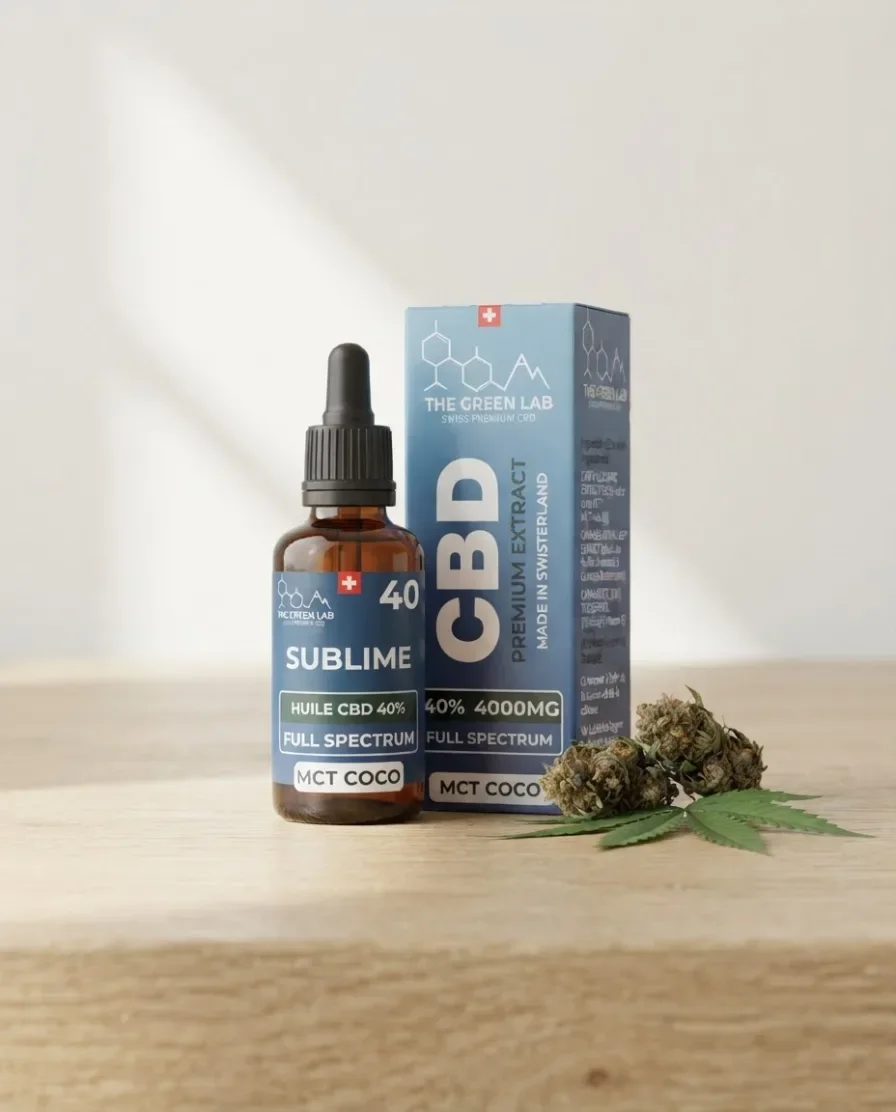
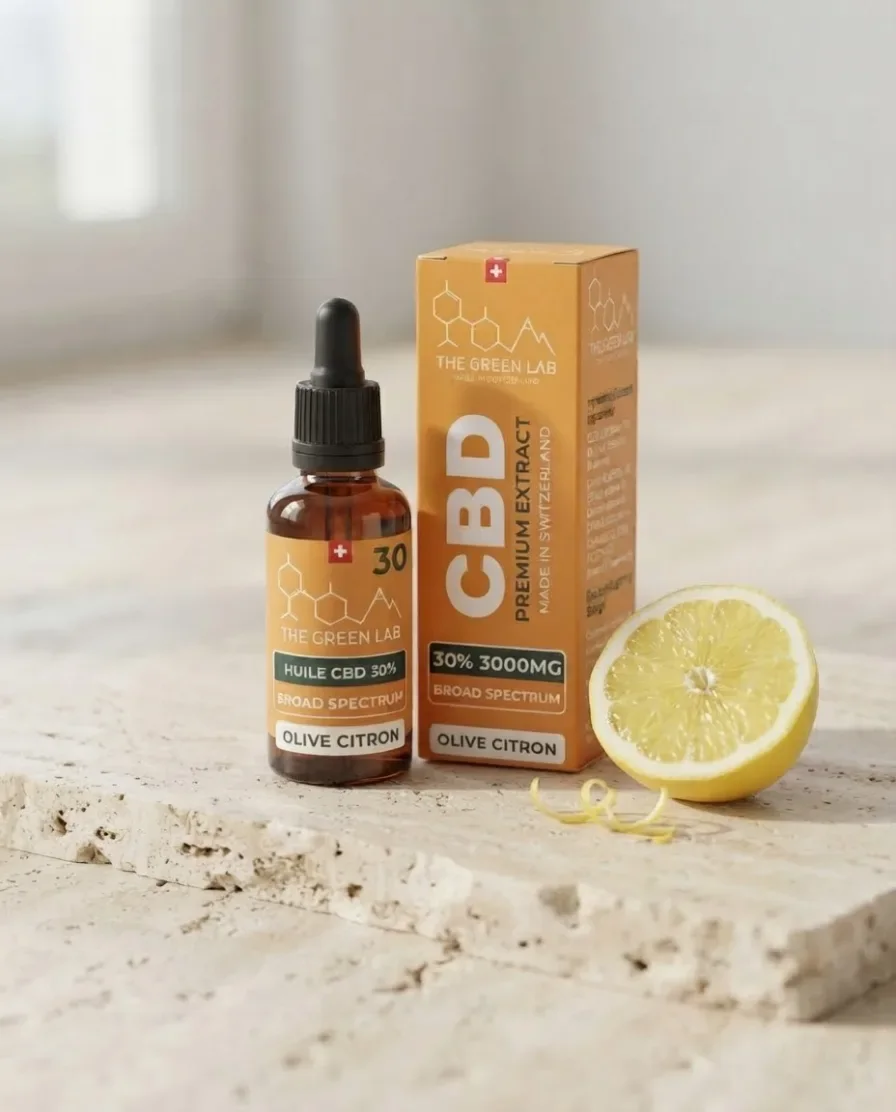
Choosing between the two is not a matter of promises. Full Spectrum keeps the profile closest to the plant, with traces of THC below the Swiss threshold. Broad Spectrum suits those who prefer an extract from which THC has been removed. The spectrum is one criterion among others, alongside concentration and carrier oil.
Our laboratory
Our Full Spectrum and Broad Spectrum oils are formulated in our laboratory in Gland, from analysed extracts. It is the measured composition, not the word printed on the box, that guides our formulation. Discover the laboratory →